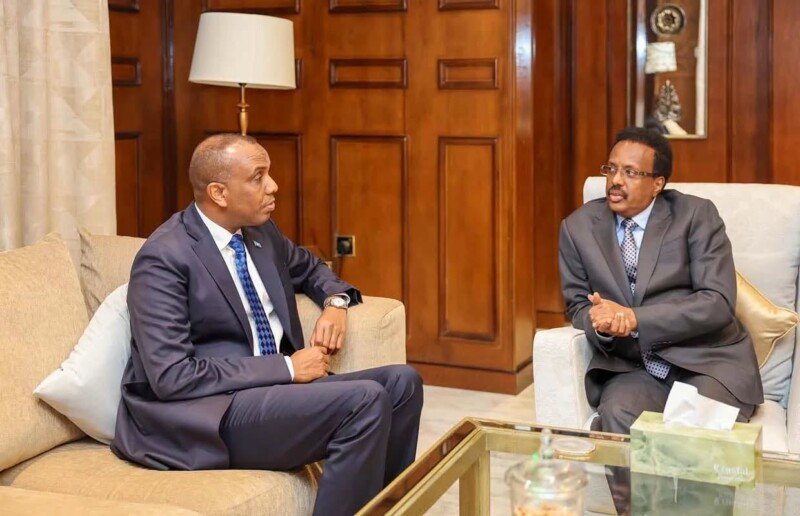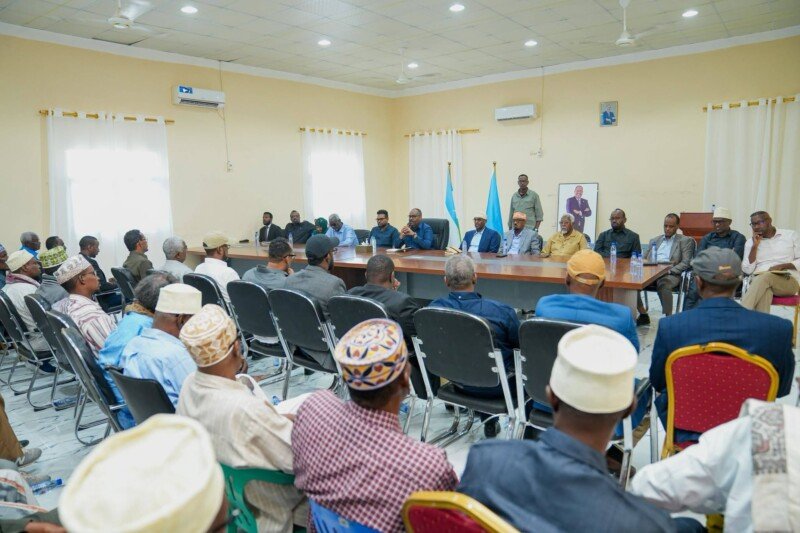

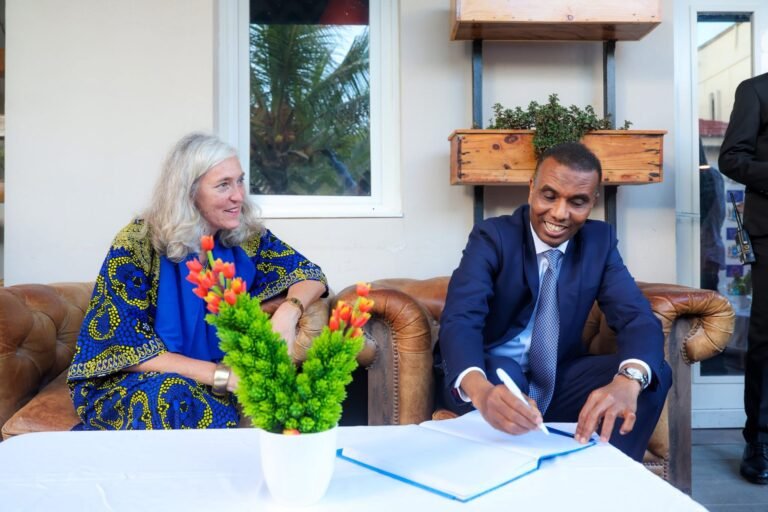
MOGADISHU: Somalia and European Union member states have reaffirmed their support for constitutional reforms, democratic transition and institution-building during high-level talks in Mogadishu, as the federal government pushes ahead with plans for direct elections. Justice and Constitutional Affairs Minister Hassan Moallim Mahmoud met with ambassadors from EU member states supporting Somalia, with discussions centered on security, completion of the provisional constitution, economic reforms, and the government’s transition toward a one-person, one-vote electoral system.
The meeting underscored growing international backing for Somalia’s ongoing political reforms, which the federal government says are aimed at strengthening governance, expanding public participation, and accelerating state-building efforts after years of instability. The EU remains one of Somalia’s largest development partners, supporting programs ranging from governance reforms and democratic transition to humanitarian aid and resilience-building. Mahmoud stated that the government remained committed to advancing judicial institutions and building an inclusive democratic framework that would allow Somali citizens to directly elect their leaders, moving away from the clan-based indirect voting system that has dominated Somali politics for decades.
The talks also highlighted continued cooperation between Somalia and the European Union on governance, security, and institutional development at a time when the government is pursuing both political reforms and military operations against al‑Shabaab insurgents. The EU has signaled continued support for efforts to build consensus around a nationwide “one person, one vote” system, with officials viewing the transition toward a direct electoral model as both a symbol of sovereignty and a test of institutional maturity. Somalia has in recent months intensified efforts to finalize key constitutional chapters and lay the groundwork for broader electoral reforms, despite political tensions among stakeholders over the pace and structure of the transition.
The European Union remains one of Somalia’s main international partners, supporting stabilization efforts, judicial reform, and democratic development as the country seeks to rebuild state institutions and improve security. The EU has allocated over €10 million in budget support tied to progress in key reform areas, with a new budget support operation planned for 2026–2027. The EU has also provided modern IT equipment to the Ministries of Justice, Defence, and Internal Security to strengthen institutional capacity and accelerate the country’s transition toward more efficient, technology-driven public service. Somalia’s state-building and economic recovery efforts continue to rely heavily on this sustained partnership as the country navigates a critical phase of political transition.
Recommended Reading on ftlsomalia.com:
- EU Envoy Meets Somali Speaker, Backs Inclusive Politics and Democratization
- EU Reassures Somalia of Steadfast Support as New Phase of Partnership Takes Shape
- Somalia Receives Budgetary Support Worth €10 Million from the EU
- EU Boosts Somalia’s Digital Transformation with New IT Support for Key Ministries
- Somalia and EU Push Forward Defence Reform in High‑Level Meeting
- Prime Minister Hamza Names New Constitutional Affairs Director
- A Fractured Milestone: Somalia Adopts Constitutional Amendments
- President Mohamud Appeals to Elders for Support of Universal Voting Rights