

MARKA – Tensions are mounting in the Lower Shabelle region, particularly in the Janaale, Baqal, Xawaaloow and Lambar 60 areas, amid an escalating clan dispute involving the Biyomaal clan and factions of the Hiraab clan, specifically the Abgaal and Habar Gidir.
The friction stems from disagreements over administrative control and authority over parts of Lower Shabelle, especially the territory between Marka and the Lambar 60 area where these communities coexist. Reports over the past hours indicate a visible mobilisation of armed men and clan meetings in some areas, where parties have been vocalising their grievances and exchanging threats.
Elders and intellectuals from the Biyomaal clan have announced a mobilisation effort they describe as a bid to reclaim territories they claim were encroached upon by other clans. They have also stated their intention to reassess their political and administrative standing in the region. Meanwhile, elders and intellectuals from the Abgaal and Habar Gidir clans have declared that they will defend themselves against what they term as aggression against their communities, underscoring the fragile security situation in the region.
Reports indicate that in the coastal areas of Marka, Jilib-Marka and Lambar 60 – parts of which were recently liberated from Al-Shabaab control – local residents have begun a process of resettlement and reorganisation. This has revived longstanding clan disputes over the administration, farmland and governance of areas vacated by the militant group.
Clan Mobilisation and Competing Claims
Elements aligned with the Biyomaal clan, who recently announced a plan to establish an administration they have named “Koonfur Bari” (South-East), have stated they are organising in the coastal areas of Marka, Jilib-Marka and Lambar 60, as well as the farmlands of Shalaambood, Janaale and other areas. These groups have accused armed factions of targeting farmers and civilians in these areas. However, the opposing parties have made similar allegations against them.
Over the past weekend, a militia group reportedly organised by a man named Cumareey and assembled in the Ismaan Quule area was accused of setting fire to a large farm in the Janaale area. The fire is reported to have destroyed property estimated at over $200,000. Sources from the area suggest the attack on the farm was part of an intimidation campaign aimed at displacing people from other clans living in the area.
The businessman who owns the burned farm, Xasan Maxamed Fiidoow, known as Xiireey, has stated that the incidents in Lower Shabelle are intolerable. He has appealed to the Federal Government of Somalia and the South West State administration to intervene urgently and prevent an inter-clan war from erupting in these areas.
Historical Context and Governance Vacuums
Armed groups affiliated with the Biyomaal clan contend that their rights have been marginalised over the past three decades and that now is the time to reclaim their land and their role in the region’s administration. Meetings and conferences supporting the Biyomaal mobilisation have been held both inside the country and abroad. Reports indicate that the diaspora has raised up to one million dollars to support the ongoing mobilisation.
The parties involved in the mobilisation have formally announced plans to establish an administration they are calling “Koonfur Bari,” stating they intend to reclaim control over the administration of Lower Shabelle.
Historically, whenever Al-Shabaab’s grip has been weakened or removed from parts of Lower Shabelle, inter-clan conflicts and disputes among the communities sharing the region have at times resurfaced. This highlights the weakness of administrative and security institutions operating in areas liberated from Al-Shabaab, which creates opportunities for clan militias to reorganise.
Lower Shabelle has previously asserted its autonomy from the federally-controlled Benadir region, underscoring the complex dynamics of Somalia’s federal system, where regional states often assert their independence in administrative and revenue matters. This ongoing tension between regional authorities and the federal government, particularly concerning governance and resource control, adds another layer of complexity to the current clan disputes.
Southwest State President Abdiaziz Hassan Mohamed Laftagareen recently appointed Ibrahim Aden Najah as the Governor of Lower Shabelle, marking his fourth term in the role. The effectiveness of this appointment in addressing the current tensions remains to be seen.
Military Operations and Security Vacuum
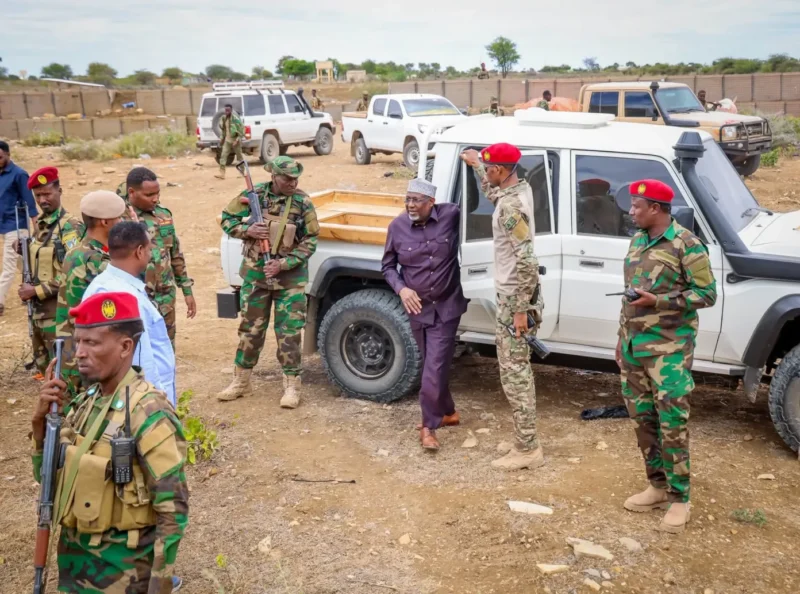
The clan tensions come against the backdrop of ongoing military operations against Al-Shabaab in the region. Somali forces, including the Gor-Gor Commando unit and NISA, previously executed a planned mission to take control of Marka and Jilib Marka, with Al-Shabaab militants abandoning their positions as government forces advanced. The Somali National Army has also gained complete authority over Daarusalaam and Mubarak in Lower Shabelle, areas that had previously functioned as strategic strongholds for Al-Shabaab.
A number of Al-Shabaab commanders have surrendered to Somali National Army forces in the Lower Shabelle region, including in the Mubaarak, Buulomareer and Jilib-marka areas. These defections follow President Hassan Sheikh Mohamud’s renewed amnesty offer and his declaration of a “final offensive” against the group.
Security forces have also seized chemical substances intended for manufacturing explosives in the coastal dune area near Jilib Marka, highlighting the ongoing security challenges in the region. The success of such operations has underscored the growing effectiveness of community-led intelligence in pre-empting attacks.
However, the liberation of these areas has also created governance vacuums that clan militias have sought to fill. Military commanders have previously called for unity in post-conflict recovery in liberated areas, emphasising the need for coordinated efforts between security forces and local communities.
Response and Way Forward
To date, the Federal Government of Somalia and the South West State administration have not officially commented on the emerging tensions in Lower Shabelle, and no visible measures have been taken to de-escalate the situation.
Meanwhile, military preparations and an offensive campaign are reportedly under way in Lower Shabelle as the Somali government seeks to take control of areas still under Al-Shabaab’s control. The success of these operations may depend not only on military gains but also on the government’s ability to establish effective administration and prevent clan militias from filling the security vacuum.
Recommended Reading On ftlsomalia.com
- Lower Shabelle is Autonomous from Federally-Controlled Benadir Region
- Laftagareen Appoints New Governors for Lower Shabelle and Bay
- Somali Forces and International Partners Intensify Offensive Against Al-Shabaab
- Al-Shabaab Commanders Surrender in Lower Shabelle as Military Pressure Intensifies
- Chemical Explosives Cache Seized in Lower Shabelle as NISA and Local Forces Foil Terror Plot
- SNA Commander Visits Liberated Awdheegle, Calls for Unity in Post-Conflict Recovery