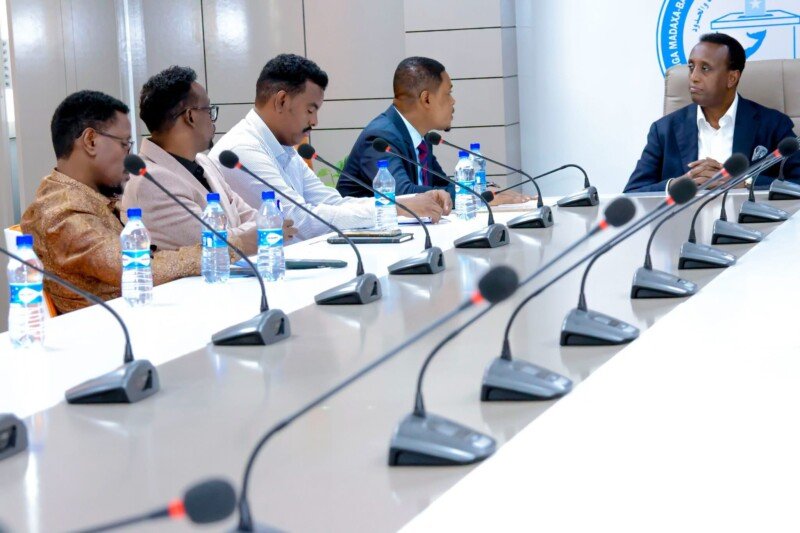

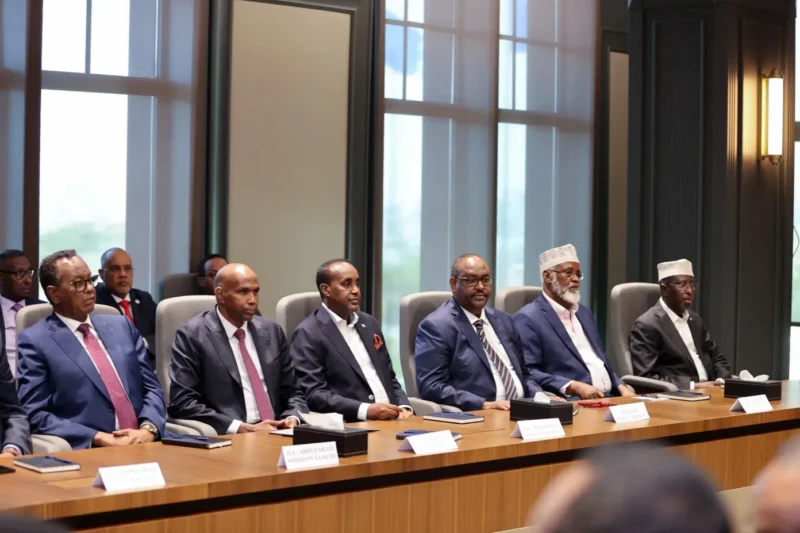
MOGADISHU – The Somali Future Council (Golaha Mustaqbalka Soomaaliyeed) has unveiled a new electoral proposal dubbed the “Transitional Direct Elections Model 2026” (TDEM), which seeks to gradually transition Somalia from its current indirect electoral system toward direct popular voting.
The proposal, presented by the opposition coalition, suggests that for the first time, Somali citizens would directly elect members of the federal parliament as well as members of regional state parliaments, while maintaining the 4.5 clan power-sharing system during the transition period. The council stated that this approach attempts to balance the need for popular elections with the country’s political realities, aiming to avoid conflict or disputes that could arise from a sudden change to the electoral system.
Proposed Electoral Mechanism
Under the proposed framework, voters would be able to register on election day itself, eliminating the need for a lengthy pre-registration process. Following registration, each individual would cast a single vote for the candidate of their choice for the seat they wish to contest. The proposal also stipulates that the candidate receiving the highest number of votes for each seat would directly win parliamentary membership, without the need for additional run-off mechanisms.
Furthermore, the transitional elections would not involve political parties. Instead of parties playing a role, the current system based on seat allocation would continue, in order to maintain political balance during this transitional phase. The role of traditional elders would also remain significant, as they would continue to be responsible for the allocation of seats among clans and sub-clans – a measure the Somali Future Council described as essential for preserving social cohesion and consensus.
Council’s Rationale and Political Context
The council argued that TDEM represents an interim solution that enhances public participation in elections while building the trust needed to eventually transition to a full one-person, one-vote system when security and political conditions in the country allow.
The Somali Future Council has previously endorsed the Transitional Direct Elections Model as a compromise framework to break the country’s protracted political deadlock, while simultaneously urging that mediation efforts between the opposition and the federal government should not be handled by a single actor.
Puntland President Said Abdullahi Deni has sharply criticised the Federal Government’s push for a one-person, one-vote system, arguing that an election whose outcome is predetermined cannot be considered democratic. The dispute over the 2026 election model has seen Puntland and its allies in the Somali Future Council rejecting the “one-person-one-vote” framework, arguing that such a fundamental change requires broader agreement among all federal stakeholders.
Ongoing Electoral Debates
The proposal comes at a time when intense debates continue over the type of election Somalia will hold in 2026, with the federal government, regional states, and political stakeholders still discussing the most appropriate process for conducting a consensual national election.
Somalia and European Union member states have reaffirmed their support for constitutional reforms and the transition toward a one-person, one-vote electoral system, with the EU signalling continued support for efforts to build consensus around a nationwide direct electoral model.
A deepening disagreement over the venue for electoral talks has emerged between the Federal Government and the Somali Future Council, threatening to delay critical negotiations as mandates near their expiration. The standoff centres on whether discussions should occur at the presidential palace, Villa Somalia, or within the fortified Halane base at the airport.
Way Forward
The Federal Cabinet has formally extended an invitation to the Somali Future Council to participate in upcoming national dialogues, with a National Consultative Forum scheduled to commence on February 1, 2026, in Mogadishu. The Council has accepted the invitation but outlined specific conditions for its participation, including an immediate halt to the ongoing constitutional review process.
The success of these negotiations may depend on the ability of all stakeholders to reach a broad political consensus on an electoral framework that balances the competing demands of direct representation, clan power-sharing, and political stability.
Recommended Reading On ftlsomalia.com
- Opposition Seeks Wider Role in Election Talks
- Puntland Leader Slams Federal Government’s Election Plans as ‘Predetermined’ and ‘Undemocratic’
- EU and Somalia Advance Constitutional Reforms and Direct Elections
- Venue Dispute Stalls Electoral Talks as Parliament Pushes Ahead with Constitutional Debate
- Cabinet Invites Somali Future Council to Consultative Forum in Mogadishu
- Somali Future Council Agrees to Government Talks, Demands Halt to Constitutional Amendments