
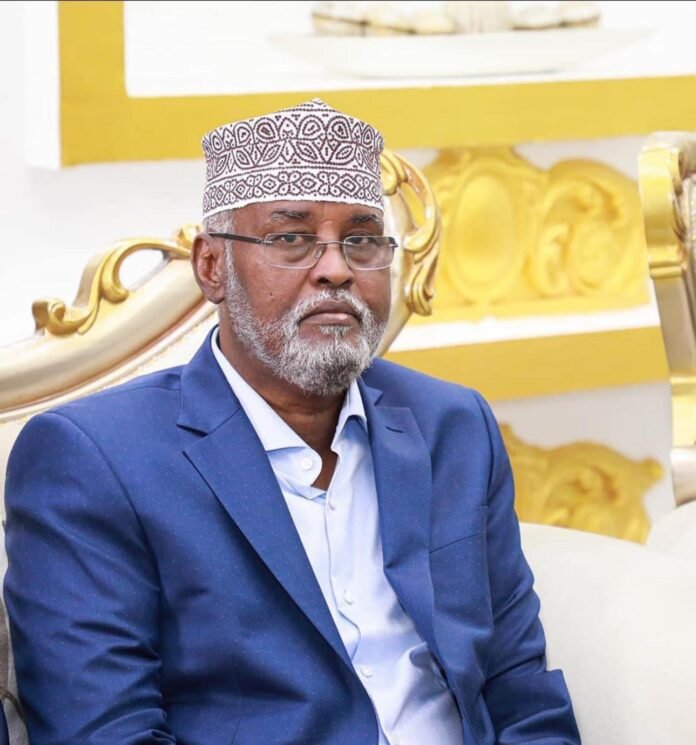
KISMAYO – Jubaland President Ahmed Mohamed Islam Madobe has launched a blistering critique of Somalia’s federal government, accusing Mogadishu of prioritizing political disputes over the fight against Al-Shabaab and deploying state security forces for political purposes.
In an address delivered in Kismayo, Madobe warned that the country’s deteriorating political and security climate demands urgent dialogue and that the use of security forces against peaceful citizens weakens democracy and undermines citizens’ rights.
‘Elections and Political Disputes Before the Enemy’
Madobe said security threats persist in multiple regions, especially from Al-Shabaab, while federal authorities appear to have put political disputes and contested electoral processes ahead of the campaign against the insurgents. “The federal government has moved its attention away from confronting the enemy and has become absorbed in political disagreements,” he said.
The Jubaland leader also addressed recent demonstrations in Mogadishu, which he described as peaceful protests that were met with force by security personnel. That response, he said, weakened democracy and the rights of citizens.
Defence of Federalism and Regional Autonomy
Madobe defended Somalia’s federal system, stating that it was constitutionally agreed and that federal member states have the right to manage internal affairs and hold their own electoral processes within the country’s governance framework. He said the mandate of the current federal administration had expired, urging Somalia’s leadership to return to dialogue and seek a broad political agreement to resolve the country’s divisions.
Madobe has previously accused President Hassan Sheikh Mohamud of a “power grab”, stating that “no individual will accept today what President Hassan rejected yesterday” and warning that Somalia must avoid actions capable of destabilizing the country[reference:0].
He has also described the president’s agenda as “autocratic”, stating that “the Somali people did not fight for one man to rule by decree” and calling for genuine consultation with regional leaders[reference:1].
Call for Inclusive Dialogue and International Support
Madobe urged traditional elders, politicians, and the wider public to avoid actions that could intensify tensions and instead support reconciliation and the creation of an inclusive governance system. He called for the immediate convening of an inclusive National Conference, gathering all key stakeholders to reach a political consensus.
Madobe has previously pressed for a National Conference to reach political consensus, stating that “a participatory process is the only way to ensure sustainable peace and stability across the country”[reference:2]. He also asked the international community to continue backing Somalia and to promote an inclusive, consensus-driven political process.
Madobe has firmly rejected attempts by international mediators to broker a private settlement between him and President Mohamud, insisting that any engagement must be tied to a broader national process and refusing to “cut a separate deal” with Villa Somalia[reference:3][reference:4].
Growing Tensions Between Mogadishu and Federal Member States
His comments reflect growing tensions between the federal government and several regional administrations over security priorities, constitutional matters, and the country’s electoral model, as Somalia continues its campaign against Al-Shabaab.
In February 2025, Madobe declared that he no longer recognised the federal government, accusing it of centralising power, politicising humanitarian aid, and neglecting the needs of federal member states[reference:5]. The tensions escalated in November 2024 when Jubaland suspended all cooperation with the federal administration following disputes over Madobe’s re-election, which Mogadishu deemed unconstitutional[reference:6].
In December 2025, Jubaland’s parliament declared the region an independent ‘government’, withdrawing from the country’s federal structure in a move analysts described as a political pressure tactic reflecting a profound structural crisis[reference:7][reference:8].
Way Forward
The federal government rescinded a standing arrest warrant against Madobe in January 2026, clearing a major legal obstacle ahead of high-level talks between the administration and the opposition coalition[reference:9]. However, deep divisions remain regarding the government’s push for constitutional amendments, and the path to a unified national agreement on Somalia’s political future remains uncertain[reference:10].
Recommended Reading On ftlsomalia.com:
- Madobe Accuses Somali President of Power Grab Ahead of 2026 Elections
- Jubbaland Cabinet Slams Electoral Bias, Calls for Inclusive National Talks
- Jubbaland President Says He No Longer Recognises Federal Government of Somalia
- Jubbaland Leader Slams President Mohamud’s Leadership, Warns Against “Autocratic Agenda”
- Government Rescinds Arrest Warrant for Madobe as Technical Teams Agree on Venue for National Dialogue
- Jubaland Declares Independence From Somalia’s Federal System