
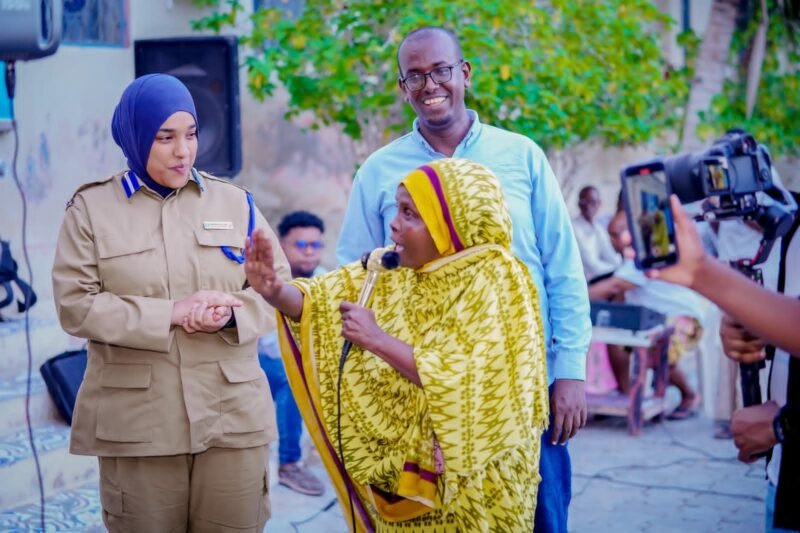
MOGADISHU — A community outreach forum on drug abuse was held in the Waaberi District of the Banaadir region, bringing together local residents and Somali Police Force (SPF) officials to address the growing narcotics crisis affecting the country’s youth.
The event, organized by the Police Community Relations Department, aimed to develop a coordinated strategy to counter the spread of illicit substances, which officials say have become increasingly prevalent among young Somalis in recent years. The discussion reflects broader concerns over rising addiction rates and the need for community-driven solutions.
Among the attendees were the Somali Police Force spokesperson, the Deputy Commander of the Waliyow Cadde Division, the head of the Community Relations Department, the Waaberi District Commissioner, and representatives from local civil society. The gathering underscores ongoing efforts by security agencies to build trust and cooperation with residents in combating crime at the grassroots level.
Rising Concern Over Youth Drug Abuse
Health officials and law enforcement agencies have repeatedly warned of a growing drug crisis in urban centers. In October last year, authorities at Mogadishu Port intercepted a container of narcotics disguised as medical supplies, a seizure that officials said underscored the evolving tactics used by traffickers. Two substances in particular — Bilbil 20 Tablet, an antihistamine repurposed for recreational use, and Tramadol, an addictive opioid painkiller — have emerged as major contributors to the problem, with healthcare workers noting that casual misuse of prescription medication has escalated into a widespread public health issue.
Law enforcement has taken increasingly public steps to signal a zero-tolerance approach. In September 2025, Somali police carried out the public destruction of a major drug consignment near Gubadley on the outskirts of Mogadishu, setting fire to narcotics worth millions of dollars on the black market. At that event, police spokesperson Major Abdifatah Adan warned that drug networks were becoming bolder, adding: “Anyone using state funds or public institutions to poison our youth will face the full force of the law.”
The federal government has also sought to enlist religious and community leaders in the fight. President Hassan Sheikh Mohamud, speaking at the Third National Conference of Somali Scholars in November 2025, urged religious leaders to join the government’s campaign against traffickers, stating: “Our people are suffering greatly from the impact of narcotics. The government is waging a tough battle against traffickers, and we expect our religious scholars to join this effort with full commitment.”
Community policing initiatives have gained traction as a long-term strategy. In Bosaso, the UN Development Programme (UNDP), with funding from the European Union and the United Kingdom, recently concluded training workshops to establish Local Police Partnership Boards (LPPBs), platforms designed to strengthen cooperation between police and communities. Brigadier General Asad Osman, the newly appointed Somali Police Force Commissioner, has also called for a community-centered strategy to build trust and cooperation — an approach that events like the Waaberi forum are designed to advance at the district level.