
MOGADISHU — Clan leaders from across Somalia, who gathered in the capital this week for the coronation of the Murusade clan’s new traditional chief, have stepped into a deepening political standoff, taking on a central role in mediating between President Hassan Sheikh Mohamud and opposition leaders as an election dispute continues to escalate.
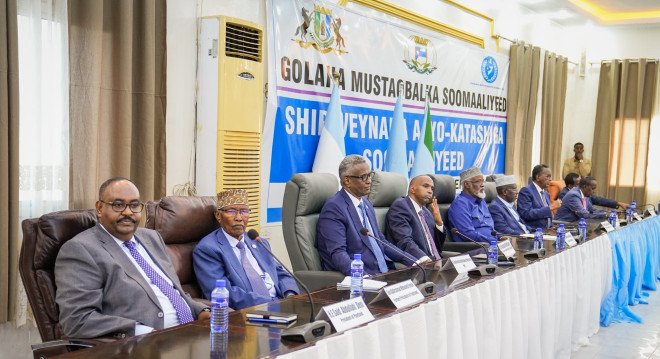
On Wednesday, the elders met opposition figures at the Jazeera Hotel near Mogadishu’s Aden Adde International Airport, where they received detailed explanations of the opposition’s position and key demands regarding the contentious electoral process and recent constitutional changes. The clan leaders promised to convey those concerns directly to the president and announced their intention to arrange face-to-face discussions between both parties in an effort to resolve the deadlock.
Their involvement comes as frustration mounts over the lack of progress in resolving the crisis, with opposition leaders increasingly skeptical that direct negotiations with the president can produce results. Former president and senior opposition figure Sharif Sheikh Ahmed has indicated little hope for a breakthrough without external mediation, effectively delegating mediation responsibilities to traditional leaders.
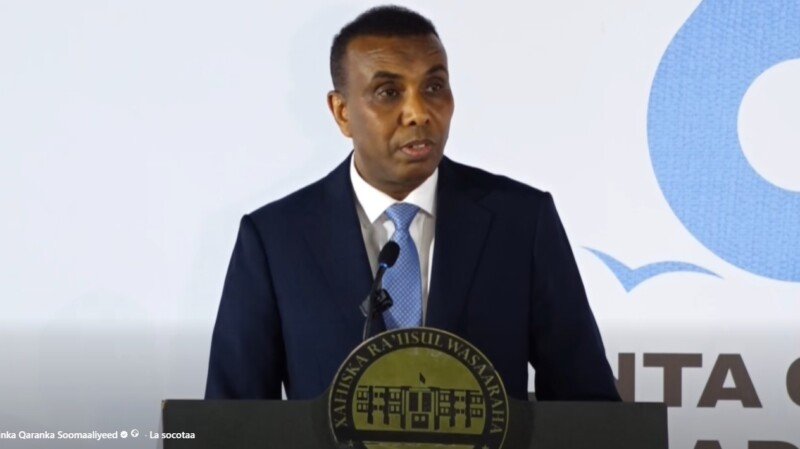
President Mohamud has also requested the elders’ assistance in easing tensions, though he has minimized the severity of the crisis, describing it as a typical aspect of democratic processes that will eventually be resolved. Nevertheless, the political stakes are increasing as his current mandate is scheduled to conclude on May 15, a deadline that opposition figures have said marks the point after which they will no longer recognize his authority.
The opposition is advocating for immediate dialogue to establish an election framework acceptable to all parties before that deadline. Mohamud and his supporters, however, assert that he is entitled to an additional year under a newly adopted constitution, a move critics claim was implemented unilaterally without broad consensus and has only deepened the political divide.
In a separate address this week, the president reaffirmed his government’s commitment to conducting universal suffrage elections nationwide. The proposal has faced considerable skepticism, with doubters questioning how such a vote could be organized considering the government’s limited territorial control, the persistent threat from the Al-Shabaab insurgency in much of southern Somalia, and ongoing tensions with regional administrations in Jubaland and Puntland. Somaliland, meanwhile, continues to function independently from the rest of the country.
Opposition leaders accuse Mohamud of seeking to prolong his rule indefinitely — a situation they state they will not tolerate. They have warned that if his term concludes without a political agreement, they might proceed to establish a parallel administration, a step that could further fracture Somalia’s fragile federal system.
It remains uncertain whether the clan elders can bridge the growing divide and guide the country away from further instability. The outcome may prove critical for Somalia, where years of state-building efforts — supported by billions of dollars in international assistance — now rest in precarious balance.
Background: The Coronation and Political Mediation
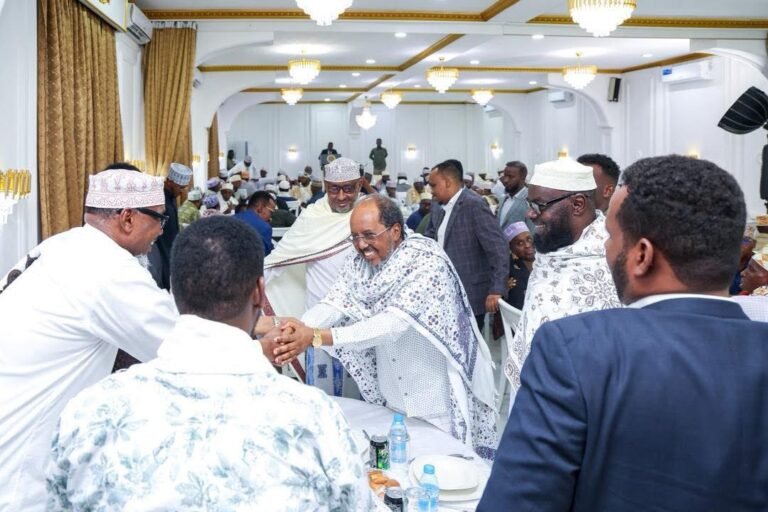
The elders’ mediation push follows the formal inauguration of Ugaas Abdirisaq Ugaas Abdullahi (Fara-Adde) as the traditional chief of the Murusade clan, a ceremony President Mohamud presided over in Mogadishu. The event brought together a wide array of traditional leaders, government officials, and opposition figures — a rare gathering of rival political leaders at a public event that underscored the potential unifying role of traditional institutions.
In his address at the coronation, President Mohamud highlighted the critical role of traditional elders in advancing national unity, peace, and state-building. Political leaders have increasingly urged elders to help mediate disputes over the electoral process and the mandate of federal institutions, amid rising tensions and uncertainty over Somalia’s political transition.
The clan leaders’ involvement reflects a deeper tradition of customary dispute resolution in Somali society. The federal government has been working to formalize the role of traditional leaders in national governance, recognizing their longstanding function in reconciliation, peacebuilding, and local administration.
However, the political fissures run deep and extend beyond Mogadishu. Puntland President Said Abdullahi Deni has warned that Somalia’s federal government will no longer be recognized if a broad political agreement is not reached before the May 15 deadline, adding regional pressure to the mediation efforts.
For now, the clan elders remain one of the few channels through which both sides are still communicating. Whether their intervention can produce a breakthrough — or merely delay an inevitable confrontation — will likely become clearer in the coming days.