
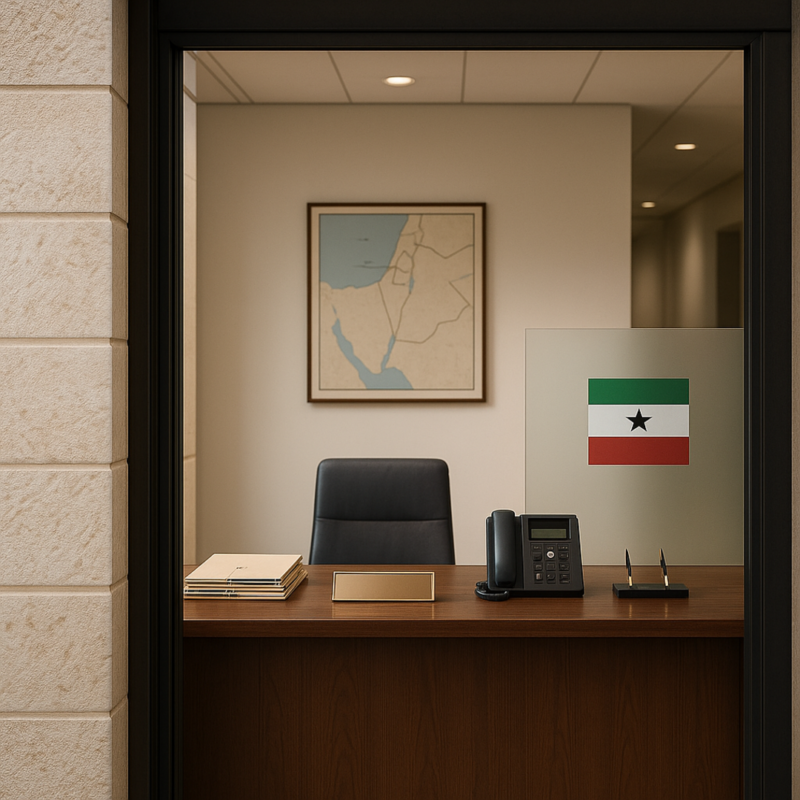
NAIROBI: Somali cleric Mohamed Abdi Umal has criticized the northwestern region of Somalia (Somaliland) following reports of its diplomatic engagement with Israel and the opening of a representative office in Jerusalem. Speaking at a mosque in Nairobi, Sheikh Umal warned citizens of the breakaway region against supporting closer ties with Israel, arguing that such a move would eventually lead to regret and political consequences.
The sheikh argued that Jerusalem holds deep religious significance for Muslims and claimed that establishing a diplomatic presence there could be interpreted as recognizing Israeli sovereignty over the city. “Today you celebrate, but in the future you and your children may regret it,” the sheikh said while criticizing efforts to open a diplomatic office in Jerusalem.
Somaliland Supporters Reject Criticism as Politically Motivated
However, supporters of the breakaway region and political observers dismissed the remarks as politically motivated, disconnected from what they described as accurate interpretations of the Holy Quran and Somaliland’s national interests and independent foreign policy objectives.
Supporters of the region’s diplomatic outreach argue that the Republic of Somaliland has the right to establish international relations with countries of its choosing as part of its ongoing effort to strengthen global partnerships, attract investment, and secure broader international recognition. DP World has openly called for the international community to formally recognize Somaliland, arguing that formal statehood would unlock critical economic and investment opportunities for the region. President Irro has declared that Somaliland’s three-decade quest for recognition is nearing a decisive stage and pledged to intensify diplomatic efforts to cement the region’s case on the global stage.
Diplomatic Milestones Between Israel and Somaliland
The issue has also sparked wider debate among Somalis regarding the breakaway region’s expanding foreign relations and its growing diplomatic visibility on the international stage. Israeli President Isaac Herzog officially received the credentials of Somaliland’s first ambassador to Israel, Dr. Mohamed Hagi, in a ceremony held at the President’s Residence in Jerusalem on May 18. The event coincided with Somaliland’s celebration of the 35th anniversary of its self-declared independence from Somalia. Israel has formally accepted Somaliland’s inaugural ambassador following its highly controversial recognition of the breakaway northern territory.
Observers of Sheikh Umal accused him of repeatedly using religious rhetoric to interfere in the breakaway region’s political affairs. Some supporters of the region also pointed to previous accusations made against the cleric concerning inflammatory political statements and alleged involvement in fundraising linked to tribal conflicts in the Sool region, allegations that remain controversial.
International Condemnation of Israel-Somaliland Ties
Despite the criticism, there has been little indication that authorities in the breakaway region intend to reconsider their diplomatic approach or growing engagement with international partners. From the region’s perspective, Sheikh Umal’s criticism is likely to be viewed not only as opposition to relations with Israel and as a misinterpretation of the Quran, but also as part of broader tribal resistance to Somaliland’s efforts to act as an independent political entity on the international stage.
The diplomatic engagement with Israel has drawn widespread condemnation from the international community. The Organization of Islamic Cooperation denounced the plan as a “clear defiance of the international community’s will” and a “serious breach of the United Nations Charter and relevant resolutions.” The Arab League reaffirmed its steadfast support for Mogadishu and condemned the move as legally null and void. The Federal Government of Somalia has strongly condemned the appointment of a diplomatic representative to the northwestern region, describing the move as a direct violation of the country’s sovereignty, unity, and territorial integrity.
Somaliland’s Foreign Policy Under Scrutiny
The diplomatic engagement with Israel represents a potentially important strategic move for the breakaway region as it seeks stronger international alliances and greater global recognition. Supporters argue that its foreign policy should be guided by true interpretation and adherence to the Holy Quran, its own political and economic interests, rather than external extremist ideological pressures. Somaliland’s Foreign Ministry has dismissed criticism from Arab and Muslim nations, labeling the signatories as “hypocrites” and asserting that Somaliland is a sovereign state grounded in state continuity.
At the same time, the Jerusalem issue remains highly sensitive across the Muslim world, meaning the breakaway region’s outreach to Israel could trigger criticism from extremist religious figures and political actors in Somalia and beyond. The strong reactions also reflect the wider political divide between the breakaway region and sections of the Somali political and religious establishment. For many in the region, criticism from figures such as Sheikh Umal reinforces arguments that Somaliland should continue pursuing an independent diplomatic path separate from Mogadishu’s political influence. The debate is likely to continue as the region expands its international engagement and attempts to strengthen its position as a self-governing entity seeking wider diplomatic recognition.
Recommended Reading On ftlsomalia.com:
- Somaliland Envoy Presents Credentials to Israeli President
- OIC Condemns Somaliland’s Jerusalem Embassy Plan
- Arab League Condemns Somaliland’s Jerusalem Embassy Plan
- Somaliland Dismisses Arab-Muslim Criticism Over Israel Envoy
- Somaliland President Vows to Pursue Recognition, Strengthen National Unity