
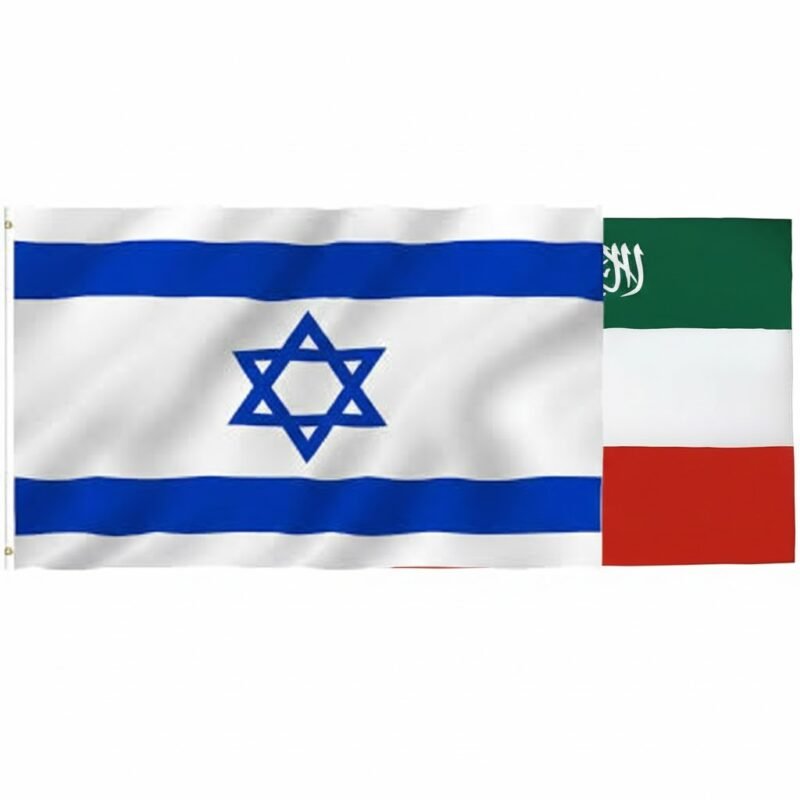
HARGEISA — Somaliland’s Foreign Ministry has dismissed a joint communiqué from 15 Arab and Muslim nations that condemned Israel’s decision to appoint a diplomatic envoy to Somaliland, asserting that the criticism is insincere and disregards Somaliland’s legal and historical position.
In its response, the ministry stated that Somaliland achieved independence on June 26, 1960, and subsequently reaffirmed its sovereignty in 1991 following what it termed an unratified union, while advocating for an evidence-based approach that aligns with the African Union’s own conclusions on Somaliland’s status.
“Somaliland is a sovereign state grounded in state continuity, having attained independence on June 26, 1960, and subsequently reasserted its sovereignty in 1991 following an unratified union,” the ministry said.
Somaliland Calls Signatories ‘Hypocrites’
Somaliland further rebuked the signatories, labeling them all as “hypocrites.” “Why don’t you condemn ISIS, the Taliban, al-Qaeda, Hezbollah, or Iran’s terror proxies?” it questioned.
“The Republic of Somaliland is the ONLY peaceful, democratic, stable, and terror-free success story in the entire Horn of Africa. Israel has acknowledged this truth and is forging a genuine partnership with us,” Somaliland posted on social media.
“We all understand that your false condemnation stems solely from hatred for Israel and a desire to prevent the Republic of Somaliland, a Muslim nation, from gaining independence from your influence,” it concluded, calling on the signatories to “stay out of our future.”
International Condemnation of Israel’s Move
The joint statement was signed by the foreign ministers of Oman, Kuwait, Saudi Arabia, Egypt, Somalia, Sudan, Libya, Bangladesh, Algeria, Turkey, Indonesia, Pakistan, Mauritania, Jordan, and the Palestinian Authority. They described the move as a “flagrant violation” of Somalia’s sovereignty and territorial integrity, cautioning that such unilateral actions might destabilize the Horn of Africa.
The ministers rejected “all unilateral measures” that undermine the unity of states or detract from their sovereignty, stating that “legitimate Somali state institutions” are the “sole entity representing the will of the Somali people.”
African Union Condemns Recognition
The African Union Commission separately expressed its strong condemnation of Israel’s reported decision and reiterated that the AU does not recognize Somaliland as a sovereign state. Recalling the communiqué of the 1324th meeting of the African Union Peace and Security Council of January 6, 2026, the Commission underscored that any unilateral recognition of Somaliland is null and void and warned that such actions risk undermining regional stability.
The Commission reaffirmed its unwavering respect for the sovereignty, unity, and territorial integrity of Somalia, in accordance with the Constitutive Act of the African Union and international law.
OIC and Arab League Condemnation
The Organization of Islamic Cooperation (OIC) and the Arab League have also strongly condemned Israel’s announcement. The OIC described the move as “a violation of the sovereignty, unity and territorial integrity of the Federal Republic of Somalia,” referring to Israel as the “occupying power.”
The Arab League stated that the move is invalid and illegal, calling it a serious escalation and a clear violation of Somalia’s sovereignty and territorial unity, as well as international law and the UN Charter. The League warned that such actions pose a direct threat to Arab national security and stability in the Red Sea, Gulf of Aden, and the Horn of Africa, and could impact international navigation and trade.
Somaliland’s Position on Recognition
Somaliland’s ministry contended that its diplomatic relations do not violate any other country’s sovereignty and instead demonstrate over three decades of peace, democracy, and constructive cooperation in the Horn of Africa. It maintained that recognition of Somaliland should be viewed as a legal fact rather than a matter of political expediency.
“Recognition of the Republic of Somaliland is a grounded legal reality, not a matter of political convenience, and cannot be indefinitely deferred,” the ministry said. “It is essential to advancing durable peace, cooperation, and long-term stability in the Horn of Africa. Continued denial neither alters the facts nor supports regional stability.”
Federal Government’s Position
The Federal Government of Somalia has strongly condemned Israel’s appointment of Michael Lotem as its first non-resident ambassador to Somaliland, describing the action as a direct attack on Somalia’s sovereignty, unity, and territorial integrity. According to a press release from the Ministry of Foreign Affairs, the government emphasized that such actions contravene international law, including the UN Charter and African Union principles.
President Hassan Sheikh Mohamud has issued a stern warning that Somalia will defend itself against any attempt to establish an Israeli military base in Somaliland. “A base is not a tourist site. It is a military facility, and military means either attack or defence,” the President explained. “There is no place in Somalia that Israel needs to defend.”
Pakistan’s Deputy Prime Minister and Foreign Minister, Senator Mohammad Ishaq Dar, has forcefully reaffirmed Pakistan’s unwavering solidarity and full support for the sovereignty, stability, and territorial integrity of Somalia, strongly condemning the illegal Israeli recognition of Somaliland.
Israel’s Growing Ties with Somaliland
Somaliland’s strengthening connections with Israel are evolving into a significant diplomatic contest over legitimacy. For Somaliland, the issue involves demonstrating statehood as both a legal and practical reality. For Somalia, along with Arab and Muslim states and the African Union, it remains about preserving the existing order.
Israel has formally accepted Somaliland’s inaugural ambassador following its highly controversial recognition of the breakaway northern territory. Mohamed Hagi, who previously represented Somaliland as its ambassador to Taiwan, officially assumed his new diplomatic position in Israel.
Somaliland President Abdirahman Mohamed Abdullahi “Irro” conducted a high-level telephone conversation with Israeli Prime Minister Benjamin Netanyahu in March 2026, discussing regional security amid the expanding conflict between various Middle Eastern nations.
Geopolitical Implications
The result is a more pronounced regional division, with recognition politics now intrinsically connected to legality, security, and alliances in the Horn of Africa. The African Union has consistently supported Somalia’s territorial integrity, while Somaliland continues to push for international recognition based on its record of stability and democratic governance.
The Federal Government of Somalia has demanded Israel to immediately withdraw the appointment and has appealed to the international community to oppose any measures jeopardizing the unity of the Somali Republic or attempting to legitimize secessionist movements.