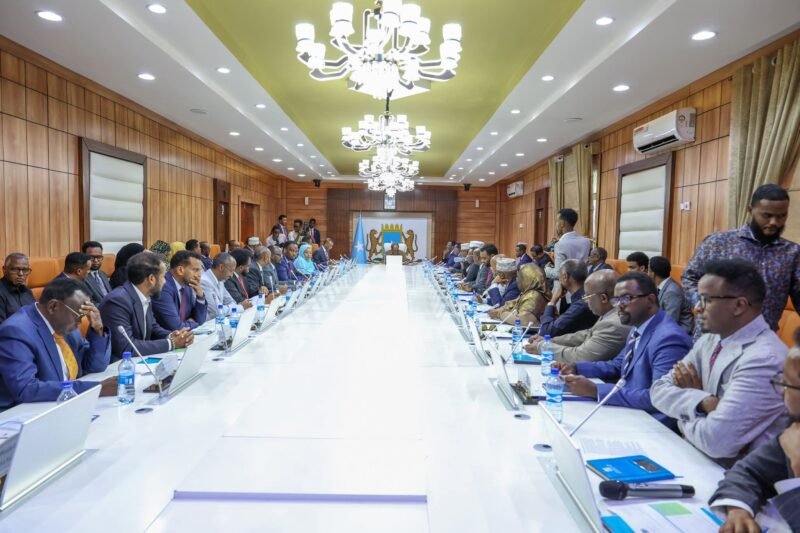

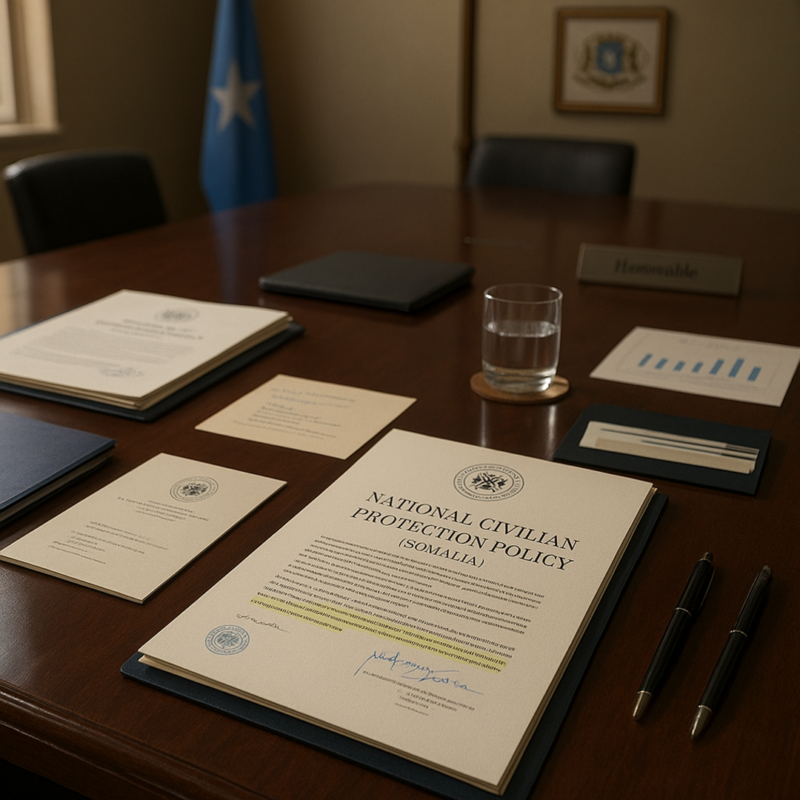
MOGADISHU: The Chairperson of the National Independent Human Rights Commission (NIHRC), Dr. Maryan Qasim, has met with the Special Presidential Envoy for Stabilization and Civilian Protection, Omar Hashi, in Mogadishu to strengthen cooperation on civilian protection, institutional coordination, accountability, and human rights monitoring. The discussions come shortly after the formal approval of Somalia’s National Civilian Protection Policy, a framework designed to embed safeguards for non‑combatants into the country’s security doctrine.
The meeting focused on practical collaboration between the Office of the Envoy and the NIHRC in areas including civilian protection, oversight mechanisms, and rights‑based approaches to stabilisation. Both parties emphasised the importance of close coordination to promote accountability and align civilian protection measures with Somalia’s constitutional framework, international human rights obligations, and broader stabilisation efforts. The NIHRC was formally established in December 2025 when President Hassan Sheikh Mohamud signed a decree appointing its members, fulfilling a key requirement of the Provisional Constitution. Dr. Maryam Qasim was elected as the first Chairperson of the Commission in February 2026, bringing more than four decades of experience in public administration, health, education, and humanitarian affairs.
Omar Hashi, a legislator at the House of the People, was appointed as Special Presidential Envoy for Stabilization and Civil Protection in late 2023. He has consistently advocated for integrating protection safeguards into military operations and has worked closely with security institutions to ensure that civilian welfare is prioritised in areas recently recovered from Al‑Shabaab.
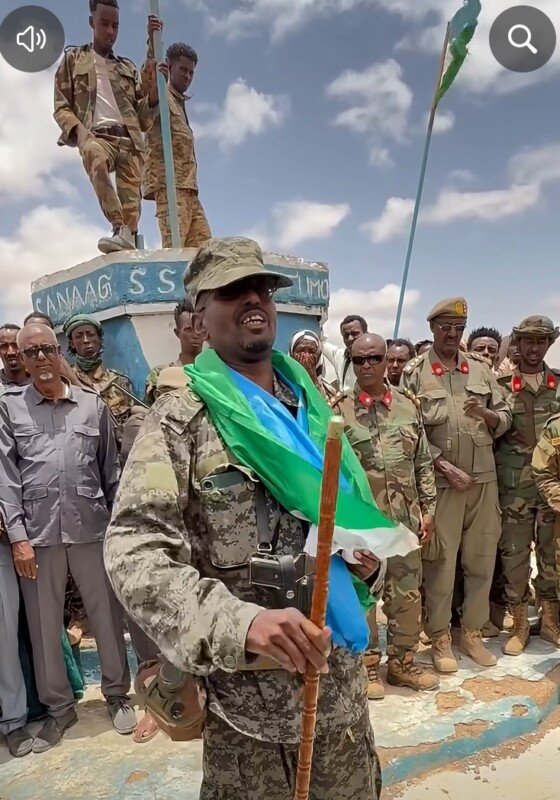
The National Civilian Protection Policy, a core theme of the discussions, has been developed through a series of high‑level consultations involving military commanders and government officials. The policy is intended to establish clear rules of engagement, protocols for urban operations, evacuation procedures, and coordination with local authorities and humanitarian actors. Integrating such safeguards is viewed as essential for sustaining military gains and undermining extremist propaganda that exploits allegations of misconduct.
The NIHRC has already been active in aligning Somalia’s human rights framework with international standards. The Commission recently engaged with the Ministry of Justice on prison conditions, detainee rights, and judicial reforms for vulnerable populations. It has also held discussions with international partners, including the European Union, to strengthen oversight, rule of law, and protection of vulnerable communities. The Commission has also launched capacity‑building workshops in Mogadishu to enhance its institutional capabilities.
The collaboration between the NIHRC and the Office of the Special Envoy represents a significant step toward embedding human rights accountability into Somalia’s stabilisation agenda. As the country continues to conduct military operations against Al‑Shabaab while advancing constitutional and political transitions, the integration of civilian protection and oversight mechanisms is expected to play a central role in sustaining peace and strengthening public confidence in state institutions.
Recommended Reading on ftlsomalia.com:
- Somalia Pushes for Enhanced EU Support on Human Rights and Governance
- Dr. Maryam Qasim Ahmed Elected Head of Somalia’s Human Rights Commission
- Somalia Has a New Special Presidential Envoy for Stabilization and Civil Protection
- Mogadishu Leaders Push Forward Civilian Protection Framework in Security Talks
- Justice Minister and Human Rights Commission Discuss Prison Reforms
- Human Rights Commission Launches Capacity Workshop in Mogadishu