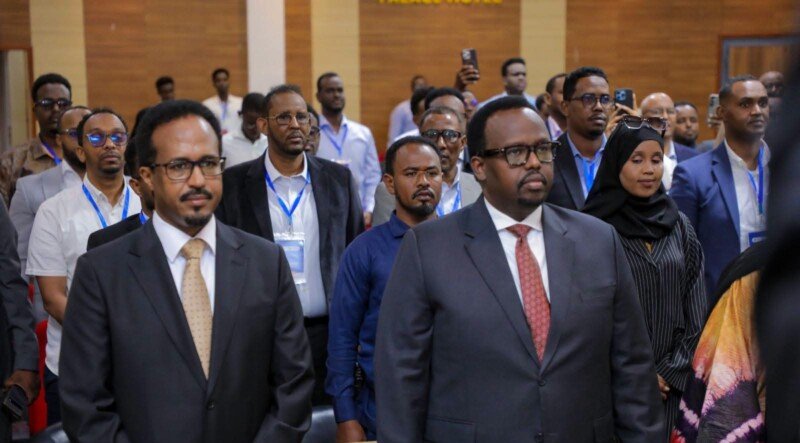

MOGADISHU: The Federal Ministry of Livestock, Forestry and Range has officially launched the Activating Climate Resilient Agricultural Livelihoods in Somalia (ACALS) project. The initiative will provide climate-resilient technologies and livelihood support for pastoralists, farmers, women, and youth across the country, with a particular focus on building long-term adaptation capacity in the face of recurring droughts and climate shocks.
The ACALS project is funded by the African Development Bank (AfDB) and will be implemented jointly by the World Food Programme (WFP) and the United Nations Office for Project Services (UNOPS) in Somalia. According to ministry officials, the initiative aims to strengthen resilience and empower 30,000 people across Hirshabelle and Puntland states through restored agricultural systems, climate-adapted infrastructure, and anticipatory action. Women and youth have been identified as key target groups for capacity-building and livelihood support.
The launch comes as Somalia continues to recover from one of the most severe drought cycles in recent history. The World Bank has supported disaster preparedness projects in the country, while the Somali Disaster Management Agency (SoDMA) has pushed for technology-driven early warning systems to protect communities from recurring natural disasters. The ACALS project complements these efforts by addressing the specific needs of livestock herders and smallholder farmers who are most vulnerable to climate variability.
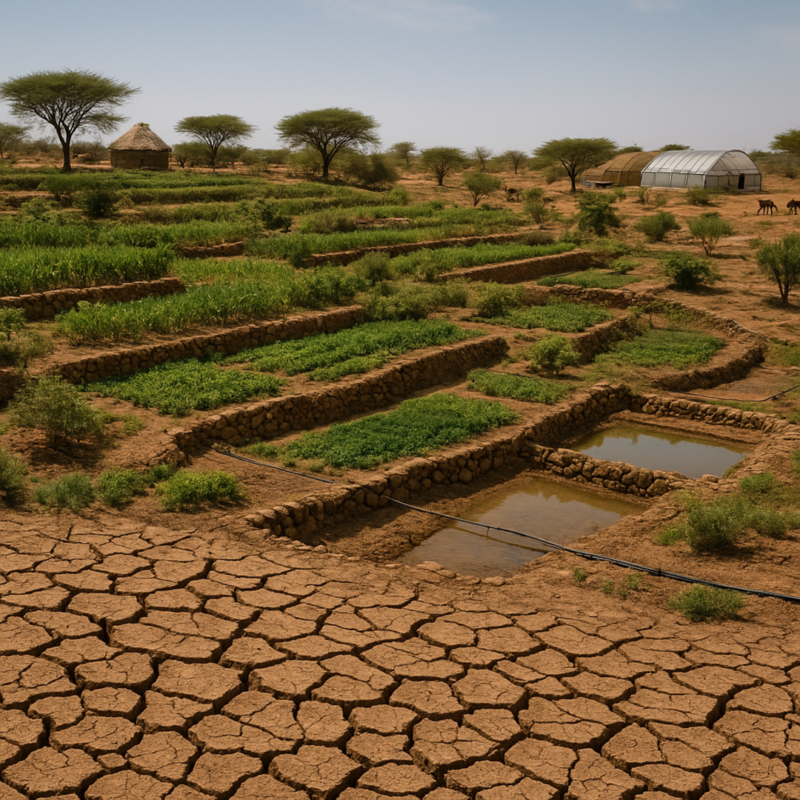
The Ministry of Livestock, Forestry and Range has emphasized that the project will prioritize climate-adapted infrastructure, including water catchment systems, drought-resistant fodder production, and rehabilitation of degraded rangelands. Somalia and the World Food Programme have previously formalized cooperation on climate resilience, and the ACALS project represents a concrete outcome of that partnership. The initiative also aligns with the government’s efforts to enhance access to climate finance through the Green Climate Fund and Adaptation Fund.
With the official launch, the ministry has signaled that implementation will begin immediately in the selected districts of Hirshabelle and Puntland. Government officials have called on local communities and international partners to support the rollout of activities, noting that the project represents a shift from emergency aid toward sustainable, community-led resilience.