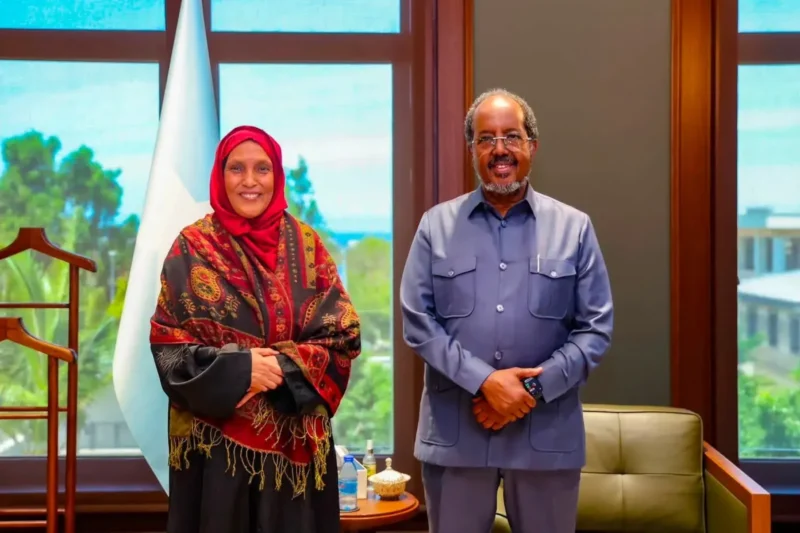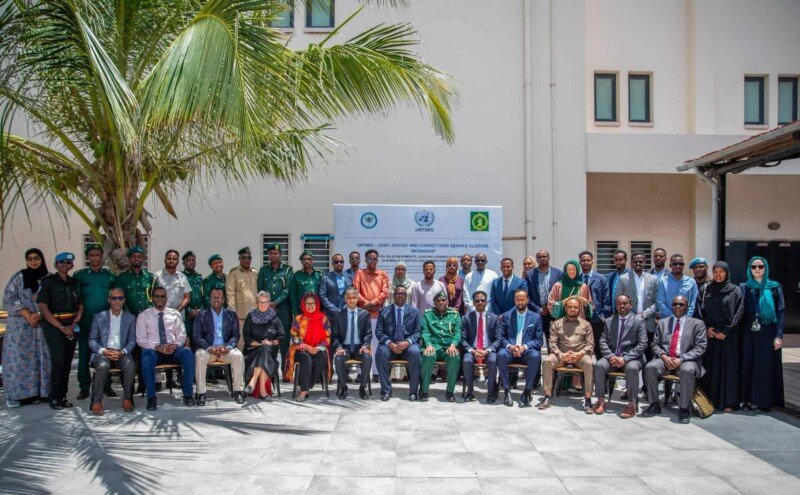

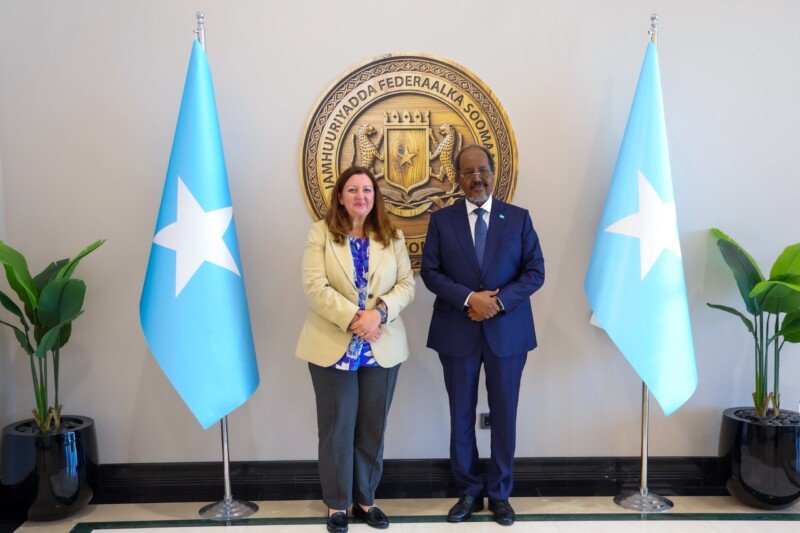
MOGADISHU — The United Kingdom has reaffirmed its long-term commitment to Somalia during the first visit to the country by the Minister for Development and Africa, Kirsty McNeill MP, who held talks with President Hassan Sheikh Mohamud on political dialogue, security priorities, and humanitarian challenges.
During her visit, the minister discussed Somalia’s political and security priorities and the need for progress towards a credible and sustainable transition to Somali-led security. She encouraged leaders from across Somalia to engage in constructive dialogue that strengthens national unity, advances political progress and helps build consensus on Somalia’s future, underlining that continued progress on political dialogue and a security transition will be critical to maintaining international confidence and support.
The minister reaffirmed that the UK remains a committed partner to Somalia, working alongside Somali leaders and communities in support of a more stable, secure and prosperous future for the Somali people.
The UK has been a key partner in Somalia’s security sector, with Defence Minister Ahmed Moallim Fiqi meeting British Ambassador Charles Nicholas King to discuss strengthening UK support for Somalia’s security institutions and ongoing military operations against Khawaarij militants. The UK has praised the Somali National Army for recent operational advances against Al-Shabaab and has reaffirmed London’s commitment to supporting Somalia’s security sector and wider state-building agenda.
Military cooperation between the two countries has also deepened, with the Commander of the Somali National Army, Brigadier General Ibrahim Mohamed Mohamud, holding talks with Colonel Andy Seddon, the Commander of United Kingdom Operations in Somalia, to enhance operational coordination and build the capacity of Somali forces. Colonel Seddon confirmed that the UK remains committed to sustaining its support for Somalia, particularly in security, stability and improving the capability of the Somali National Army.
Security Transition and UK Support
The UK stands ready to provide further support for Somali forces through UNSOS, which plays a vital role in sustaining Somalia’s hard-won security gains against Al-Shabaab. Progress on political dialogue between all Somali leaders and on plans for Somalia’s security transition will be important in confirming future support.
UK support to UNSOS provides essential non-lethal assistance, including food rations, tents, medical supplies and casualty evacuation. The UK has also donated modern counter-IED vehicles to the Somali National Army and handed over a newly constructed military training facility in Baidoa, which is expected to enhance the operational readiness and professionalism of the SNA.
The UK has also called on Somalia’s Federal Government and the Somaliland administration to strengthen dialogue and communication as a constructive path toward resolving outstanding matters. Ambassador King has emphasized that sustained engagement between the two sides is essential for making meaningful progress, underscoring London’s position that direct communication remains the most viable avenue for building trust and finding solutions.
The British Ambassador has also commended the resilience and vital contributions of Somali journalists, underlining the United Kingdom’s continued commitment to safeguarding media freedom and free expression. Ambassador King stressed that a vibrant and independent press remains central to Somalia’s democratic journey, highlighting the daily challenges Somali journalists face in informing the public, holding authorities accountable, and strengthening national dialogue.
British Ambassador Charles King, who has described Mogadishu as one of the world’s most dangerous diplomatic postings, has previously emphasized that the UK works in close coordination with the Federal Government of Somalia, the African Union, and the United Nations. These partnerships focus on neutralizing threats from extremist groups such as Al-Shabaab and ISIS, curbing maritime piracy, and providing essential support to the Somali people.
Critical Note
Minister McNeill’s visit underscores the UK’s continued commitment to Somalia at a critical juncture, as the country navigates a complex security transition with the winding down of UNSOM and the uncertain future of UNSOS following US funding cuts. The UK’s emphasis on political dialogue and Somali-led security reflects a recognition that military gains against Al-Shabaab must be accompanied by political progress.
However, the UK’s ability to maintain its current level of support may be constrained by its own domestic fiscal pressures and competing international priorities. The shift toward an “investment-driven” partnership, while a welcome move toward sustainability, will require tangible economic opportunities that are not yet fully developed.
As Ambassador King has noted, the gains made are fragile. The UK’s continued engagement is vital, but it must be accompanied by genuine progress on political dialogue and governance reforms to ensure that international support translates into lasting stability for the Somali people.