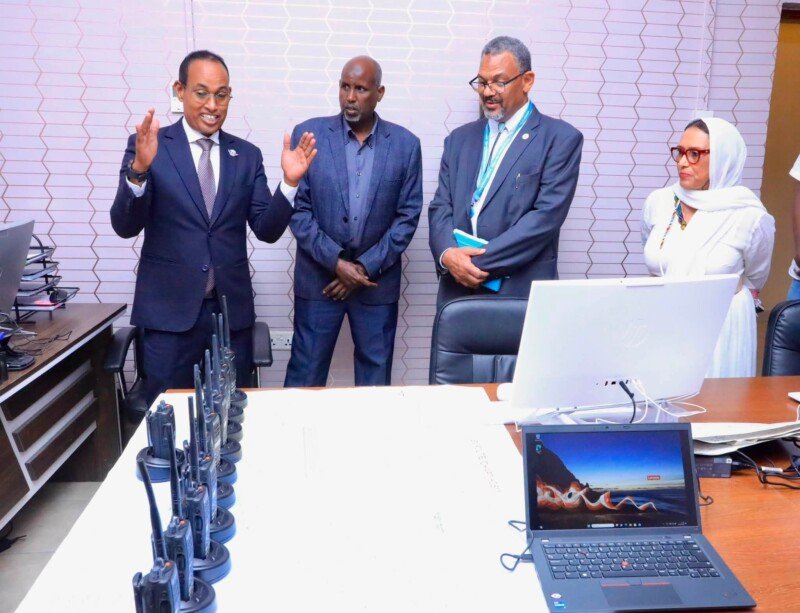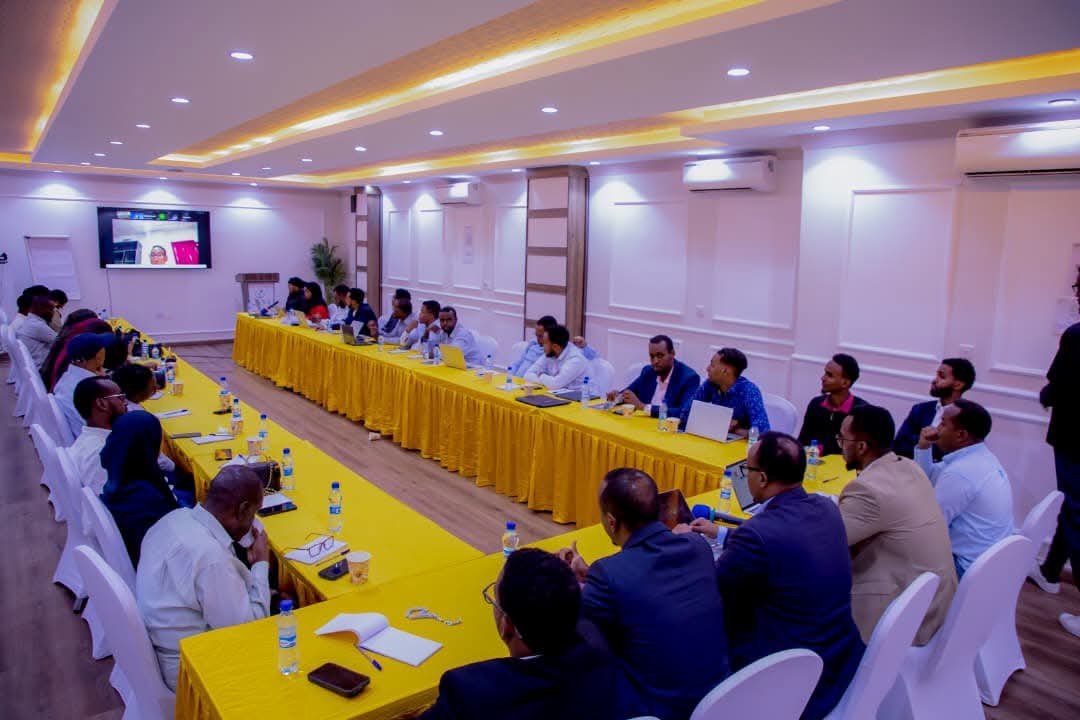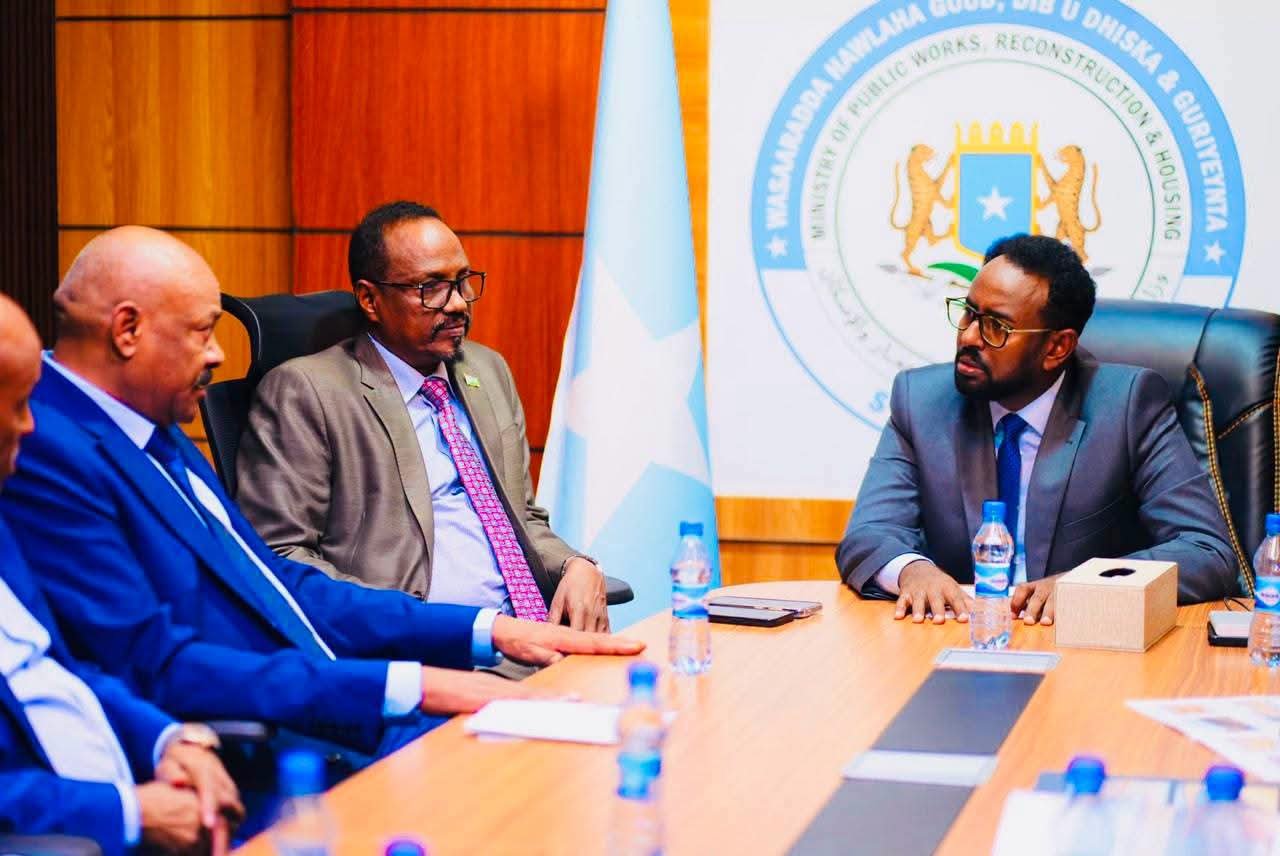

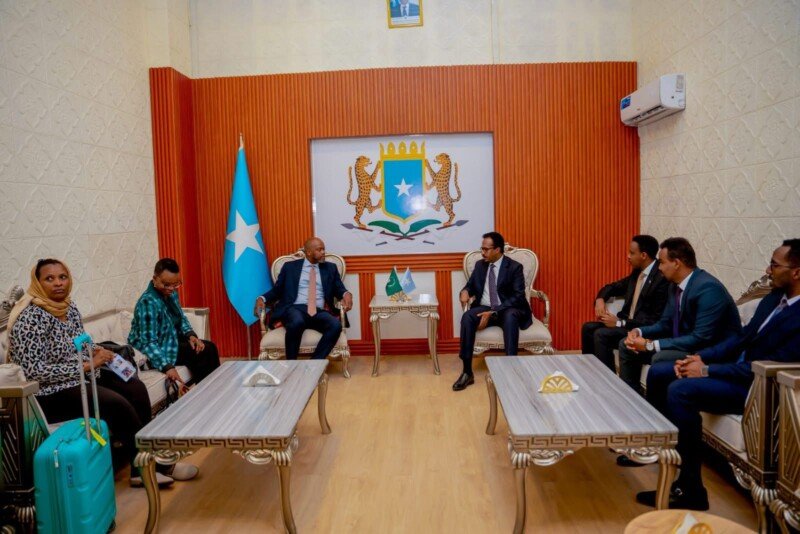
MOGADISHU — The Minister of Commerce and Industry, Ambassador Jamaal Mohamed Hassan, has officially welcomed the Secretary-General of the African Continental Free Trade Area (AfCFTA), Wamkele Mene, to Mogadishu at the start of a three-day official visit to Somalia from August 16 to 18, 2026.
The visit comes at a time when Somalia has taken important steps toward joining and benefiting from the African free trade area, which represents a market of more than 1.4 billion people across the continent. During his stay, the Secretary-General will hold meetings with senior Somali government officials and business leaders. The discussions will focus on the implementation of AfCFTA, the opportunities it opens for Somali businesses, and how Somalia can fully benefit from the continental market.
The visit also provides an opportunity for Somalia to further strengthen its role in Africa’s economic integration, promote trade and investment, and prepare Somali businesses for the opportunities available in the continent’s single market.
Somalia’s Minister of Commerce and Industry has previously joined African trade ministers at the Intra-African Trade Fair (IATF 2025) to push for faster AfCFTA implementation, including harmonizing trade regulations and reducing non-tariff barriers. Somalia joined the AfCFTA in 2023 and is currently aligning its trade policies with continental frameworks.
Somalia has also participated in the Second AfCFTA Business Forum in Marrakech, Morocco, where the Deputy Minister of Commerce and Industry engaged in high-level bilateral discussions with senior AfCFTA officials and trade ministers from across the continent to expand trade and investment cooperation.
Strengthening Regional Economic Integration
Somalia’s engagement with the AfCFTA is part of a broader effort to strengthen regional economic integration and create a more favourable environment for trade and investment. Somalia has been deepening its integration into the East African Community, with the country’s population of 17 million boosting the EAC’s market to more than 300 million people as the bloc seeks to expand free trade across the region.
Somalia’s financial integration efforts include a landmark agreement between the National Securities Exchange of Somalia and the Nairobi Securities Exchange to deepen cooperation in East Africa’s capital-markets ecosystem, promoting cross-border listings, investor access and regulatory harmonisation across the region.
Somalia’s private sector is also driving regional integration, with Hormuud Telecom signing a landmark agreement with GIZ to develop an inclusive digital economy in Somalia and the wider East African region, focusing on cross-border payment systems, digital literacy, and AI training.
Somalia has endorsed a multilateral transport MoU with Türkiye and African coastal nations to strengthen regional transport connectivity across Africa’s coastal corridor, aligning with the African Union’s Agenda 2063 and AfCFTA objectives.
Expanding Continental Engagement
Somalia has also been strengthening its engagement with regional organisations, participating in the Indian Ocean Rim Association (IORA) Senior Officials’ Meeting in New Delhi to discuss cooperation on trade, maritime security, and economic development.
Somalia’s Minister of Livestock attended the African Pastoral Markets Development Forum in Addis Ababa, where African governments moved to overhaul the continent’s pastoral livestock economy through a new policy and investment agenda aimed at creating an integrated African livestock market under the AfCFTA.
The East African Kiswahili Commission has reaffirmed its commitment to helping Somalia integrate Kiswahili into education, governance, and regional communication systems, describing the language as a strategic tool for deepening regional cooperation within the EAC.
Critical Note
While the visit of the AfCFTA Secretary-General represents a significant step toward Somalia’s integration into the continental free trade area, the country faces considerable challenges in fully benefiting from the agreement. Infrastructure deficits, limited productive capacity, and a weak regulatory environment remain significant obstacles to Somali businesses accessing regional and continental markets.
The government must prioritise investment in trade-related infrastructure, including ports, roads, and customs systems, while also building the capacity of Somali businesses to compete in a larger market. The private sector, which has been the driving force behind Somalia’s economic recovery, must be engaged in the implementation process to ensure that the benefits of AfCFTA reach Somali entrepreneurs and communities. The international community, while supporting trade reforms, must also continue to invest in Somalia’s productive capacity and institutional development to enable the country to fully benefit from regional integration.
Recommended Reading On ftlsomalia.com
- Somalia Joins African Trade Ministers in Pushing AfCFTA Implementation
- Somalia, Tanzania Pledge to Boost Trade and Investment Ties
- Kenya, Somalia Stock Markets Agree on Integration
- Hormuud Telecom and GIZ Sign Agreement to Boost East Africa’s Digital Economy
- Somalia Joins Second AfCFTA Business Forum in Marrakech
- Somalia’s Livestock Minister Attends African Pastoral Markets Forum