
KAMPALA – Uganda’s Chief of Defence Forces, General Muhoozi Kainerugaba, has called on regional military leaders to unite and innovate as the African Union Support and Stabilization Mission in Somalia (AUSSOM) faces an existential funding crisis, with the United Nations preparing to withdraw logistical support by the end of the year and Washington signalling it will not renew the mission’s mandate under the current framework.
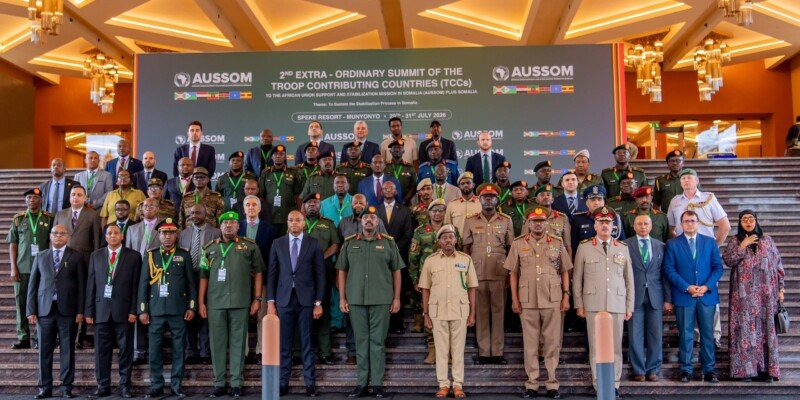
Speaking at the opening of the Extraordinary Meeting of Chiefs of Defence Forces from Troop-Contributing Countries (TCCs) at Speke Resort Munyonyo in Kampala, Gen. Kainerugaba warned that tightening financial constraints are already undermining frontline operations. “These are difficult circumstances, but they also call for our unity, creativity, and resolve,” he told regional military chiefs. “The future of our mission, and the sacrifice and progress we have all made together in Somalia, depend on the quality of the decisions we make at moments like this”.
A Mission in Jeopardy
The high-level military gathering comes at a critical juncture as the United Nations Support Office in Somalia (UNSOS) prepares to wrap up its logistical operations by December 31, 2026. Gen. Kainerugaba revealed that UNSOS has already slashed its financial and operational support to AUSSOM and the United Nations Guard Unit by 25 percent, forcing frontline commanders to adjust operational priorities and threatening the gains made against the Al-Shabaab insurgency over the last two decades.
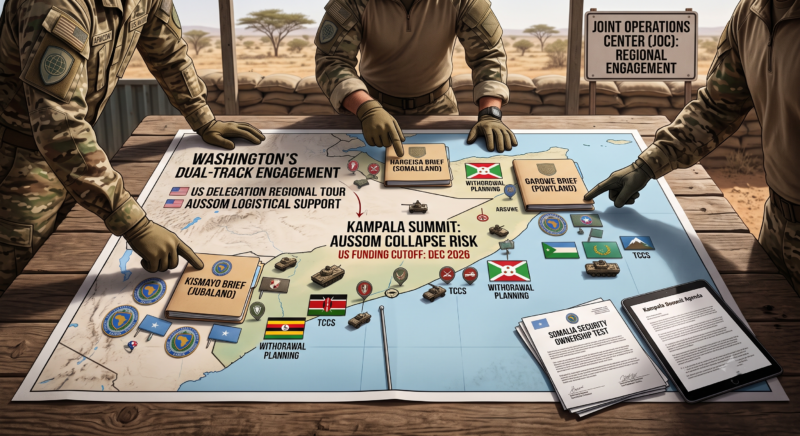
Adding to the mission’s uncertainty, the Ugandan army chief highlighted shifting international diplomatic dynamics, noting indications that the United States will not support renewing AUSSOM’s United Nations Security Council mandate if it remains tied to the existing UN support framework. Against this backdrop, Gen. Kainerugaba emphasized that African nations must shoulder full responsibility to fund and sustain peacebuilding efforts beyond December 2026. Without UNSOS, AUSSOM would lose critical logistical support, including food, water, fuel, transportation, medical services and casualty evacuation.
A Three-Day Summit to Chart the Future
The military chiefs’ technical deliberations form the first leg of a crucial three-day regional summit held under the theme, “To Sustain the Stabilization Process in Somalia”. The outcomes will feed into a comprehensive strategic report to be presented to Defence Ministers on July 30, which will guide regional Heads of State during the 15th Extraordinary Summit on July 31. The summit brings together military delegates, defence ministers, and heads of state from AUSSOM member countries, including Uganda, Burundi, Djibouti, Ethiopia, Egypt, and Kenya, along with host nation Somalia.
“As Chiefs of Defence Forces, we are responsible for providing clear military guidance and strategic direction at a time when the mission environment is changing,” Gen. Kainerugaba stated, urging delegates to approach discussions with frankness and a shared purpose.
Uganda, which provides the largest contingent of troops with approximately 5,000 to 6,000 soldiers stationed in the country, has already declared its intention to withdraw its forces after nearly two decades. The Kampala summit is a last-ditch effort to prevent a broader exodus of troop-contributing countries.
A Legacy of Sacrifice and Gratitude
Uganda was the first nation to deploy troops to Somalia under the original African Union Mission in Somalia (AMISOM) in 2007. Brigadier General Ibrahim Mohamed Mahmoud, Commander of the Somali National Armed Forces, expressed deep gratitude to the peacekeeping forces for their long-standing sacrifices in stabilizing Somalia.
Echoing Gen. Kainerugaba’s stance, the Head of the AU Peace Support Operations Division, Brigadier General Cheick Dembele, stressed that unbroken African solidarity remains vital as the African Union continues its commitment to build robust Somali security institutions capable of maintaining lasting peace.
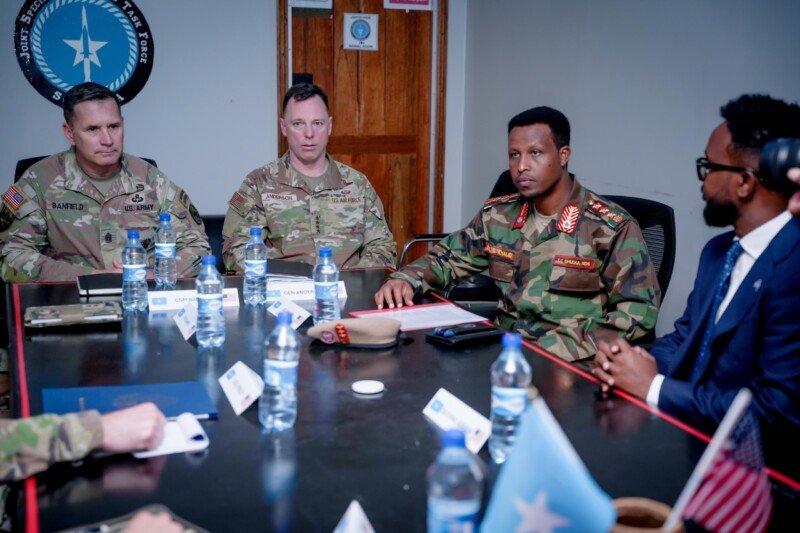
A US delegation has toured Jubaland, Puntland and Somaliland ahead of the summit, signalling Washington’s willingness to engage directly with regional administrations. The United States has contributed nearly $2 billion to the UN support mission in Somalia but has grown frustrated with what it views as insufficient progress by Somali leaders in assuming responsibility for their own security.
Way Forward
The Kampala summit represents a pivotal moment for Somalia’s security transition. The withdrawal of UN logistical support and the potential end of the UN mandate under the current framework place the burden squarely on African nations to sustain the peacekeeping mission. The EU has reaffirmed its support for AUSSOM, but even that is not enough to close the gap. The question is whether the continent can rise to the challenge, or whether the hard-won gains of the past two decades will be undone by a funding crisis that was foreseeable but left unaddressed. As Gen. Kainerugaba noted, the quality of the decisions made at this moment will determine the future of the mission and the progress achieved together in Somalia.
Recommended Reading On ftlsomalia.com
- Somalia Faces Critical Security Test as AUSSOM Mission Nears Collapse Without UN Support
- US Faces Critical Choice on Somalia Security Assistance as AUSSOM Mandate Nears Expiry
- As AUSSOM Teeters on the Brink, US Delegation Visits Regional Administrations Ahead of Kampala Summit
- Uganda Announces Intent to Withdraw Troops from Somalia After 19 Years
- EU Reaffirms Support for AUSSOM Amid Funding Talks