
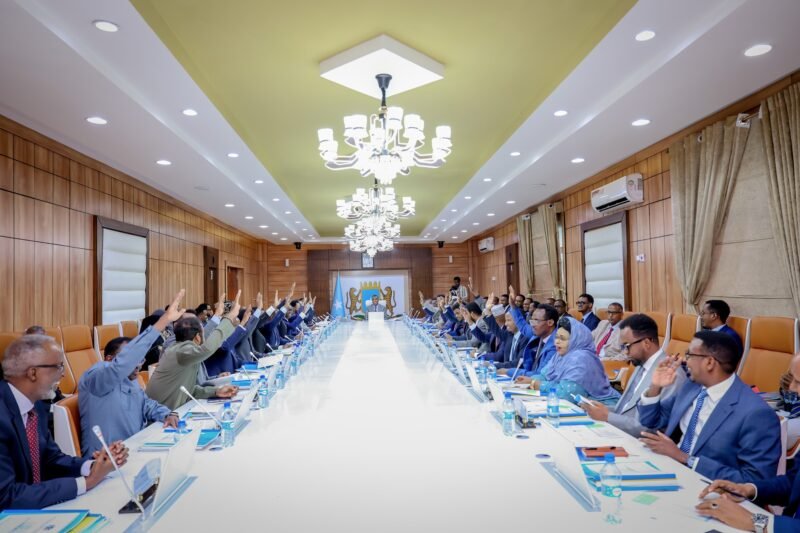
MOGADISHU — The Council of Ministers of the Federal Government of Somalia held its regular weekly meeting in Mogadishu on Thursday. The session, presided over by Second Deputy Prime Minister Jibriil Abdirashid Haji Abdi, focused primarily on national security updates and the approval of key development legislation.
Security Gains in Lower Juba
Substantial time was devoted to reviewing current operational conditions across the country. The Cabinet expressed strong appreciation for the Somali Armed Forces’ dedicated service in protecting citizens.
The Council particularly emphasized the significant victory secured yesterday in Kudhaa, where the National Army successfully repelled an attack by Al-Shabaab militants (referred to by the government as Khawarij ). Ministers noted that the security forces’ prompt and professional response eliminated the threat, safeguarding local residents and re-establishing stability in the Lower Juba region.
Policy Approvals
Shifting to legislative and development issues, the Council unanimously approved two documents vital for national connectivity and economic integration:
-
Maritime Safety:
The Cabinet endorsed a Memorandum of Understanding (MoU) on Port State Control for the Indian Ocean region. Presented by the Ministry of Ports and Marine Transport, the agreement aims to improve maritime safety standards and regulation. -
Postal Modernization:
The Council approved the National Postal Policy (2025–2030), developed by the Ministry of Communications and Technology. This strategic plan seeks to modernize the nation’s postal services and incorporate them into the digital economy over the next five years.
Governance and Dialogue
During the meeting, ministers also received detailed briefings on the Integrated Performance Management Policy, a framework aimed at enhancing efficiency throughout government institutions.
Additionally, the Council received updates on the National Consultative Political Conference. The “DanQaran” administration reaffirmed its dedication to this forum, stressing the importance of open dialogue to resolve political differences and advance the nation’s democratic initiatives.