
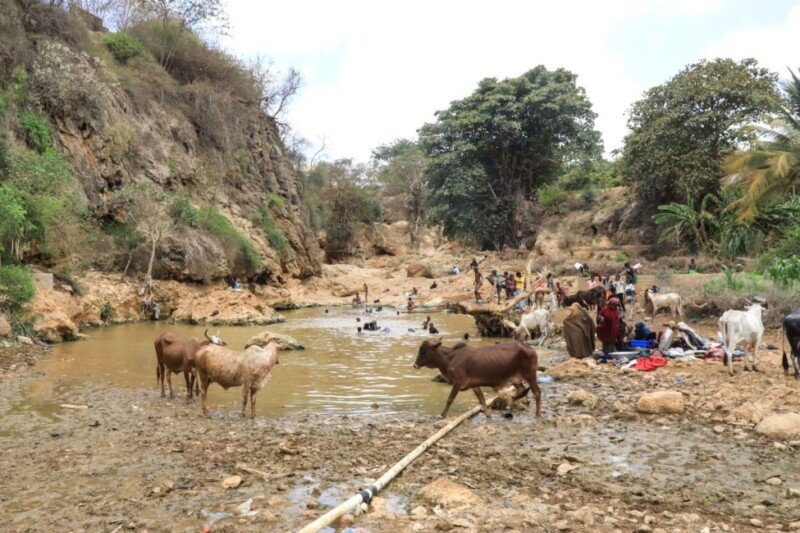
BAIDOA, Somalia – The Gerbooda waterfall in Baidoa, Southwest state of Somalia, has been reduced by drought to a muddy pool shared by people and livestock, a stark symbol of the worsening climate crisis gripping the Horn of Africa nation.
Nearly 62,000 people have been displaced by drought across five districts in Somalia since the beginning of the year. Data from the International Organization for Migration (IOM) shows that drought now accounts for three out of every four new displacements in the five most affected districts, a 22 per cent increase from last year that underscores the growing severity of climate shocks.
The Somali government has declared a national disaster as drought conditions continue to worsen across the country, with authorities warning that the situation is rapidly deteriorating and urgent humanitarian intervention is needed to prevent widespread famine.
Drought Projections Worsen
Even if the Gu rainy season (April–June) brings normal to above-normal rainfall, nearly 125,000 more people are projected to be displaced by drought in the second quarter of 2026, according to IOM’s Displacement Tracking Matrix.
“Drought is already forcing tens of thousands of people from their homes, and many more could be displaced in the months ahead,” said Manuel Pereira, Chief of Mission for IOM Somalia. “When water disappears, crops fail and livelihoods collapse, displacement becomes a last resort. Without swift action, drought will continue to uproot communities, deepen hunger and increase vulnerability across Somalia, particularly for the most vulnerable.”
An estimated 6.5 million people in Somalia are now facing crisis levels of hunger or worse, an increase of 1.7 million since January. Funding cuts from international aid partners have worsened the crisis, with just 29 per cent of humanitarian funding requirements met last year.
Hardest-Hit Districts
Baidoa, Dayniile, Kahda, Diinsoor and Doolow districts are among the hardest hit, as worsening drought conditions drive crop failure and the collapse of livelihoods, deepening hunger and placing increasing pressure on already limited infrastructure.
The Federal Government of Somalia has released the Gu 2026 Seasonal Climate Outlook, noting that the season is likely to bring wetter-than-average rainfall across much of the country, offering potential short-term relief from prolonged dry conditions. However, above-average air temperatures are expected, which may increase evapotranspiration, water demand, and heat stress, potentially reducing the effectiveness of rainfall for crop and pasture recovery.
Deyr Season Failure and Jilaal Dry Period
This surge in climate-driven displacement follows below-average rainfall during the 2025 Deyr season, compounded by an unusually harsh Jilaal dry period. Water sources have been depleted, grazing conditions have deteriorated, and agricultural production has been severely reduced across parts of the country, forcing thousands to leave their homes in search of water, food and assistance.
The 2025-26 drought is intensifying rapidly and is likely to be as severe and widespread as previous major droughts of 2022, 2017 and 2011, according to new data compiled by the Food and Agriculture Organization (FAO). It is estimated that 70–85 per cent of cropland in key producing zones is under severe drought, and the Deyr harvest is well below average.
Displacement to Urban Centers
IOM’s DTM projections indicate that drought-related mobility, particularly among pastoral and farming communities, is expected to increase further in the coming months if rainfall conditions do not improve. This raises concerns that displacement pressures may intensify across already vulnerable regions as displaced households move toward towns and cities where they hope to access assistance or basic services.
However, these urban centres are not capable of rapidly absorbing sudden population growth, leaving many newly displaced families to settle in informal or underserved areas where access to basic services and infrastructure remains extremely limited. “Many are moving to urban areas and displacement sites that are already overstretched, where access to shelter, water, and basic services remains limited,” IOM officials have warned.
Pastoral Communities Hit Hard
Findings from a recent IOM pilot assessment on pastoral mobility in the Gedo region highlight that many households reported travelling long distances to reach water points, while livestock losses linked to drought and extreme heat were widely reported during the monitoring period. When livestock herds decline, households lose their primary source of income, food and resilience against future shocks.
In Baidoa, the price of rice has risen from $0.75 per kilogram to $1 per kilogram, according to data tracked by humanitarian organizations, further straining the ability of displaced families to afford basic necessities.
Response Efforts and Funding Gaps
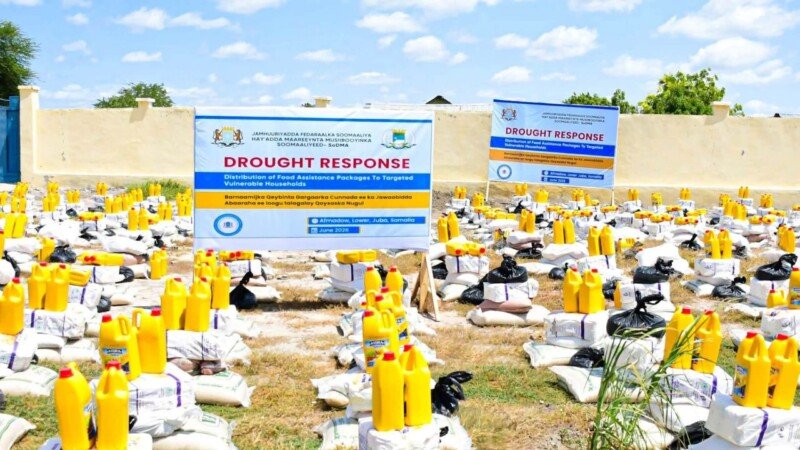
Through the Rapid Support Mechanism, IOM and its partners are able to respond quickly to emerging shocks and provide life-saving support to newly displaced families, including emergency shelter, water, non-food items and essential assistance.
A EUR 19 million European Union-funded humanitarian project has improved living conditions and expanded access to life-saving services for displaced populations across Somalia. The project, implemented between August 2023 and May 2026, delivered integrated humanitarian assistance across multiple regions, with over 90,000 people accessing basic shelter support and over 38,000 people gaining access to safe water for domestic use.
Yet the scale and pace of drought-driven displacement and food insecurity are rapidly outstripping available resources. UN agencies and partners have received just 14 per cent of the total funding requested for humanitarian aid in Somalia this year. IOM has determined there is an urgent need for $10 million “to save lives and provide a basic level of dignity to the most vulnerable.”
Looking Ahead
In displacement sites and informal settlements, families face overcrowded conditions, limited access to safe water and sanitation, and inadequate shelter, compounding already severe humanitarian needs. With drought expected to persist, IOM is calling for urgent and sustained support to address the growing impacts. Scaling up life-saving humanitarian assistance remains critical, alongside stronger investment in water infrastructure, drought resilience and climate-resilient livelihoods that help communities withstand future shocks.
Recommended Reading On ftlsomalia.com:
- Somalia Declares National Disaster as Drought Worsens Amid Humanitarian Crisis
- Somalia’s Drought Crisis Deepens: 6.5 Million Face Famine as Aid Funding Plummets
- Somalia Issues Gu 2026 Climate Outlook Warning of Flood Risks After Severe Drought
- Somalia Drought Likely as Severe as Previous Prolonged Dry Periods, FAO Warns
- Rising Food Prices and Malnutrition Threaten Somali Families as Drought Worsens
- EU-Funded Project Expands Access to Shelter, Water and Protection for Displaced Somalis