
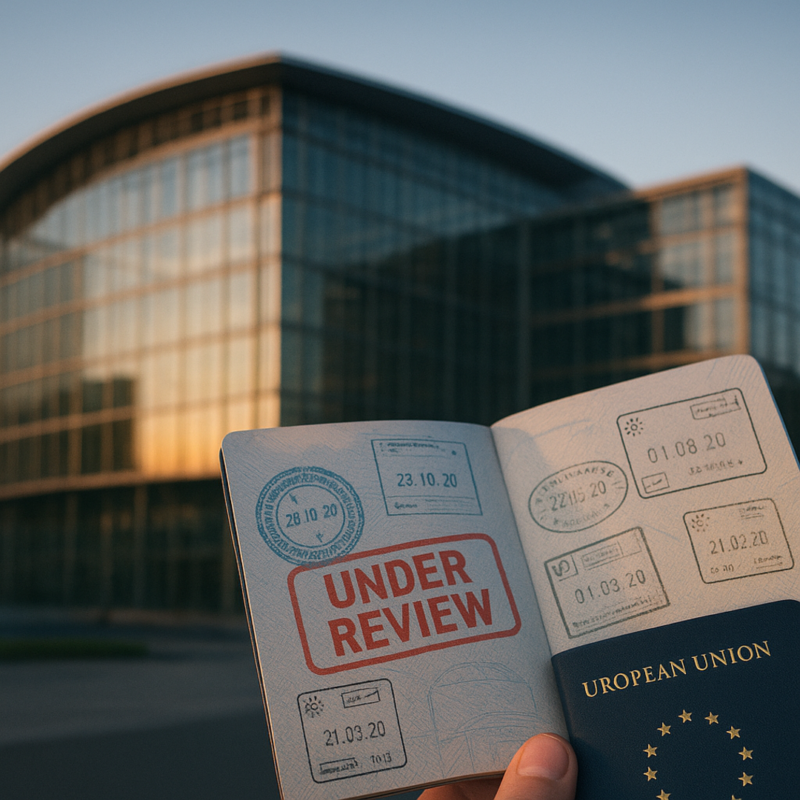
LUXEMBOURG – The number of Somali nationals arriving irregularly in the European Union more than doubled between 2024 and 2025, prompting EU interior and justice ministers to approve new restrictive visa measures against Somalia during a meeting of the Justice and Home Affairs Council on June 4, 2026, in Luxembourg.
According to official figures presented at the meeting, the irregular arrivals from Somalia increased by over 100 percent in a single year, with many journeys facilitated by sophisticated smuggling networks operating along migration routes to Europe. The ministers acknowledged that the surge in arrivals coincided with what they described as “inadequate cooperation” from Mogadishu on the readmission of Somali citizens whose asylum claims or residency applications have been rejected.
EU Ministers Cite Inadequate Readmission Cooperation
Home affairs ministers from the 27 member states exchanged views on the external dimension of migration, with a particular focus on Somalia. A statement from the Council noted that “the number of Somali nationals arriving irregularly in the EU more than doubled between 2024 and 2025, with many journeys facilitated by smuggling networks.” Against this backdrop, ministers provided guidance on the way forward regarding the Commission’s proposed restrictive visa measures.
The ministers also discussed how the EU could strengthen its response to migrant smuggling networks, both in Somalia and in transit countries. The Council emphasized that effective return mechanisms are necessary to maintain the credibility of asylum and immigration systems across the bloc.
Cyprus Deputy Minister Advocates Holistic Approach
Nicholas A. Ioannides, Deputy Minister for Migration and International Protection of the Republic of Cyprus, which holds the EU presidency, addressed the ministers on the issue. He mentioned the possibility of adopting “a holistic approach” aimed at promoting sincere cooperation and mutually beneficial strategic partnerships with third countries.
However, Ioannides pointed out that when a third country refuses to respond regarding repatriation and readmission, it is necessary to “use all the tools at our disposal, including restrictive visa measures,” reaffirming a stance of closure and rejection towards Somali migrants according to observers. The Deputy Minister also announced that ministers will mark the entry into application of the asylum and migration pact at a ministerial conference in Nicosia on June 12.
Pact Entry and Eurodac System Launch
The ministers took stock of the implementation of the asylum and migration pact ahead of its entry into application on June 12, following an update from the European Commission. They also reviewed progress on the roll-out of the new Eurodac system, which will become operational on the same day.
Ioannides stated: “On 12 June, the EU turns a new page in migration management. The launch of the pact on migration and asylum is an important achievement and demonstrates our ability to find common solutions to shared challenges.” He added that the pact will reinforce the EU’s capacity to monitor and manage its external borders and provide for more efficient migration and asylum procedures.
Switzerland’s Secret Deportation Plan Raises Alarms
The EU discussions come amid revelations about Switzerland’s secret plan to deport several Somali nationals on a special flight to Mogadishu, a move that has sparked concern among human rights groups. Swiss officials reportedly aim to negotiate clearance directly with Somali border authorities at Mogadishu airport, bypassing formal approval from Somalia’s government.
In a controversial move, the Swiss Federal Department of Justice and Police has issued temporary laissez-passer travel documents for Somalis lacking valid passports, effectively creating identity papers without Somalia’s consent. Human rights advocates have urged both governments to halt the deportations, warning that secretive flights violate international law and endanger individuals seeking protection from conflict and instability.
Germany’s Expanding Role in Somalia Migration
Germany has emerged as a key partner for Somalia on migration and immigration matters. Somalia has urged Germany to help train its immigration officers, with the Director General of Somalia’s Immigration and Citizenship Agency holding productive discussions with senior officials from Germany’s Ministry of Interior, the Police, and the Immigration Office. Germany has vowed to focus on capacity building and professional development for Somali personnel.
In a positive development for bilateral relations, Germany officially accepts the Somali diplomatic passport for entry and residence, with the decision appearing in the German federal gazette on December 1, 2025. The new policy enables holders of the Somali Diplomatic Passport to enter and stay in Germany with full official validity, signaling rising trust in Somalia’s improved travel documentation.
Somalia’s Diplomatic and Service Passports Gain European Recognition
Beyond Germany, several other European nations have formally recognized Somalia’s official travel documents. Somalia’s diplomatic and service passports are now recognized by Germany, Norway, Sweden, and the Netherlands, marking a significant advancement in bilateral relations between Mogadishu and these European capitals. The recognition enables holders of these official passports to enter and reside in those countries without additional visa restrictions, reflecting growing international confidence in Somalia’s reformed documentation standards.
This progress stands in contrast to the broader EU discussions on restrictive visa measures for ordinary Somali passport holders. While diplomatic and service passport holders enjoy facilitated access to several European nations, the proposed visa restrictions would primarily affect regular Somali citizens seeking to travel for business, education, or family purposes.
FTL Somalia Analysis: Proposed Visa Measures Unlikely to Sway Mogadishu
FTL Somalia analysts do not expect the proposed visa restrictions to serve as an effective “stick” to force the Federal Government of Somalia to adopt a different approach on readmission cooperation. The number of Somalis who currently have the resources to travel to Europe, meet all the requirements, and are using a regular Somali passport is negligible. For most Somali citizens, the prospect of obtaining a Schengen visa through regular channels remains out of reach due to income levels, documentation challenges, and existing barriers. Therefore, further tightening of visa rules is unlikely to create meaningful pressure on Mogadishu to change its stance on repatriation, as the vast majority of irregular Somali migrants in Europe did not arrive using regular passports or standard visa procedures in the first place.
Deepening Somalia-Germany Migration Cooperation
The migration dialogue between Mogadishu and Berlin continues to expand. Somalia and Germany have deepened cooperation on migration and citizenship, with discussions focusing on Germany’s potential support for strengthening Somalia’s immigration systems, including administrative frameworks, technical infrastructure, and personnel training.
Somalia and Germany have also deepened ties with renewed security project support, reflecting the broader strategic partnership between the two nations that extends beyond migration into security and governance cooperation.
Expulsion of European Nationals and Border Security
Migration cooperation is not a one-way street. Two European nationals from Poland and Germany were expelled from Somalia on the recommendation of the Attorney General’s office, which accused them of violating Somali laws. The expulsion demonstrates that Mogadishu is willing to take reciprocal action on immigration violations.
To strengthen its border management capabilities, Somalia has deployed the advanced Personal Identification Secure Comparison and Evaluation System (PISCES), a cutting-edge platform that enables real-time identification and screening of individuals entering or leaving the country using biometric data and secure database integration.
Digital Economy Partnership with German Agency
Beyond migration and security, Somalia and Germany are also cooperating on economic development. Hormuud Telecom and GIZ have signed an agreement to boost East Africa’s digital economy, focusing on expanding cross-border payment systems, enhancing digital literacy, and fostering AI training programs. The strategic partnership, signed in Mogadishu, aims to accelerate the East African Community’s digital transformation agenda.
Context of Somalia’s Multiple Crises
For years, Somalia has been grappling with multiple crises, including a severe civil conflict, the insurgency by the terrorist group Al-Shabaab, and a catastrophic humanitarian emergency linked to drought and climate change. Despite these challenges, the EU ministers’ decisions must be viewed within the context of the European Commission’s visa strategy, adopted by the executive in January 2026. The latter already includes restrictive and targeted visa measures to suspend, refuse, or restrict visa applications in response to hostile actions by third countries that undermine the EU’s security.
Schengen Governance and Visa Policy
During the same meeting, home affairs ministers discussed the overall state of the Schengen area following the presentation of the Commission’s 2026 State of Schengen Report. Several member states stressed the need to enhance the role of the common visa policy as the first line of security screening which contributes to effective border management.
The Council adopted conclusions on strengthening EU and national Schengen governance, representing a significant contribution to further enhancing the effectiveness, coordination and resilience of Schengen governance at both national and European Union level. The new Schengen cycle for 2026-2027 will continue to focus on accelerating the digitalisation of procedures and systems, strengthening the resilience of external borders and effectiveness of returns, and increasing internal security.
Impact on Somali Citizens
If implemented, the proposed restrictive visa measures would likely increase travel costs, administrative requirements, and waiting times for Somali applicants, potentially reducing mobility between Somalia and Europe. Somali citizens including students, business travelers, professionals, and individuals with family ties in European countries would be most affected.
The Federal Government of Somalia has not yet publicly responded to the latest EU discussions. The approach presented by ministers on June 4 suggests a further tightening of visa measures beyond the existing framework adopted in January 2026.
The Federal Government may need to accelerate its cooperation with EU member states on repatriation procedures to avoid the proposed sanctions. However, as FTL Somalia analysts note, the negligible number of Somalis who can access regular visa channels means the measures may have little practical impact. The recent deployment of the PISCES border system and ongoing training partnerships with Germany suggest that Somalia is taking steps to modernize its immigration framework, which could address some European concerns.
Recommended Reading On ftlsomalia.com:
- Switzerland’s Secret Plan to Deport Several Somalis Raises Human Rights Alarm
- Somalia Urges Germany to Help Train Its Immigration Officers
- Germany Recognizes Somali Diplomatic Passport for Entry and Residence
- Somalia, Germany Deepen Ties with Renewed Security Project Support
- Somalia, Germany Deepen Cooperation on Migration and Citizenship
- Two European Nationals Expelled from Somalia
- Hormuud Telecom and GIZ Sign Agreement to Boost East Africa’s Digital Economy
- Somalia Deploys Advanced Border Security System