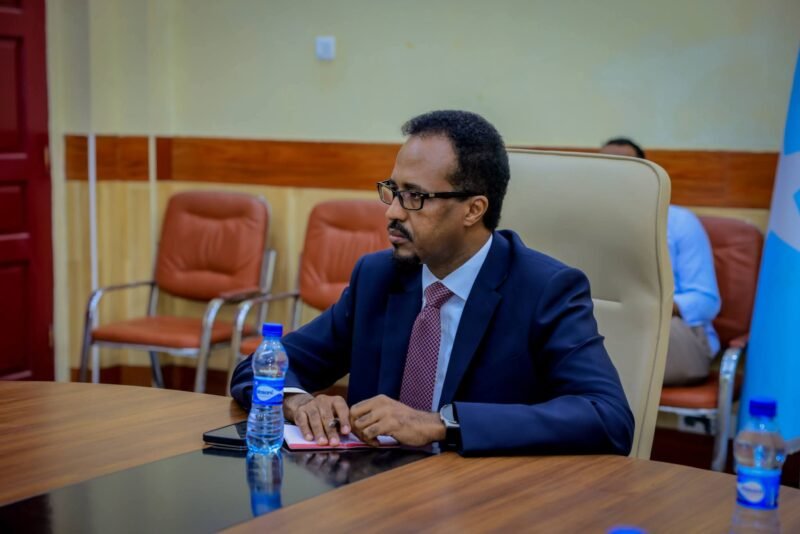

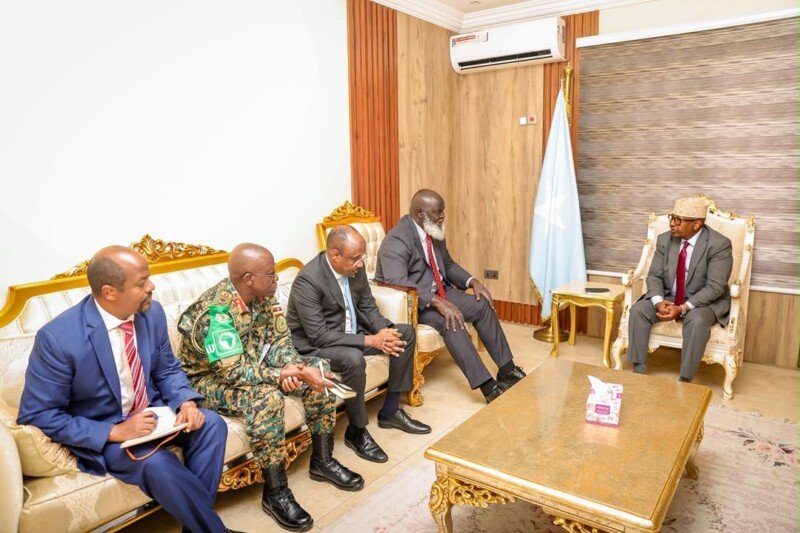
MOGADISHU – Somalia’s Minister of Defence, Ahmed Moallim Fiqi, has held talks with the African Union Special Representative for Somalia and Head of the African Union Support and Stabilization Mission in Somalia (AUSSOM), Ambassador El Hadji Ibrahima Diene, to reinforce security cooperation and counter-terrorism efforts as Somalia continues its transition toward full security responsibility.
The meeting, which took place at the Ministry of Defence headquarters in Mogadishu, focused on strengthening coordination between Somali security institutions and AUSSOM. Minister Fiqi expressed gratitude for AUSSOM’s continued support and praised the close cooperation between the Ministry and the African Union mission. Ambassador Diene reaffirmed AUSSOM’s commitment to supporting Somali-led security initiatives and stabilisation efforts across the country.
A Transition at a Critical Juncture
The meeting comes at a pivotal moment for Somalia’s security transition. AUSSOM officially began its mandate in early 2025, succeeding the African Union Transition Mission in Somalia (ATMIS), reflecting a shift in AU strategy from direct combat support to a more targeted approach focused on training, advising, and institutional capacity building for Somali security forces. The UN Security Council has extended AUSSOM’s authorization through December 31, 2026, while the United Nations Transitional Assistance Mission in Somalia (UNTMIS) is set to conclude its operations by October 31, 2026.
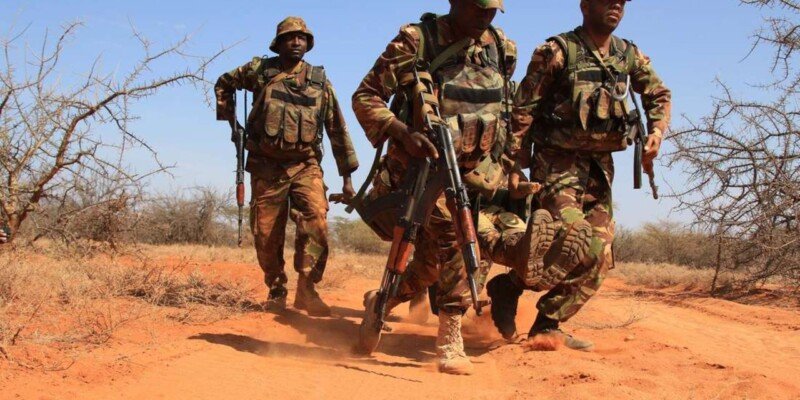
AUSSOM has reaffirmed its dedication to Somalia’s peacebuilding and stabilization initiatives, emphasising the value of African unity, solidarity and collective action. The mission has also reviewed its operations to strengthen support for Somalia’s security transition, reaffirming the African Union’s commitment to protecting security gains and supporting the gradual handover of responsibilities to Somali institutions.
A Pattern of Unfulfilled Promises
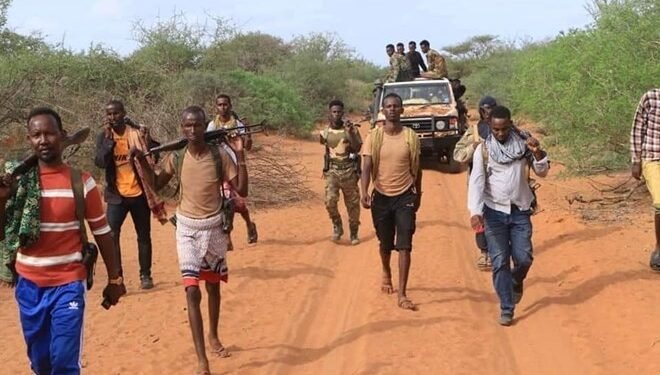
While the meeting between Minister Fiqi and Ambassador Diene reflects ongoing cooperation, it also highlights the persistent gap between rhetoric and reality in Somalia’s security sector. Minister Fiqi has previously briefed parliament on security gains, reporting that 220 precision airstrikes have been carried out since February, eliminating 868 militants, including 52 senior operatives. Yet despite these tactical successes, Al-Shabaab continues to control large areas of southern and central Somalia and has repeatedly demonstrated its ability to exploit political divisions and weak state institutions.
Discussions between AUSSOM and Somali officials have focused on reinforcing coordination and securing predictable and sustainable funding for the mission, a concern that has shaped recent African Union and United Nations consultations. However, funding shortfalls continue to plague the mission, with the African Union projecting a need for about $190 million in 2025 to facilitate the shift from ATMIS to AUSSOM. Civil society monitors have noted the impact of funding shortfalls, from unpaid troops to interrupted aid for at-risk groups.
Minister Fiqi has inaugurated a Defence Board to unify security operations and advance force reform, launching a strategic platform designed to strengthen defence governance and enhance coordination among the nation’s security institutions. Yet the gap between institutional ambition and operational capacity remains wide. The success of these reforms will depend on whether the government can move beyond meetings and declarations to deliver tangible improvements in security and governance.
A Relationship of Convenience, Not Transformation
The meeting between Minister Fiqi and Ambassador Diene is the latest in a series of engagements that underscore the transactional nature of the Somalia-AU relationship. Minister Fiqi has previously conducted a strategic tour of AUSSOM’s Sector 3 headquarters in Baidoa, praising the critical logistical and combat support provided by AUSSOM units. The Ministry of Internal Security and AUSSOM have vowed complete dedication to freeing the nation from the Al-Shabaab insurgency, following a series of high-level diplomatic meetings and successful frontline offensives.
However, these engagements have not translated into a coherent strategy for long-term stabilisation. The AU’s shift from direct combat to advisory and logistical support reflects a recognition that Somali forces must lead, but it also raises questions about whether Somali institutions are ready to assume that responsibility. The lack of a clear roadmap for the security transition, combined with persistent funding gaps and political fragmentation, suggests that the partnership between Somalia and the AU, while necessary, is far from sufficient.
Way Forward
The meeting between Minister Fiqi and Ambassador Diene represents a step toward strengthening security cooperation, but it is far from a solution. Without sustained investment, genuine political will, and a coherent strategy for the security transition, the partnership between Somalia and the AU risks becoming another exercise in documentation rather than transformation. As Somalia continues its long and uneven journey toward stability, the challenge is not only to secure international support but to build the institutions and governance structures that will allow Somalis to secure their own future.
Recommended Reading On ftlsomalia.com
- Somali Defence Minister Inspects AUSSOM Base in Baidoa
- Somalia and AUSSOM Leaders Deepen Security Cooperation
- AUSSOM Reaffirms Support for Somalia’s Peace
- Somalia, AU Reaffirm Commitment as AUSSOM Takes Root
- Defence Minister Inaugurates Strategic Board
- Somali Defense Leaders Brief Upper House on Security Gains