
MOGADISHU — The Ministry of Endowments and Islamic Affairs of the Federal Government of Somalia has submitted the draft bill for the establishment of the Somali Scholars Council to the House of the People of the Federal Parliament, initiating the constitutional approval process.
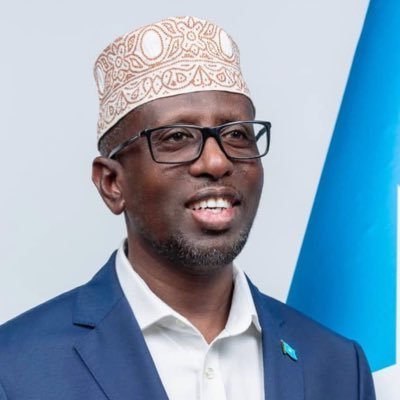
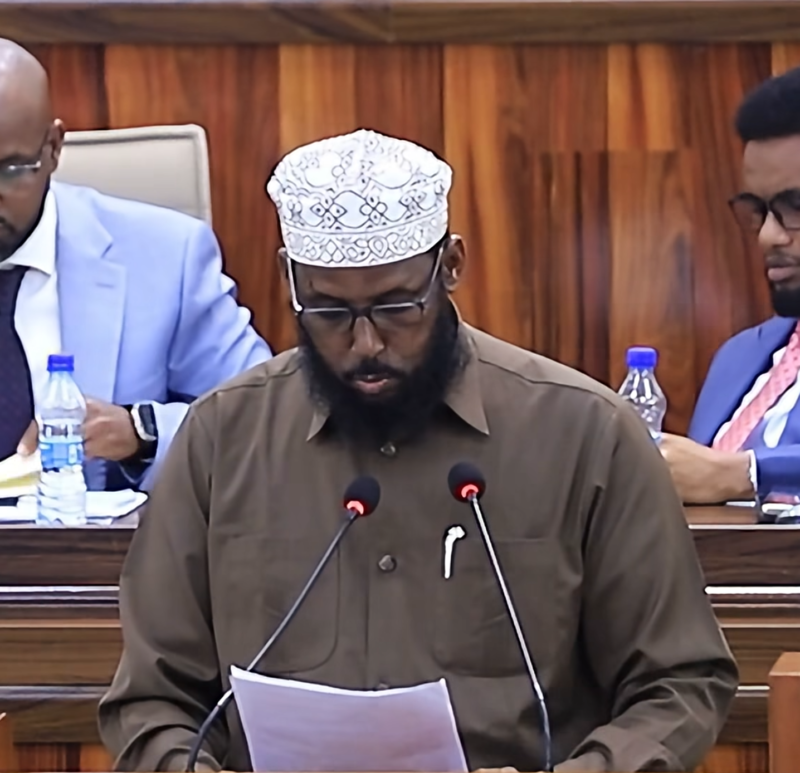
Minister of Endowments and Islamic Affairs, Sheikh Mukhtar Robow Ali, presented the bill to the House of the People, stating that the establishment of the Somali Scholars Council is essential for uniting Somali religious scholars, strengthening their role in society, and enhancing consultation between the government and the scholars.
The draft bill consists of three chapters and 30 articles, outlining the legal foundation, structure, duties, and functions of the Somali Scholars Council. The Ministry stated that the purpose of the draft law is to establish a national framework with legal and accountability mechanisms, working in the interest of the nation, religion, and social guidance.
During the parliamentary debate, Minister Robow emphasized that the Somali Scholars Council could play a vital role in strengthening unity among scholars, promoting peace and reconciliation, and resolving community disputes. He also stated that the Council could contribute to religious awareness and social ethics, and prevent the misinterpretation of religion and extremist ideology.
The Union of Somali Islamic Scholars Councils has previously called on the federal government to halt actions that deprive citizens of their property rights, amid growing complaints over land disputes, demolitions, and forced evictions in parts of the capital. The scholars held a meeting in Mogadishu to address numerous complaints from residents who said their properties were being demolished or contested despite holding legal ownership documents.
The draft bill underwent a consultative and legal review process before being submitted to Parliament. The Ministry of Endowments and Islamic Affairs has now requested the House of the People to pass the legislation. The Minister noted that the approval of this law is crucial for strengthening the role of Somali scholars, promoting peace, social cohesion, and cooperation between the government and religious scholars.
Role of Somali Scholars in National Affairs
The third National Scholars Conference, organized by the Federal Ministry of Endowments and Religious Affairs, brought together over 300 Somali scholars from throughout the country and from Africa, Europe, and the United States. Conference discussions focused on essential national issues, such as ongoing development efforts, security conditions in the capital, and the Somali National Army’s sustained victories in campaigns against Al-Shabaab. Participants also examined the threats from clan disputes and stressed the importance of fostering greater social cohesion and religious leadership.
Somali scholars have consistently been at the forefront of national humanitarian efforts. The Somali Disaster Management Agency (SoDMA) Commissioner, Mahamuud Moallim Abdulle, held a strategic meeting with leaders from the Umbrella of Somali Islamic Scholars to discuss the worsening drought crisis. The religious delegation was headed by the Umbrella’s Chairman, Sheikh Adan Moallim Sugow. Discussions revolved around how the Ulama could take a more active role in increasing public awareness, promoting social unity, and organizing community-based humanitarian actions. Commissioner Abdulle encouraged the scholars to lead a nationwide initiative of “spiritual and social mobilization.”
During the foundation stone ceremony for the Daarul Fatwa Center, the government highlighted its commitment to fostering unity and supporting Somali scholars through various religious initiatives. The Daarul Fatwa Center is expected to play a pivotal role in guiding Islamic discourse and promoting cohesion among the Somali people.
Expanding Religious and Cultural Cooperation
Minister Robow has also deepened religious and historical ties with Djibouti, meeting with President Ismail Omar Guelleh to strengthen cooperation in the fields of Awqaf and Zakat administration. Robow emphasized Somalia’s intent to study and adapt Djibouti’s successful model in managing religious endowments and charitable funds. President Guelleh reaffirmed Djibouti’s commitment to standing alongside Somalia in its ongoing journey toward stability and development.
Robow’s official visit to Djibouti was aimed at reinforcing the long-standing religious and cultural ties between the two Horn of Africa nations. Discussions centered on building institutional partnerships between Somalia’s religious councils and Djibouti’s Ministry of Religion, sharing experiences on promoting moderate Islamic teachings, countering extremist ideologies, and managing public endowments to support community development.
Strengthening Religious Cooperation with Türkiye
Somalia and Türkiye have also deepened ties on religious affairs and education, with Minister Robow welcoming a high-level delegation from Türkiye’s Diyanet Foundation. The discussions focused on bolstering bilateral cooperation in the areas of Islamic endowments (Waqf), institutional capacity-building, and educational opportunities for Somali scholars. Both sides reaffirmed their shared commitment to enhancing the management and revitalization of Waqf institutions across Somalia.
In August 2026, Minister Robow held a high-level meeting with the President of Turkey’s Presidency of Religious Affairs (Diyanet), Prof. Dr. Safi Arpaguş, in Ankara to expand bilateral cooperation in Islamic education, religious endowments, and institutional capacity-building. The meeting, which took place at Diyanet’s headquarters, focused on strengthening institutional ties, including Turkish support for the establishment and development of Somalia’s Zakat Fund and Waqf system. Somali Ambassador to Turkey, Fatxudiin Cali Maxamed, also attended the meeting.
A central focus of the talks was Turkey’s continued support for the establishment of Somalia’s Zakat Fund and the development of a national Waqf system. Minister Robow has previously noted the need to establish an Endowments Agency and a Zakat Registry Fund, as well as to train experts and ministry staff to manage these institutions. According to officials, the two sides agreed to expand collaboration in Islamic education, religious services, institutional development, and public awareness programmes, while strengthening technical cooperation to support the establishment and management of Somalia’s Zakat Fund and Waqf institutions.
President Arpaguş reaffirmed Diyanet’s commitment to supporting Somalia’s priority programmes in religious affairs, while Minister Robow welcomed the expanded partnership, saying it would help strengthen the country’s religious institutions and advance reforms within the Ministry of Endowments and Islamic Affairs.
The talks also reinforced cooperation between the two institutions ahead of the implementation of a Memorandum of Understanding designed to provide a formal framework for collaboration in religious affairs, Islamic education, training, and institutional development. Recently, Somalia’s Council of Ministers approved a draft bill to ratify the agreement between Diyanet and the Ministry of Endowments and Islamic Affairs. The legislation is expected to be submitted to parliament for consideration before the MoU enters into force. The partnership with Diyanet is expected to provide Somalia with access to Turkey’s experience in administering religious institutions and charitable endowments, while helping develop sustainable mechanisms to support education, social welfare, and community development.
The latest agreement reflects the expanding relationship between Somalia and Turkey, which has broadened beyond humanitarian assistance and security cooperation to include education, institutional development, maritime affairs, and economic investment. Turkey has been one of Somalia’s most trusted international partners, investing heavily in the country’s security sector and providing multifaceted assistance that has significantly contributed to stabilisation efforts.
Pilgrimage and Religious Observance
The Federal Government of Somalia bid farewell to the first group of Somali pilgrims departing for the annual Hajj pilgrimage in Saudi Arabia in May 2025. A total of 431 pilgrims left Mogadishu’s Aden Adde International Airport, marking the beginning of that year’s Hajj journey for Somali worshippers. “This is a sacred journey, and we ask Allah to accept their Hajj and bring them back safely,” said Minister Robow at the time. A total of 11,500 Somalis were expected to perform Hajj that year.
Minister Robow also met with the Chairman of the Muslim Scholars Association in Saudi Arabia, Sheikh Muhammad Al-Issa, in Makkah to discuss the need to explore cooperation between Somali scholars and the MSA.
Critical Note
The submission of the draft law for the Somali Scholars Council to Parliament represents a significant step toward institutionalizing the role of religious scholars in Somalia’s governance framework. However, the bill’s success will depend on how it is implemented and whether it genuinely represents the diversity of Somali religious scholarship.
While formalizing the role of scholars could contribute to social cohesion and counter extremism, there are risks that the council could become a government-controlled body that marginalizes independent religious voices. The government must ensure that the council is established through a transparent process that includes broad consultation with scholars from different regions and schools of thought.
Furthermore, the effectiveness of the council will depend on whether it can maintain its independence and credibility. As the Union of Somali Islamic Scholars has demonstrated in its call to halt land grabs and protect property rights, religious leaders have an important role in holding the government accountable and advocating for justice. If the council is perceived as a government tool, it may struggle to gain the trust of Somali communities. The government must also ensure that the council has the resources and authority needed to fulfill its mandate effectively.
Minister Robow’s background as a former Al-Shabaab leader who later renounced the group has drawn both interest and scrutiny. His leadership of the ministry has introduced administrative changes aimed at streamlining Hajj operations and improving transparency, but questions remain about the ministry’s ability to reform deeply entrenched practices. The international community and Somali citizens alike will be watching to see whether the partnership with Türkiye translates into tangible improvements in the governance of religious institutions and the delivery of services to communities in need.
Recommended Reading On ftlsomalia.com
- Religious Leaders Call on Government to Halt Land Grabs and Protect Property Rights
- Minister Robow and Diyanet Chief Agree to Expand Islamic Education and Waqf Development
- Third National Scholars Conference Addresses Security, Development and Social Unity
- Scholars Mobilize for National Drought Response
- Somalia, Türkiye Deepen Ties on Religious Affairs and Education
- Somalia, Djibouti Deepen Religious and Historical Ties