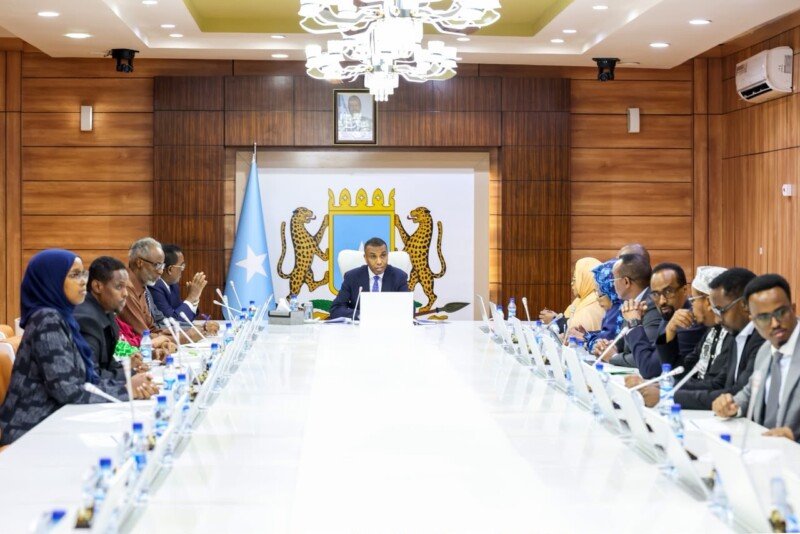

MOGADISHU — The African Development Bank (AfDB) has officially launched a new phase of the Africa Disaster Risk Financing Programme (ADRiFi) in Somalia, a project worth approximately $19 million aimed at strengthening the country’s resilience to climate-related disasters .
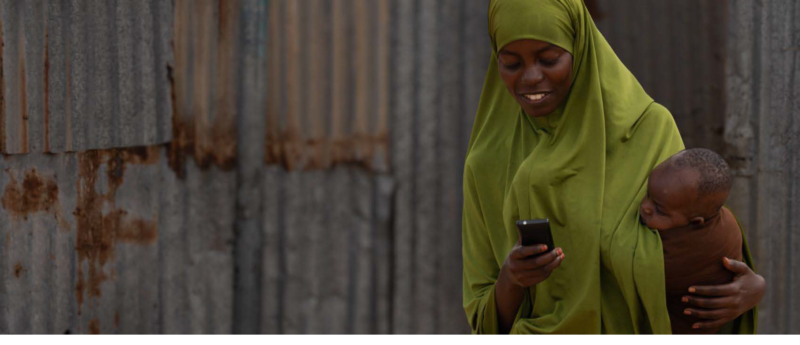
The project, implemented in partnership with the Somali Disaster Management Agency (SoDMA) and the Ministry of Finance, focuses on enhancing Somalia’s capacity to prevent and manage the impacts of climate change. ADRiFi specifically supports preparedness and mitigation efforts against recurring droughts, floods, and other climate-related disasters that severely affect Somali pastoralist and farming communities .
This launch builds on Somalia’s earlier participation in the ADRiFi programme. In June 2024, Somalia joined a $35 million climate disaster risk financing project alongside Comoros, Djibouti, and South Sudan . During the AfDB’s 2024 Annual Meetings in Nairobi, Somalia secured $18 million from that project to tackle droughts and floods and boost agricultural production .
The African Development Bank stated that this investment is part of broader efforts to build resilience in communities and infrastructure, enabling Somalia to better respond to future climate risks. The project will be jointly implemented by AfDB, SoDMA, and the Ministry of Finance, with further details on funding schedules, priority areas, and the number of direct beneficiaries expected to be announced.
Expanding Climate Resilience Investments
The ADRiFi project is part of a growing portfolio of climate and resilience investments in Somalia. In December 2025, the African Development Fund approved a $9.63 million grant under the Activating Climate-Resilient Agricultural Livelihoods in Somalia (ACALS) project . The financing supports investments in improved water access, climate-smart agriculture, and more robust disaster preparedness at the community level . The World Food Programme provided an additional $2.2 million in in-kind support, bringing the total project value to $11.83 million .
The ACALS initiative, implemented by WFP and UNOPS, directly reaches 180,000 people and indirectly benefits another 300,000, including women, youth, and pastoral households in Hirshabelle and Puntland . “This initiative is a practical response to the challenges facing the country,” said Pascal Sanginga, the Bank’s Agriculture Sector Manager for East Africa .
In February 2026, the AfDB approved a $24.45 million grant to improve access to clean water and sanitation in Somalia, benefiting more than 500,000 people in Dollow, Qardho, and South Galkayo . The Urban Water Supply and Sanitation Project will supply and install 40 km of transmission and distribution pipelines, drill or rehabilitate 42 boreholes, and construct four water treatment plants .
The AfDB has also partnered with UNHCR and the federal government on the $20.55 million Sustainable Urban Resilience for Displaced and Host Communities in Doolow (SURDHT) project . The project aims to improve living conditions for internally displaced persons in four urban camps in Doolow, Gedo region, through better housing, water, sanitation, and livelihood opportunities .
Beyond AfDB financing, Somalia has also received significant climate funding from other sources. In October 2024, the Green Climate Fund approved $95 million for the “Ugbaad” project, marking the largest GCF climate investment led by FAO . The seven-year project aims to enhance climate resilience in Somalia’s agricultural sector, benefiting over two million people .
Somalia has also benefited from climate insurance payouts. In March 2025, the Federal Government received a $1,455,710 insurance payout from the African Risk Capacity Group to support drought-affected communities .
Critical Note
The launch of the $19 million ADRiFi project and the broader portfolio of climate investments represent a significant commitment to building Somalia’s climate resilience. The African Development Bank’s support for early warning systems, disaster preparedness, and community resilience is welcome, particularly given the country’s vulnerability to recurrent droughts and floods.
However, the effectiveness of these investments will depend on whether they translate into tangible improvements on the ground. Past disaster response efforts have been hampered by limited coordination, inadequate resources, and weak institutional capacity. The Somali government must ensure that this funding is used transparently and effectively to reach the communities most at risk.
The government must also prioritize the implementation of early warning systems and ensure that vulnerable communities have access to timely information about impending disasters. Without sustained commitment and accountability, the risk is that these projects, like many before them, will not deliver the intended benefits for ordinary Somalis.