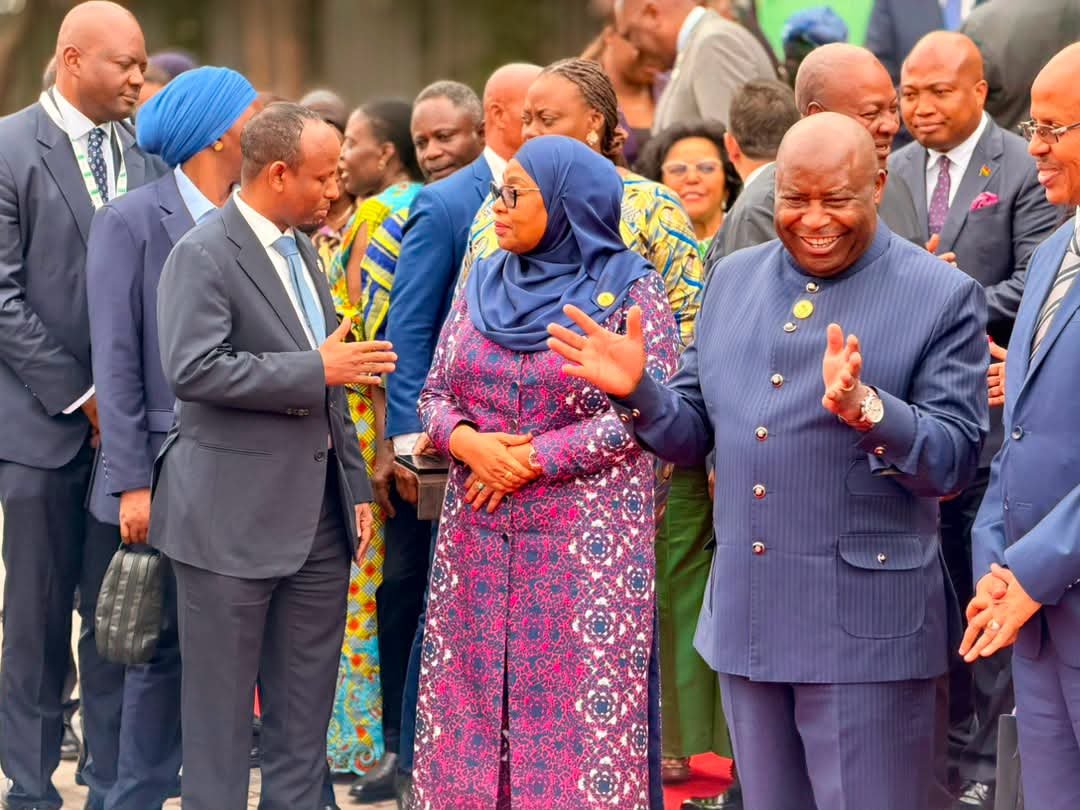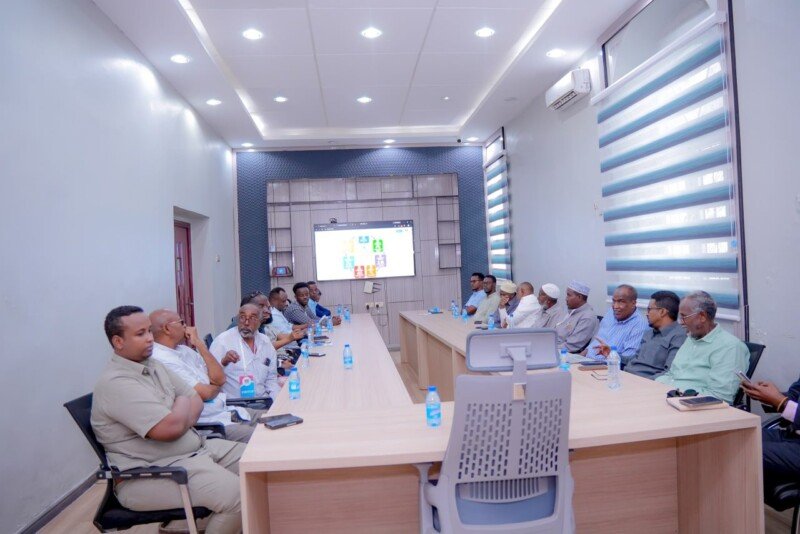

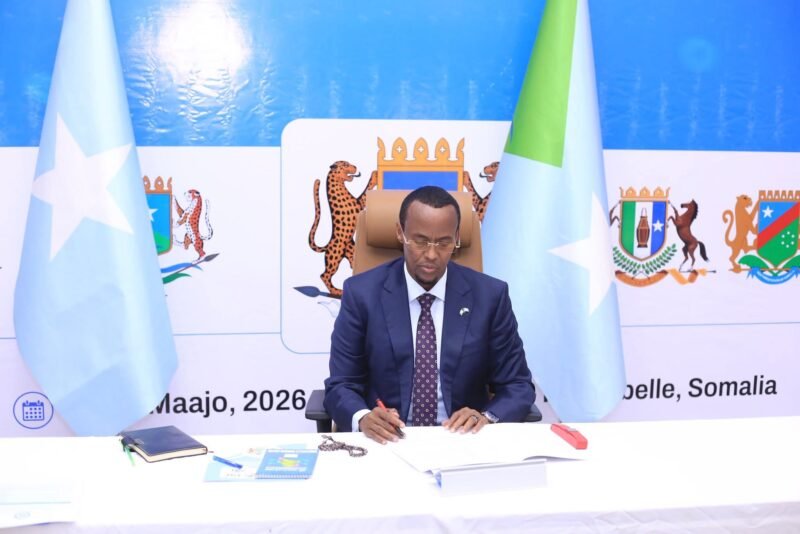
JOWHAR: A high-level delegation comprising health officials from the Federal Government of Somalia and Federal Member States arrived in Jowhar, the administrative capital of Hirshabelle State, ahead of the National Health Consultative Conference scheduled to open the following day. The delegation, led by Minister of Health and Human Services Dr. Ali Haji Adam, received a warm welcome upon arrival in the city for the two-day meeting, which prioritizes national health strategy and collaborative governance between Mogadishu and the federal states.
The conference is focused on strengthening Somalia’s healthcare system, with discussions centered on enhancing cooperation between the Federal Ministry of Health and health ministries of the Federal Member States. Participants are expected to address the improvement of public healthcare services, acceleration of national health strategies, and ensuring equitable access to quality healthcare for all Somali citizens. During the conference, officials will review existing challenges facing the health sector, explore new plans to improve essential healthcare services, and discuss ways to enhance public health nationwide. The meeting is expected to conclude with important recommendations and resolutions aimed at advancing Somalia’s healthcare system and improving service delivery across the country.
The gathering builds on recent federal efforts to set national health priorities and align support with government-led frameworks. In January, Dr. Ali Haji Adam convened a health financing conference in Nairobi bringing together federal and state health ministers, international aid organizations, and development partners to address sustainable funding. The Somali delegation has also actively participated in global health governance, leveraging its seat on the WHO Executive Board to advocate for vulnerable health systems and secure financial support for fragile states.
The push for federal-state coordination aligns with a series of nationwide reforms and strategic policy launches. In February, the Ministry of Health announced that the national immunization rate had officially reached 76 percent and that the government had integrated immunization programs into the national budget, reflecting a partial shift away from donor dependency. In April, the Ministry finalized and validated the National Comprehensive Postabortion Care Guideline Package, a framework designed to reduce preventable maternal deaths associated with pregnancy complications. Additionally, the Community Health Strategy 2025–2029, aimed at strengthening primary healthcare and progressing toward Universal Health Coverage, was launched last month with support from international partners.
The Jowhar conference is also occurring as Somalia’s health system continues to face severe pressures. The country hosts approximately 3.3 million internally displaced persons, and nearly 5 million people require humanitarian assistance according to the Somalia Humanitarian Needs and Response Plan. Acute malnutrition remains dire, with UN data projecting 1.84 million children under five will suffer from acute malnutrition during 2026, including approximately 500,000 facing life-threatening severe malnutrition. Health officials have indicated that the conference outcomes will directly inform the government’s national health strategy for 2026–2030 and help coordinate donor investments with stated federal priorities.
Recommended Reading on ftlsomalia.com:
- Somali Health Minister Launches Conference on Health System Financing and Development
- Somali Health Minister Highlights 76% Immunization Rate at African Vaccine Strategy Launch
- Somalia Advocates for Health Priorities Through WHO Board Position in Geneva
- Somalia Completes National Postabortion Care Guidelines to Boost Maternal Health
- War Impact Worsens Somalia’s Child Malnutrition Crisis
- Somalia Launches Climate Resilience Project for Farmers and Pastoralists
- Somalia Receives Budgetary Support Worth €10 Million from the EU