
MOGADISHU – A mother embraces her son after eight months apart. He was among Somali migrants stranded in Libya who received assistance from the International Organization for Migration (IOM) to return safely. Another 165 Somali migrants stranded in Libya have safely returned home with the support of the Federal Government of Somalia, the European Union (EU), and IOM. This brings the total number of migrants supported to return from Libya this year to nearly 557.
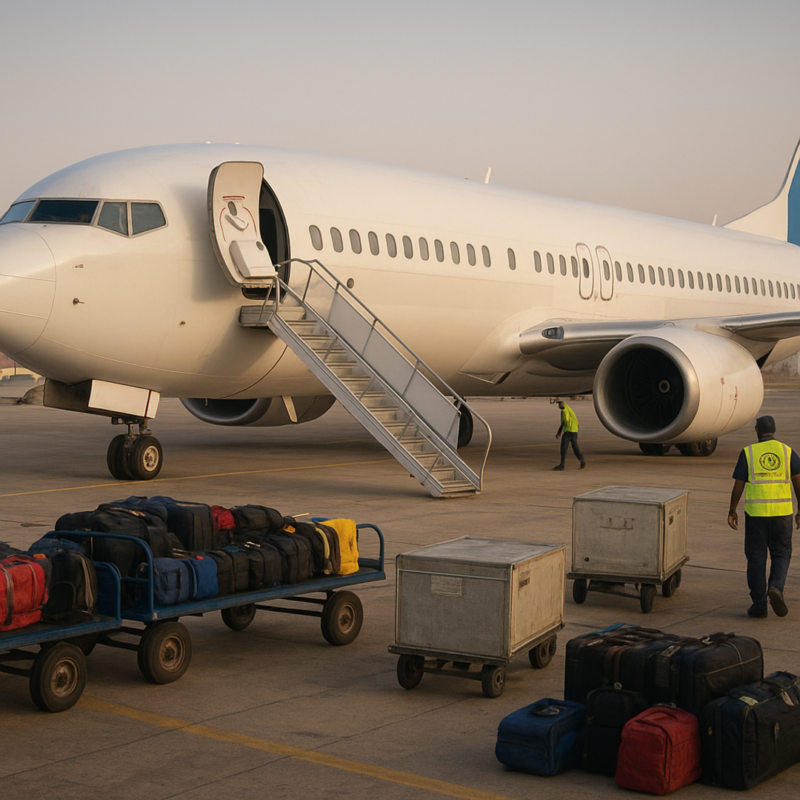
The migrants received assistance through IOM’s Voluntary Humanitarian Return (VHR) programme, funded by the European Union, which supports migrants returning to their countries of origin. The chartered flight carrying the migrants landed at Egal International Airport in Hargeisa to disembark 13 migrants before proceeding to Aden Abdulle International Airport in Mogadishu to disembark another 152 migrants.
On board were mostly young men under 25, including 27 minors, who had been stranded in Libya for months after being exploited and abused by smugglers and human traffickers.
Support for Returnees Upon Arrival
On arrival in Mogadishu and Hargeisa, returnees received temporary accommodation, onward transportation, medical and psychosocial support, pocket money, phones and SIM cards to reconnect with families. Every return is voluntary and based on the migrant’s decision. IOM provides counselling to ensure returnees can make an informed choice about returning home and offers tailored reintegration assistance to help them rebuild their lives and livelihoods with dignity in Somalia.
At least 20 Somali migrants have died while attempting to cross the Mediterranean Sea en route to Palma, a Spanish island, according to survivors of a separate tragedy. The victims, mainly youth from Somalia’s Puntland State, were fleeing widespread unemployment and lack of economic opportunities in their home region.
Deadliest Migration Route
Irregular migration along the Central Mediterranean route remains one of the world’s most dangerous, exposing migrants to violence, torture, trafficking, and exploitation. This corridor is the deadliest, with hundreds recorded dead or missing due to drowning and other hazards. A recent search and rescue operation off the coast of Libya reported 42 deaths after a rubber boat capsized, including eight Somalis. By offering safe and dignified return, this programme reduces the risks of dangerous journeys while addressing vulnerabilities upon arrival and providing individual reintegration assistance.
According to IOM’s Displacement Tracking Matrix, over 1,400 Somali migrants remained stranded in Libya in April 2025. Insecurity and lack of essentials like food, shelter, and healthcare expose migrants to numerous protection risks. Thousands urgently require protection and humanitarian assistance.
Stranded Ethiopian Migrants in Bossaso
In a separate but related operation, IOM helped 23 vulnerable Ethiopian migrants, including women and 10 unaccompanied or separated children, stranded in Bossaso to safely return home. Many of the migrants had been stranded for months and endured extreme hardships during their journeys, including extortion, exploitation and abuse by people smugglers. The movement was facilitated by IOM in coordination with the Ministry of the Interior of Puntland and the Ethiopian Consulate in Puntland.
“My family had to pay 95,000 Ethiopian Birr (approximately USD650) to free me from people smugglers. After two years of hardship, I am so happy to finally go home,” said one migrant, a young mother of two children as they boarded the plane.
Migration Response Centre Support
Through the Migration Response Centre (MRC) in Bossaso, IOM and the Government of Somalia provide life-saving protection assistance and assisted voluntary return (AVR) support. Before departure, the returning migrants received counseling, verification with the Ministry of Interior, travel documentation support from the Ethiopian Consular Office in Puntland, and pre-departure assistance to ensure safe, dignified, and voluntary returns.
The Deputy President of Puntland, Ilyaas Osman Lugatoor, has delivered a strong caution to young Somalis regarding the escalating dangers of irregular migration, announcing that the region will implement tougher passport screening to curb human trafficking. He emphasized that shielding young people from these threats is now a primary goal for his leadership.
Funding Gaps Leave Many Stranded
However, needs continue to outpace available resources. In 2025 alone, 2,946 migrants registered for support at the Migration Response Centre (MRC) in Bossaso, including 612 unaccompanied and separated children. Of these, 552 requested Assisted Voluntary Return (AVR), but only 107 migrants received support to return due to limited funding.
“These figures highlight the urgent protection needs of stranded migrants, especially women, children and unaccompanied minors,” said Ms. Prestage Murima, Deputy Chief of Mission for IOM Somalia. “More resources are needed to expand these lifesaving support to make sure more stranded migrants have a safe way home.”
Puntland President Said Abdullahi Deni has issued a rare and candid admission of failure over the mass exodus of Somali youth, acknowledging that his administration, and Somalia’s leadership at large, has failed to address their plight. Speaking at the 56th session of the Puntland Parliament, Deni said, “We shattered their ambition, destroyed their hope, buried their future. They have every right to risk their lives at sea. We have failed our responsibility.”
MPRR-SSA Programme Statistics
Under Somalia’s Migrant Protection, Return and Reintegration in Sub-Saharan Africa (MPRR-SSA) programme, funded by the European Union and managed by IOM, the organization assists Somali migrants returning home. Since August 2022, 1,394 Somali migrants, including 215 women, have been supported with voluntary return and over 929, including 151 women, with reintegration assistance across Somalia. Without such support, many Somali migrants would remain trapped in extremely unsafe conditions in detention centres, facing insecurity, food shortages, lack of shelter, and inadequate medical care. Others would be forced to continue their journey, risking their lives.
Regional Response to Human Trafficking
The migration crisis has prompted heightened concern from regional authorities. Lugatoor announced that the government will demand that anyone under 40 seeking a passport provide a reason for their trip and show they are not being drawn into trafficking paths.
“Any person under the age of 40 applying for a passport must explain the reason for their application. If they are travelling abroad, we need to understand the purpose of their journey,” he said.
Authorities state the enhanced restrictions intend to dismantle trafficking syndicates while steering youth toward secure, lawful routes and deterring choices fueled by misleading offers of prosperity.
The United Nations High Commissioner for Refugees (UNHCR) and the Puntland Ministry of Health have signed a Memorandum of Understanding aimed at enhancing access to quality healthcare for refugees and host communities across the region. The agreement underscores a shared commitment to strengthen health facilities and promote the inclusion of refugees and asylum seekers in Puntland’s national health system.
Looking Ahead
The statement from President Deni marks a significant shift in tone from regional leaders, many of whom have been criticized for downplaying the migration crisis. It also highlights the urgency for Somalia’s federal and state governments to devise comprehensive responses to the country’s youth challenges.
The IOM continues to call for increased funding to expand Assisted Voluntary Return programs and provide life-saving protection assistance to vulnerable migrants stranded along dangerous migration routes in the Horn of Africa.
Recommended Reading On ftlsomalia.com: