
Jubbaland, Somalia – Jubbaland region has declared itself an independent government and withdrawn from the country’s federal structure, marking a significant escalation in the political divide between regional authorities and President Hassan Sheikh Mohamud’s administration in Mogadishu.
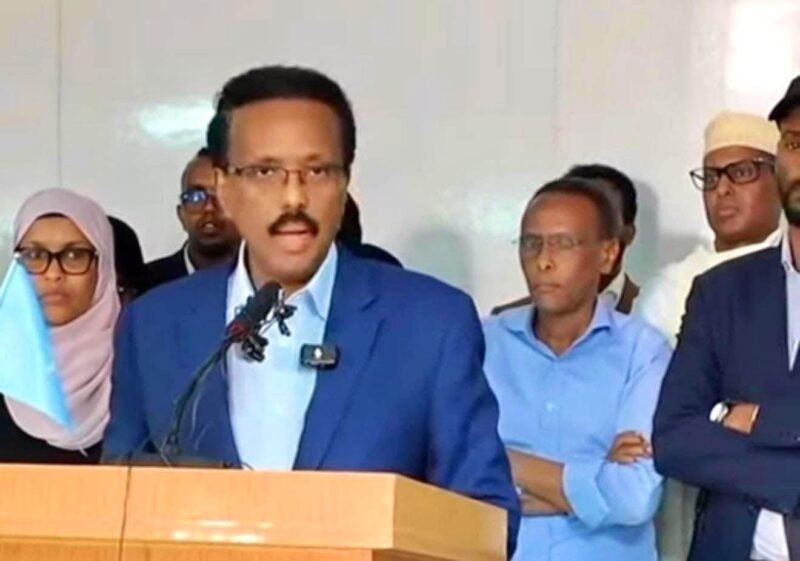
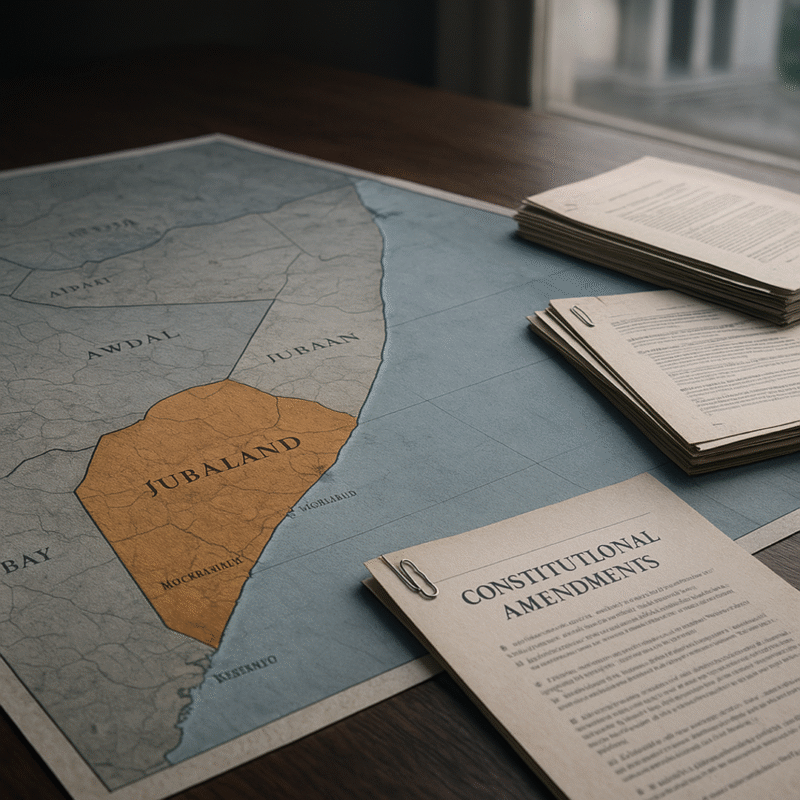
The declaration was announced on Sunday during a ceremony in Kismayo, where Jubbaland’s parliament speaker, Abdi Mohamed Abdirahman, stated that lawmakers had amended the regional constitution to redefine Jubaland not as a federal member state but as an independent ‘government.’
Abdirahman directed regional officials to ‘abide by the constitution’ and to exclusively refer to Jubbaland as a government, discontinuing the language associated with Somalia’s federal framework established in 2012.
The Speaker provided no specifics on how the declaration would be implemented, but the action mirrors similar steps taken by Puntland, which last year severed ties with Mogadishu and started functioning as an autonomous government until, according to Puntland, Somalia agrees on a unified national constitution and governance structure.
Jubbaland’s decision follows extended disputes between the federal government and administrations in both Jubbaland and Puntland, focusing on constitutional authority, resource distribution, and election control.
Regional leaders accuse Mogadishu of attempting to centralize power, while the federal government maintains that the states are pursuing unfettered autonomy.
The heart of the standoff rests in Somalia’s provisional constitution.
Although it gives the federal government authority over critical areas including foreign affairs, national security, and immigration, it leaves numerous essential aspects of power-sharing undefined. This vagueness has fueled years of political tension and conflicting interpretations of jurisdiction.
The announcements by Jubbaland and Puntland, while viewed by many analysts as political pressure tactics directed at Villa Somalia rather than genuine independence efforts, highlight a profound structural crisis.
Somalia’s federal system implemented in 2012 sought to establish equilibrium between central governance and regional autonomy. Yet with two major regions now openly distancing themselves from the federation, the model appears increasingly fragile.
The political instability coincides with mounting criticism against the federal government for neglecting to prepare for elections scheduled for May 2026.
Opposition factions and international observers caution that without a consensus on electoral procedures, the nation risks descending into renewed instability if the government’s term concludes without credible, inclusive elections.
President Hassan Sheikh Mohamud’s administration has concentrated on strengthening its position in Mogadishu, sparking concerns that election arrangements may lag significantly behind schedule.
International observers have voiced escalating concerns that political divisions could jeopardize hard-won advances in counterinsurgency efforts against Al-Shabaab.
Analysts caution that rifts between Mogadishu, Jubbaland, and Puntland might provide opportunities for the militant group to extend its influence, especially in disputed or inadequately administered regions.
Recent assessments by the International Crisis Group indicate Somalia’s political environment is on the brink of collapse, prompting calls for enhanced diplomatic involvement from the European Union and the United States.
The organization urged Somali leaders to promptly establish a definite electoral schedule and constitutional pathway, suggesting at least a temporary suspension of recent amendments implemented without broad agreement.