
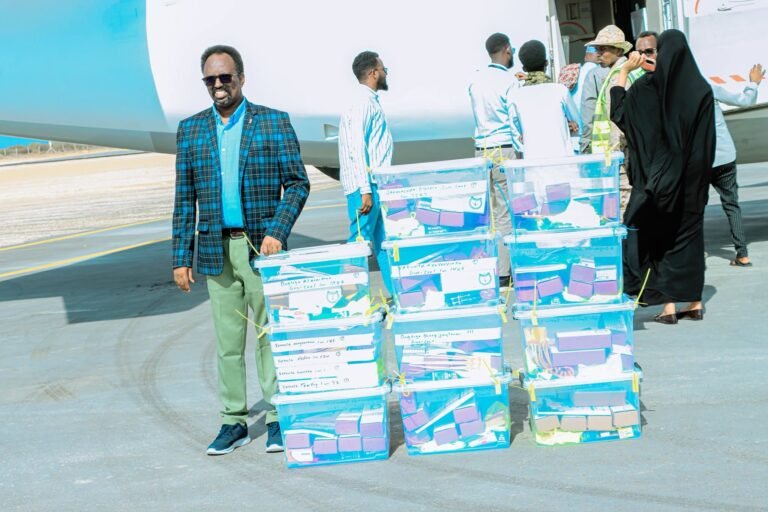
WARGALO, Mudug Region – The National Independent Electoral and Boundaries Commission (NIEBC) has officially launched the “one person, one vote” voter registration process in the Wargalo area of the Mudug region. Registration centers commenced operations this week, processing eligible citizens for upcoming local and national elections as part of the state’s plan to enhance democratic engagement and establish a comprehensive electoral framework across all federal member states.
Among the first registrants was Abdirishid Jorjo, the Deputy Commissioner of the Somali Football Federation. His participation in the Mudug registration campaign underscores the nationwide significance of the process, drawing attention to the civic duty of public figures across various sectors. Following his registration, the Deputy Attorney General directly appealed to all Wargalo district residents, encouraging them to visit NIEBC centers and exercise their constitutional voting rights.
The NIEBC’s expansion into Mudug is part of a broader, federally directed initiative to move Somalia from indirect, clan-based elections to a system of universal suffrage. The voter registration drive is a critical component of the Federal Government’s efforts to institutionalize democratic governance and ensure that every eligible citizen has a direct say in the country’s political future.
Expanding Voter Registration Across Mudug and Beyond
The Wargalo launch follows a series of voter registration initiatives by the NIEBC across the Mudug region. Last week, the commission expanded its voter registration efforts to Galbarwaaqo town in Hobyo District, where residents and local administration officials gathered to register. The exercise in Galbarwaaqo reinforced the federal government’s commitment to universal suffrage and demonstrated growing public engagement with Somalia’s democratic transition.
Voter registration has also been launched in Masagawaay, Galcad district, where the event was presided over by Galcad District Commissioner Osman Arif and Masagawaay administrative officials. Community members representing diverse sectors have shown substantial interest in the registration process, displaying eagerness to participate in the forthcoming direct elections.
The NIEBC has also commenced voter registration in Awdheegle, Lower Shabelle, as Somalia accelerates preparations for planned direct elections. District Commissioner Mohamed Ibrahim Abukar joined residents in registering at designated centers, signaling increasing public enthusiasm for direct electoral participation following decades of indirect voting systems.
A nationwide push for universal suffrage is now underway. The NIEBC has initiated the national voter registration phase across numerous remote and regional areas, from the coastal town of Hobyo and the recently stabilized Masagawaay to Qansaxdheere in the Bay region. This multi-front initiative represents a well-organized, state-led effort to ensure universal suffrage and demonstrates the federal government’s ability to deploy and manage modern civic technology far from central government hubs.
Federal Commitment to Universal Suffrage
The shift to a one-person, one-vote system has received high-level support from the federal government. President Hassan Sheikh Mohamud has reaffirmed his commitment to implementing universal suffrage, stating that Somalia must progress and would not revert to indirect and clan-based elections. “Indirect elections are a relic of the past; they are no longer relevant,” the president has declared.
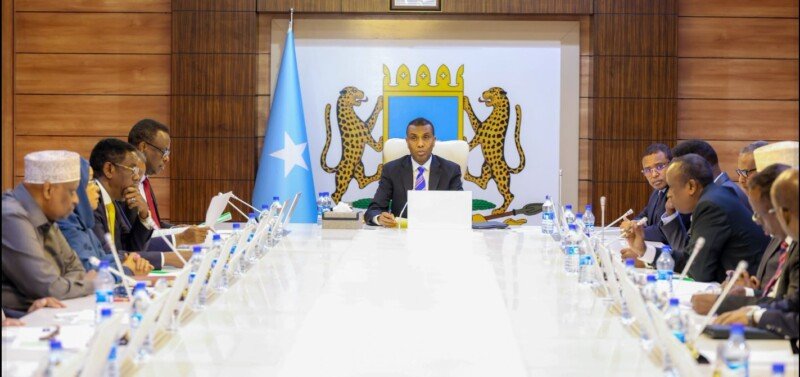
The president has also urged traditional leaders to endorse universal suffrage, emphasizing that restoring citizens’ voting rights is vital for the nation’s advancement. Prime Minister Hamza Abdi Barre has similarly declared that there will be no elections in South West State other than a one-person, one-vote process.
The NIEBC continues to expand registration activities across the country, including in the Benadir region, where it has successfully established voter registration districts as part of the transition from clan-based and indirect voting systems toward a more inclusive, representative, and transparent framework. The commission has reported steady progress in voter turnout, and officials have urged all eligible citizens to register and participate in shaping Somalia’s democratic future.