
FTL Somalia
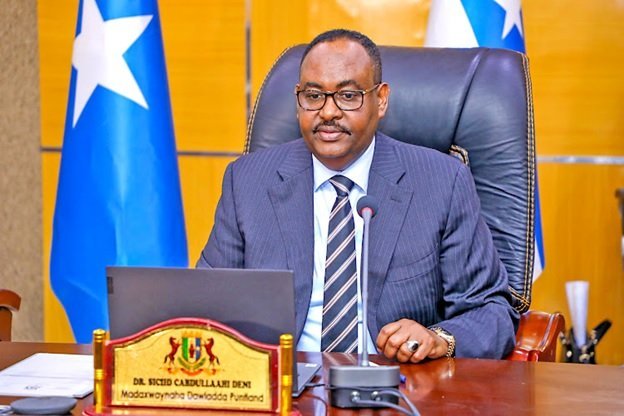
President Deni of Puntland State of Somalia

Puntland leader warns federal government will cease to exist after May 15

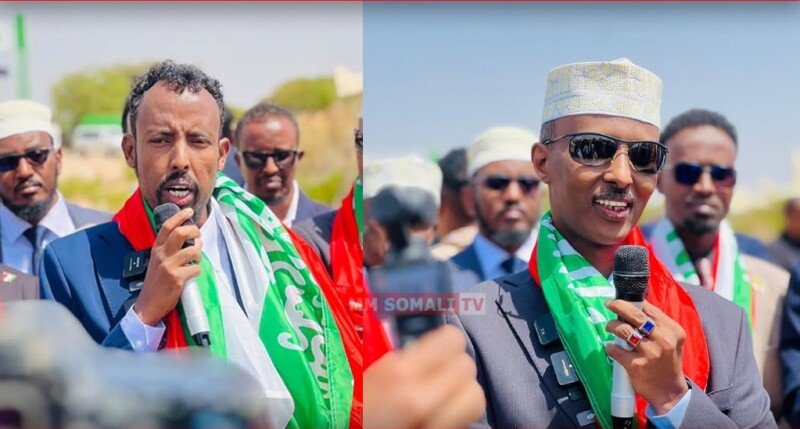
MOGADISHU — Puntland President Said Abdullahi Deni has issued a stark warning that Somalia’s federal government will no longer be recognized if a broad political agreement is not reached before the end of President Hassan Sheikh Mohamud’s term next month. Addressing regional troops at a military camp on Monday, Deni tied his remarks to the May 15 deadline cited by opposition leaders and several federal member states, underscoring a deepening constitutional and political crisis.

“From the 15th of next month, should no broadly acceptable solution to all Somalis be reached, the federal government will no longer be considered in existence,” Deni said. “Beyond that point, we will not look to the current leadership for a solution, but instead to the Somali people collectively and the regions.”

The Puntland leader stressed that his administration has a history of governing its own affairs independently and would continue to do so if necessary. He added that any federal leadership that abuses power will ultimately see its term end and face accountability.

Prime Minister Rejects Term Expiry Claims

Deni’s remarks come just days after Somali Prime Minister Hamza Abdi Barre pushed back against claims that the president’s mandate expires in mid-May. Barre said the government will continue functioning as usual beyond that date, insisting the current administration still has one year remaining.

The Prime Minister disputed the assertion that the president’s authority terminates in May, contending instead that it spans five years under both the 2012 draft constitution and the newly ratified constitution. According to this interpretation, the current term would continue for an additional year.

Constitutional Amendment at Heart of Dispute

At the heart of the dispute is a controversial constitutional amendment approved by Somalia’s parliament in March. The change extends the terms of both the president and parliament from four years to five. The parliamentary speaker said the amendment took immediate effect, effectively granting the current leadership an additional year in office.

The federal government maintains that the extension is a constitutional necessity under the new constitution, which was ratified in March 2026. Speaker of Parliament Adan Madobe has announced that Parliament would extend its stay in office by one year, a move aimed at facilitating the federal government’s transition to a “one-person, one-vote” electoral system.

However, opposition figures and some regional states have rejected the revised constitution outright. They argue that the country must adhere to the provisional constitution adopted in 2012, under which the president’s term expires on May 15.

Opposition Threatens Parallel Government

Those groups have warned that if no political consensus on elections is reached before the deadline, they will move to establish a parallel government — a step that could further fracture Somalia’s fragile federal system.

Somalia’s opposition and federal member states of Jubbaland and Puntland are considering establishing a parallel government if President Mohamud proceeds with what they describe as a “unilateral” election process. Opposition MP Dahir Amin Jesow warned that if the President continues to pursue plans for a universal suffrage vote — which the opposition argues cannot be organized within the remaining months of his term — the Somali Future Council would move to a second phase of consultations with the aim of forming a parallel government.

Senate Speaker Accuses Government of Lawlessness

The Speaker of Somalia’s Upper House of parliament has accused the country’s government institutions of systemic lawlessness, ending a months-long political absence as the nation approaches a critical electoral deadline. “The government must enforce the law, but we ourselves are the government, and yet we do not follow the law,” Senator Abdi Hashi Abdullahi stated, directing broad criticism at state organs for failing to adhere to the country’s legal statutes.

Ex-President Warns of Leadership Vacuum

Former President Mohamed Abdullahi Farmaajo has declared that the constitutional mandate of the Federal Parliament officially expired on April 14, 2026, warning that Somalia has entered a period of “rising political uncertainty.” Farmaajo argued that legislative activities can only resume after new elections are held, challenging the recent one-year term extension announced by the leadership of the House of the People.

“A month before the end of his term, outgoing President Hassan Sheikh Mohamud must urgently present a credible plan for the upcoming elections. Failing to do so will destabilize the country in ways that will have lasting political, social, security, and economic implications,” Farmaajo said.

Puntland Warns of Constitutional Vacuum

Authorities in Puntland have expressed concern that Somalia is experiencing a constitutional vacuum with escalating political uncertainty, advocating for immediate consultations to avert potential instability. According to a statement released by the Puntland Council of Ministers, Somalia’s provisional constitution mandates the expiration of the Federal Parliament’s constitutional mandate on April 14, 2026, as stipulated in Article 60, while the presidential term concludes on May 15, 2026, as outlined in Article 91.

Government Deploys Elite Forces to Prevent Rebellion

The federal government recently deployed heavily armed, Turkish-trained Gorgor special forces around a military camp led by army officer Colonel Saney Abdulle, an opposition-aligned figure and relative of former President Sharif Sheikh Ahmed. The deployment aims to prevent potential rebellion within military ranks as President Mohamud’s term concludes next month.

Troops were stationed in the Geed Timir area of the Gubadley neighborhood, north of Mogadishu, an area historically under the general’s control. The camp reportedly contains numerous fighters and significant weapons, raising fears that Abdulle might deploy forces into central Mogadishu to support opposition efforts and challenge presidential authority when his term ends on May 15.

Outlook

With both sides holding firm, the standoff highlights widening divisions over Somalia’s constitutional order and electoral process, raising fresh uncertainty about governance and stability in the country at a critical moment. The coming weeks will be critical in determining whether dialogue or further confrontation defines Somalia’s political future, with the international community continuing to monitor the situation closely.