
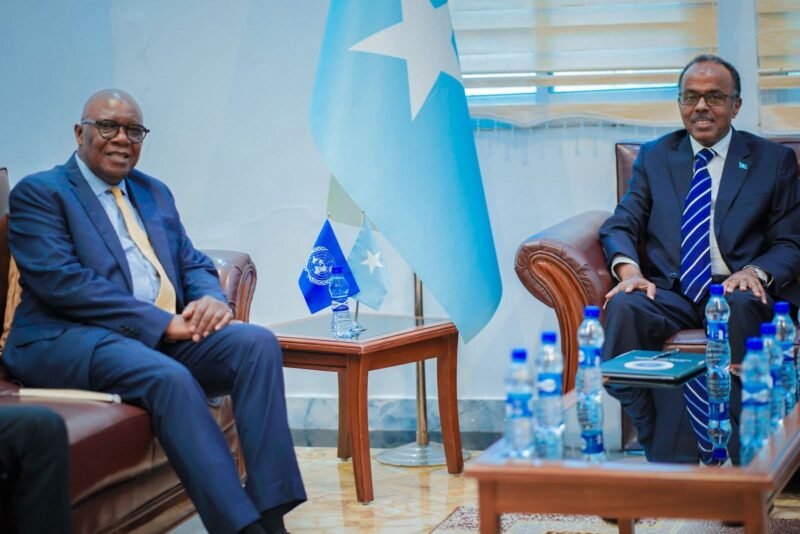
MOGADISHU — The State Minister for Foreign Affairs and International Cooperation of the Federal Republic of Somalia, Ali Mohamed Omar, today welcomed a delegation from the United Nations Transition Mission in Somalia (UNTMIS), led by Officer-in-Charge Raisedon Zenenga, accompanied by Vikram Parekh.
The dialogue centered on the current UNTMIS transition process and the changing political and security environment in Somalia, with both parties sharing perspectives on future collaboration.
In the course of the discussions, the State Minister highlighted Somalia’s unwavering dedication to a Somalia-led transition process, stressing the critical need to reinforce national institutions and build upon progress made in peace and state-building efforts. He pointed out that coordinating international assistance with Somalia’s domestic priorities is crucial for achieving lasting advancement and enduring stability.
Transition Timeline and Objectives
UNTMIS succeeded the UN Assistance Mission in Somalia (UNSOM) on November 1, 2024, in accordance with UN Security Council Resolution 2753. The transition is a two-year process scheduled to conclude by October 31, 2026, when UNTMIS will end its operations. The transition reflects progress in Somalia and aligns with the Federal Government’s request for national ownership and self-reliance, with the ultimate goal of transferring all remaining tasks to national institutions and UN agencies.
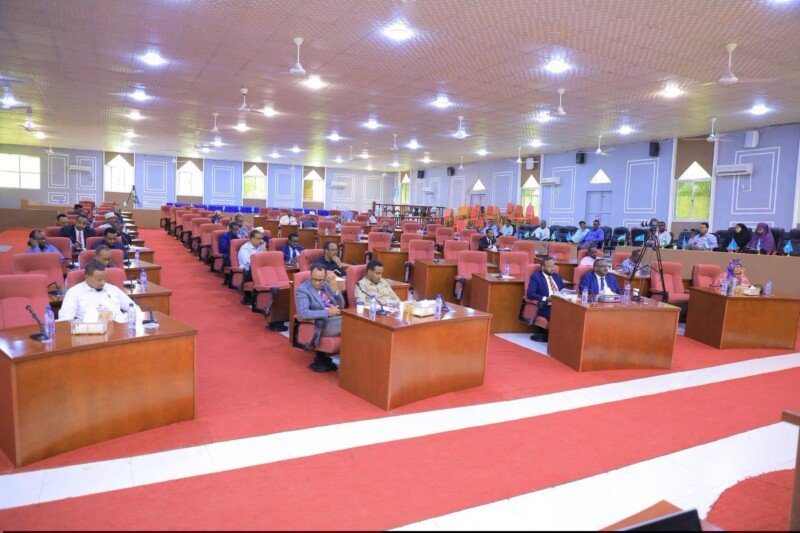
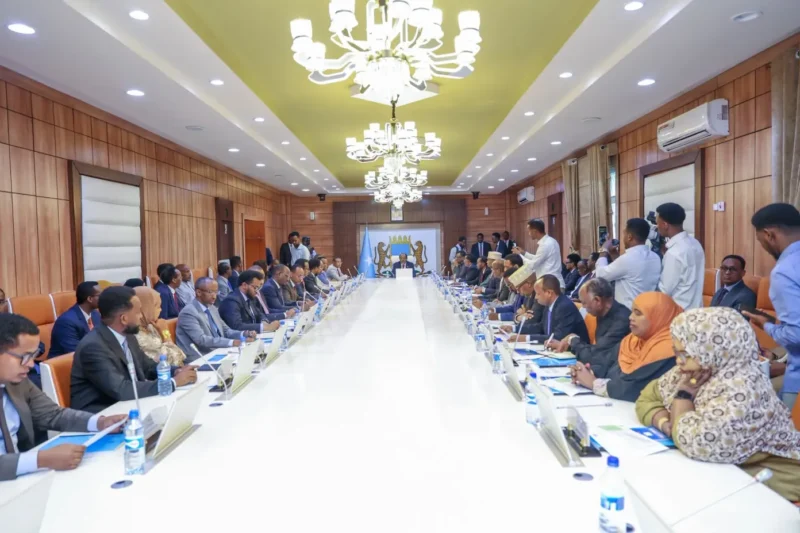
The consultative workshop, part of the UNTMIS Roadmap Development process, brought together senior representatives from the Federal Government of Somalia, including Prime Minister Hamza Abdi Barre, and focused on how the UN’s evolving role can continue to support Somalia’s political stabilization during and after the planned transition. UN officials reiterated their commitment to a smooth, Somali-led transition aligned with national priorities, particularly in finalizing the constitution and advancing federal governance structures.
Phased Transition Structure
The transition is structured in two main phases. Phase One (November 2024 – October 2025) prioritized support and capacity building in key areas while transferring specific tasks to the Federal Government and other stakeholders. Key areas of focus included state-building, human rights, rule of law, security sector support, coordination of international aid, and support for countering violent extremism.
Phase Two (November 2025 – October 2026) involves the progressive transfer of all remaining functions to the Federal Government, the UN Country Team, and other partners, leading to the mission’s conclusion. The transition process is condition-based, with the Security Council regularly reviewing progress to ensure a stable handover of responsibilities.
Previous Consultations on Security and Justice Transition
Tuesday’s meeting follows similar high-level engagements on the UNTMIS transition roadmap. In July 2025, 47 delegates from the United Nations and the Federal Government of Somalia gathered in Mogadishu to chart key priorities for the country’s ongoing security transition, concentrating on strengthening the rule of law, policing, corrections, and maritime security systems. The session was jointly led by Ambassador Yusuf Garaad and Nasrin Khan, Head of UNTMIS’s Rule of Law and Security Institutions Group, who emphasized that the goal remains building a justice and security framework in Somalia that is resilient, inclusive, and responsive to the needs of its citizens.
Government Officials Update International Partners
Senior Somali government officials led by Interior Minister Ali Yusuf Ali Hosh have also convened with international diplomats stationed in the country to provide updates on national progress and ongoing state-building initiatives. The Somali delegation, which included Justice Minister Hassan Moalim and State Minister for Foreign Affairs Ali Omar Mohamed, briefed representatives of foreign embassies and international organizations operating in Somalia on the country’s overall political and security landscape.
Commitment to Somali-Led Solutions
The meeting highlighted Somalia’s role in guiding the next stage of engagement, demonstrating a robust partnership with the United Nations and a distinct movement toward locally-driven approaches that reinforce stability, build institutional capacity, and foster long-term development.
All participants reaffirmed their dedication to improved coordination and continuous partnership, stressing the importance of ongoing collaboration to advance Somalia’s development path and promote peace and security nationwide.