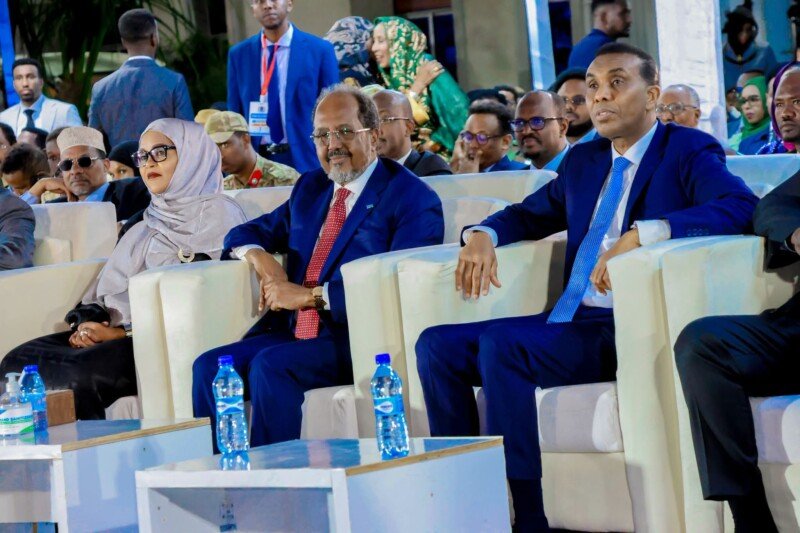


MOGADISHU – The Minister of Information, Culture and Tourism for the Federal Government of Somalia, Abdulfatah Kasim Mohamud, officially launched the National Workshop on UNESCO’s Memory of the World Programme, dedicated to preserving and protecting Somalia’s historical heritage.
The workshop, organized by UNESCO in collaboration with the JFIT Programme funded by the Japanese government, gathered representatives from government institutions and stakeholders in history, culture, arts, literature, and Somali heritage preservation. The two-day event marks the first time the Memory of the World Programme has been conducted in Somalia, facilitating knowledge exchange among experts and stakeholders about preserving history, culture, and heritage.
UNESCO has been actively supporting Somalia’s efforts to preserve the Radio Mogadishu archives, with a partnership announced between the Ministry of Information and UNESCO Country Representative Louise Haxthausen focused on digitizing over seventy years of historical audio recordings.
UNESCO Highlights Significance of the Programme
Lea Simonini, representing UNESCO, highlighted the significance of the program in enhancing Somalia’s efforts to preserve historical memory. She stated: “The Memory of the World Programme aims to safeguard the history of peoples and nations globally. For the first time in Somalia, we are conducting this workshop to facilitate knowledge exchange among experts and stakeholders about preserving history, culture, and heritage, while strengthening national participation and establishing a committee to support this initiative.”
Simonini also underscored the importance of protecting and preserving Radio Mogadishu’s historic audio archive, noting that the preservation of Somalia’s documentary heritage requires immediate attention and international cooperation.
Minister Stresses National Responsibility for Heritage Protection
In his opening address, Minister Abdulfatah Kasim Mohamud emphasized the importance of preserving national memory and Somalia’s media heritage, noting that the Radio Mogadishu Archive constitutes a living legacy containing the history and identity of the Somali people that demands immediate protection.
“This workshop on preserving collective memory arrives at a crucial time,” stated Minister Abdulfatah. “Securing the historical materials in our national archives is not just a technical task; it is a national responsibility focused on protecting the identity and history of the Somali people. The Radio Mogadishu Archive contains the history of Somali arts, culture, and nation-building and requires immediate conservation.”
The Minister further stated that the Ministry will prioritize modernizing and preserving the Radio Mogadishu Archive in cooperation with UNESCO’s Memory of the World Programme.
Radio Mogadishu Archive: A Living Legacy
The Radio Mogadishu Archive represents one of Somalia’s most valuable cultural assets. Radio Mogadishu was first established during the United Nations Trusteeship period, when Somalia was administered by Italy. Initially broadcasting in Italian, the station quickly expanded to include programming in Somali, becoming a powerful tool for education, news dissemination, and national unity.
Over the years, the station has captured pivotal moments in Somalia’s political, cultural, and social history, making its archives an irreplaceable national treasure containing decades of audio recordings that document the nation’s political, social, and cultural development. The archive includes historical broadcasts, music, poetry, and news coverage that together form an irrecoverable record of Somali identity and nation-building.
The preservation of this archive has become increasingly urgent as aging magnetic tapes and other recording media deteriorate over time. Digital preservation techniques, combined with proper archival storage, are essential to ensure that future generations can access this historical material.
International Support for Archive Preservation
The preservation of Radio Mogadishu’s archives has attracted international attention and support. Chinese Ambassador to Somalia, Wang Yu, recently visited the Radio Muqdisho archives, exploring decades-old audio recordings that encapsulate the bond between Somalia and China.
During his visit, the ambassador listened to rare voice clips of Chinese Premier Zhou Enlai from his groundbreaking visit to Somalia and a recording of a Somali singer performing a Chinese song. Moved by the significance of these preserved memories, Ambassador Wang Yu pledged China’s support in helping Radio Muqdisho conserve and digitize these invaluable archives.
Japanese Government Support Through JFIT Programme
The current workshop is funded by the Japanese government through the JFIT Programme (Japan Funds-in-Trust), which supports UNESCO’s efforts to preserve documentary heritage worldwide. Japan’s contribution reflects the country’s commitment to cultural preservation and its recognition of Somalia’s need for technical and financial assistance in protecting its historical archives.
The JFIT Programme has previously supported memory of the world initiatives in other countries, providing expertise in digitization, archival management, and conservation techniques. This marks the first time the program has been directed toward Somalia’s documentary heritage.
UNESCO Heritage Site Restoration Efforts
Beyond archival preservation, UNESCO has been actively involved in protecting Somalia’s physical heritage sites. UNESCO conducted a technical assessment of key historic sites in Mogadishu, including the Lido Secondo Lighthouse and the Old Mogadishu district, with support from ALIPH.
The expert review focused on evaluating recent structural damage and identifying culturally significant elements vital to shaping future restoration plans. This initiative seeks to safeguard Mogadishu’s rich historical heritage and strengthen its candidacy for UNESCO World Heritage status.
Establishment of a National Committee
One of the key outcomes of the workshop is the establishment of a national committee to support the Memory of the World Programme in Somalia. This committee will be responsible for identifying documentary heritage of national significance, developing preservation strategies, and coordinating with international partners on conservation efforts.
The committee will also work to nominate Somali documentary heritage for inclusion in UNESCO’s Memory of the World Register, which recognizes documentary heritage of global significance. Inclusion in the register would bring international attention to Somalia’s historical materials and could facilitate additional support for their preservation.
International Cooperation and Knowledge Exchange
The workshop facilitates knowledge exchange between Somali experts and international counterparts, bringing together representatives from government institutions, cultural organizations, and heritage preservation specialists. Participants are receiving training in archival management, digitization techniques, and conservation best practices.
Lea Simonini and other UNESCO representatives are providing technical guidance on implementing the Memory of the World Programme in the Somali context, adapting international standards to local conditions and available resources.
Way Forward for Somalia’s Documentary Heritage
The two-day workshop strengthens both national and international efforts to preserve Somalia’s historical archives and supports the broader global initiative led by UNESCO to protect documentary heritage and collective memory.
The Ministry of Information, Culture and Tourism has committed to prioritizing the modernization and preservation of the Radio Mogadishu Archive, working in cooperation with UNESCO and international partners. The establishment of the national committee provides an institutional framework for ongoing preservation efforts beyond the workshop.
Future steps will include the development of a national strategy for documentary heritage preservation, the digitization of at-risk materials, and the creation of public access programs to ensure that Somalia’s historical heritage remains available to researchers, educators, and the Somali public.