
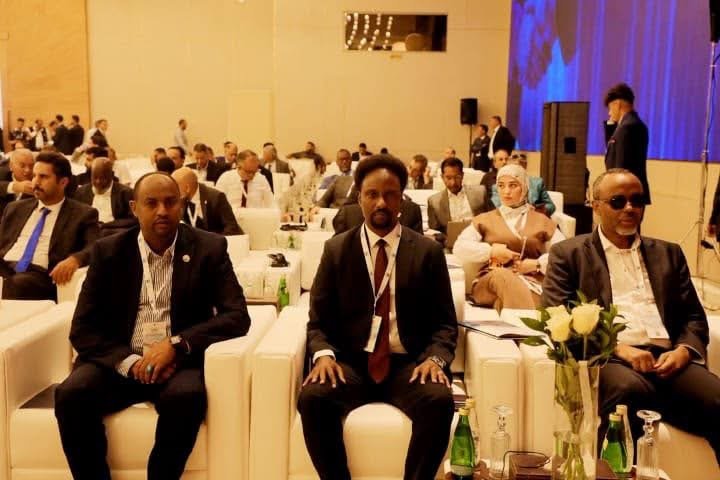
BENGHAZI – A delegation from Somalia’s National Independent Human Rights Commission (GMXIQ) has participated in an international conference in Benghazi, Libya, where it highlighted the plight of Somali migrants stranded in the country and sought to strengthen cooperation on justice, prison reform and the fight against human trafficking.
The conference, which ran from July 28 to 31, brought together human rights institutions, judges, experts and legal professionals from various countries. The Somali delegation was led by GMXIQ Acting Chairman Mohamed Harun Mohamed. Discussions focused on strengthening justice systems, prison reform, the treatment of detainees, combating irregular migration, and enhancing regional cooperation on these issues.
A Humanitarian Crisis on Europe’s Doorstep
The Somali delegation placed particular emphasis on the suffering of Somali youth trapped in Libya, describing the impact on their families and the nation as a whole. The Libyan National Committee for the Supervision of Prisons and Detainees, which organised the conference, met separately with the GMXIQ delegation and pledged to cooperate closely with the Somali government to assist Somali nationals in distress.
The conference comes at a time when Libya’s detention system is under intense international scrutiny. The United Nations has called for immediate and lasting reform of Libya’s detention system, warning that continued reports of arbitrary detention, enforced disappearances, torture and deaths in custody are damaging public confidence in state institutions and the rule of law. Thousands of migrants, including many Somalis, are held in overcrowded and inhumane conditions in official and unofficial detention centres across Libya, often subjected to abuse and extortion by smugglers and traffickers.
A Troubling Context
The conference was organised by the Libyan National Committee for the Supervision of Prisons and Detainees, a body established by the eastern-based administration in Benghazi. The eastern Libyan government, which operates in parallel to the internationally recognised Government of National Accord in Tripoli, has imposed a ban on nationals of Somalia, Sudan, Eritrea and Ethiopia from entering territory under its control. The ban, issued in June 2026, bars citizens of the four African countries from entering Libya through “all land” entry points, according to the parallel administration in Benghazi.
The contradiction is striking: while the eastern Libyan administration is hosting a conference on human rights and justice, it has simultaneously barred Somali nationals from entering its territory. The Somali delegation’s participation in the conference, therefore, raises uncomfortable questions about the effectiveness of such engagement when the host administration is actively preventing Somali citizens from seeking refuge or opportunity in the country.
A Commission at Home Under Strain
The GMXIQ’s participation in the Benghazi conference also comes at a time of internal turmoil for Somalia’s own human rights institution. In April 2026, a visible rift emerged within the Commission, with a group of commissioners publicly distancing themselves from what they described as political involvement by sections of the Commission’s leadership. Concerns were raised over alleged expressions of political support by a senior official. The internal divisions have raised questions about the Commission’s independence and its ability to effectively advocate for human rights at home.
The Commission has previously been led by Dr. Maryam Qasim Ahmed, who was elected as its head. However, the internal rift has cast a shadow over the institution’s ability to function effectively.
The establishment of the National Independent Human Rights Commission was hailed as a new chapter of national healing, but the internal divisions have raised questions about whether the institution can fulfil its mandate.
Mogadishu hosted Somalia’s first National Human Rights Summit, which was seen as a milestone for the country’s human rights agenda. However, the Commission’s internal challenges highlight the gap between ambition and reality.
A Pattern of Diplomatic Engagement
The Benghazi conference is part of a broader pattern of Somali diplomatic engagement on human rights. Somalia has been pushing for enhanced EU support on human rights and governance. In April 2026, Somalia’s Ambassador to Libya, Abdulfatah Sheikh Ahmed, met with Libyan officials to advance bilateral relations and prepare for a joint committee meeting. A US report has flagged widespread human rights abuses in Somalia, underscoring the urgent need for reform.
Way Forward
The Somali delegation’s participation in the Benghazi conference is a welcome step toward addressing the plight of Somali migrants in Libya and strengthening regional cooperation on justice and human rights. But the conference’s host, an administration that has banned Somali nationals from entering its territory, raises questions about the effectiveness of such engagement. The Somali government must ensure that its participation in international conferences translates into concrete action to protect its citizens, rather than serving as a symbolic gesture that masks the deep contradictions of the host administration. For the Somali migrants trapped in Libya’s detention centres, the conference’s promises will mean little without tangible improvements in their conditions.
Recommended Reading On ftlsomalia.com
- Somalia Pushes for Enhanced EU Support on Human Rights and Governance
- US Report Flags Widespread Human Rights Abuses in Somalia
- Creation of Somalia’s NIHRC Marks a New Chapter of National Healing
- Dr. Maryam Qasim Ahmed Elected Head of Somalia’s Human Rights Commission
- Mogadishu Hosts Somalia’s First National Human Rights Summit