
KAMPALA – A summit of African leaders and troop-contributing countries to the African Union Support and Stabilization Mission in Somalia (AUSSOM) has concluded with an agreement to sustain the mission for an additional 18 to 24 months, while also endorsing a phased and coordinated withdrawal that would preserve the security gains achieved over nearly two decades. The summit, however, was marked by a diplomatic disagreement when Somali President Hassan Sheikh Mohamud objected to the inclusion of provisions addressing Somalia’s internal political affairs in the summit’s communiqué.
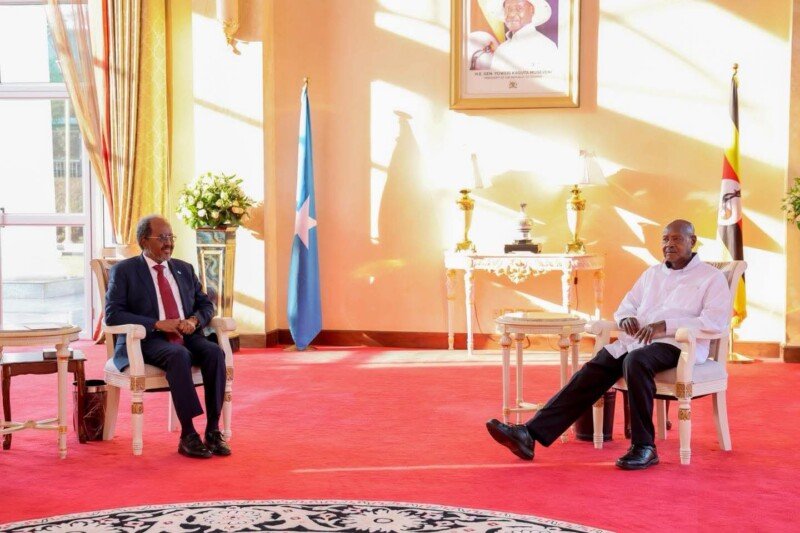
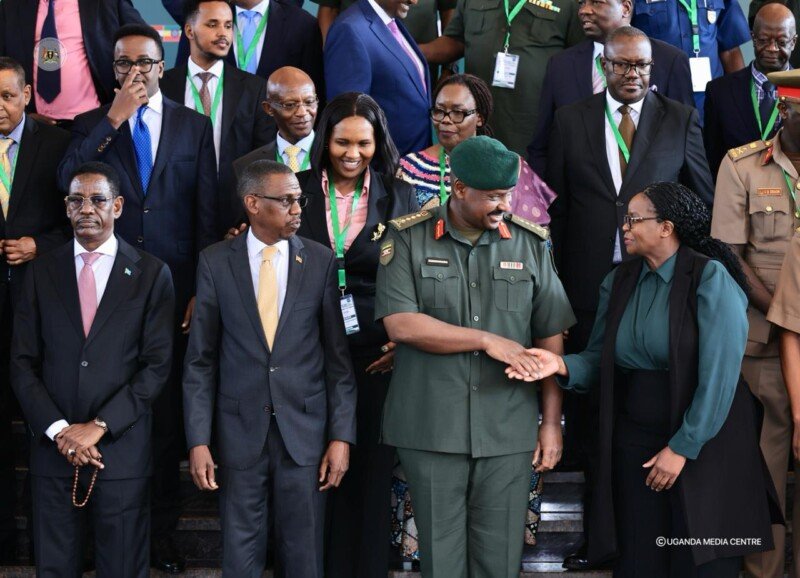
The Second Extraordinary Summit of Troop-Contributing Countries to AUSSOM, convened by Ugandan President Yoweri Kaguta Museveni at Speke Resort Munyonyo in Kampala on July 31, brought together heads of state and government from Uganda, Burundi, Kenya, Egypt, Djibouti, and Ethiopia, along with the Federal Government of Somalia. The African Union Commission, IGAD, and the United Nations were also represented.
A Diplomatic Disagreement
During the plenary session, President Mohamud objected to provisions in the draft communiqué that referenced Somalia’s domestic political affairs, arguing that the summit should remain focused on security and financing. The draft communiqué had called for a unified Somalia, urged efforts to strengthen democratic governance and national institutions, and requested President Mohamud to convene a conference of Somali political leaders and leaders of the Federal Member States, with heads of state from AUSSOM troop-contributing countries attending as observers.
“Political matters of Somalia are very internal, and Somalia does not want them to be included in this communiqué,” the president said. “The local politics of Somalia must not be internationalized or regionalized.”
He stated that the summit had been convened to address security challenges, the fight against Al-Shabaab, and funding shortfalls facing AUSSOM, adding that those issues had been adequately covered in the draft statement. His government, he said, would address political issues through domestic processes with the support and advice of regional partners, rather than through an international communiqué.
President Museveni, who chaired the session, instructed officials to revise the draft accordingly.
A Transition Plan for AUSSOM
The summit’s final communiqué, issued after the revision, emphasized the need for an “orderly, coordinated and phased exit of AUSSOM” and called for a “unified integrated mission support capability mandated by the United Nations Security Council to continue providing uninterrupted support to the Mission for a period of 18 to 24 months.” This would enable the implementation of agreed milestones, strengthen the capacity of Somali security institutions, and facilitate the orderly transfer of security responsibilities.
The leaders commended troop-contributing countries for their sacrifices in the fight against terrorism, paid tribute to fallen soldiers, and stressed the need for a unified Somalia to rebuild national confidence, democratic governance, and strengthen national state institutions. They also urged the Somali National Armed Forces to have seamless training and develop an integrated doctrine, and called for strengthening Somali security institutions through sustained regional and international partnership, mentorship, and capacity-building.
Addressing the Funding Crisis
The summit mandated the Ministers of Foreign Affairs of the troop-contributing countries, in coordination with the Federal Government of Somalia and the African Union, to form a joint task force and engage in diplomatic outreach to secure predictable and sustainable financing for AUSSOM during the transition period. This includes organizing a donors’ conference to secure financing and political commitment. The leaders also urged partners to consider the provision of additional resources to address the financial shortfalls currently experienced by the mission.
The United States has contributed nearly $2 billion to the UN support mission in Somalia but has grown frustrated with what it views as insufficient progress by Somali leaders in assuming responsibility for their own security. Washington has notified the African Union that it will no longer finance the UN Support Office in Somalia (UNSOS) beyond December 2026, a decision that threatens to pull the logistical rug from under the 12,000-strong mission. Without UNSOS, AUSSOM would lose critical logistical support, including food, water, fuel, transportation, medical services and casualty evacuation.
Uganda’s Commitment and the Cost of War
Uganda’s Minister of Defence and Veteran Affairs, Hon. Kiryowa Kiwanuka, reaffirmed Uganda’s unwavering commitment to Somalia’s peace and stability, recalling that Uganda was the first country to deploy troops under AMISOM in 2007. “Uganda has consistently regarded the peace and security of Somalia as inseparable from the collective security of our region,” he said.
He paid tribute to the soldiers from troop-contributing countries and the Somali Security Forces who lost their lives while serving in Somalia, and stressed that military operations alone cannot guarantee lasting peace. “Sustainable stability in Somalia requires complementary political, governance and socio-economic interventions,” he said, calling for strengthened state institutions, political reconciliation, enhanced cooperation between Somalia’s Federal Government and Federal Member States, improved justice systems, and measures to address poverty, unemployment and ideological extremism.
Uganda, which provides the largest contingent of troops with approximately 5,000 to 6,000 soldiers stationed in the country, had previously declared its intention to withdraw its forces after nearly two decades. The Kampala summit represents a last-ditch effort to prevent a broader exodus of troop-contributing countries and to secure the funding needed to sustain the mission.
Way Forward
The Kampala summit has produced a roadmap for the transition of AUSSOM, but the gap between diplomatic rhetoric and financial reality remains wide. The African Union has projected a need for approximately $190 million to facilitate the shift from ATMIS to AUSSOM, while civil society monitors note that short-term needs already surpass $90 million. The EU has reaffirmed its support for AUSSOM, but even that is not enough to close the gap.
The decision to sustain the mission for an additional 18 to 24 months provides a window of opportunity for Somalia to build the capacity of its security forces and for the international community to secure sustainable funding. But the underlying governance challenges, corruption, political fragmentation, and weak institutions, remain unresolved. The summit’s communiqué, stripped of references to Somalia’s internal political affairs, is a reflection of the Somali government’s determination to assert its sovereignty. But it is also a reminder that the international community’s patience is wearing thin.
For the Somali people, the summit’s decisions are a promise, not a guarantee. The test will be whether the leaders who gathered in Kampala can translate their commitments into tangible improvements in security and governance. Without sustained investment, genuine political will, and a commitment to transparency and accountability, the hard-won gains of the past two decades could be undone by a funding crisis that was foreseeable but left unaddressed.
Recommended Reading On ftlsomalia.com
- US Faces Critical Choice on Somalia Security Assistance as AUSSOM Mandate Nears Expiry
- Somalia Faces Critical Security Test as AUSSOM Mission Nears Collapse Without UN Support
- Uganda Announces Intent to Withdraw Troops from Somalia After 19 Years
- EU Reaffirms Support for AUSSOM Amid Funding Talks
- Muhoozi Calls for African Unity as AUSSOM Faces Funding Crisis
- As AUSSOM Teeters on the Brink, US Delegation Visits Regional Administrations