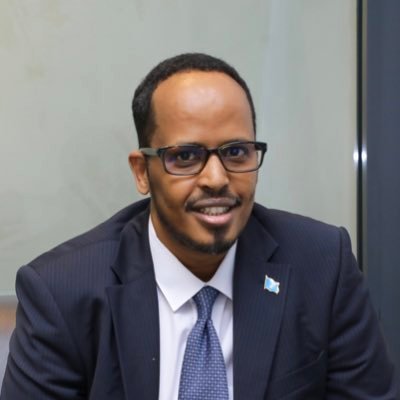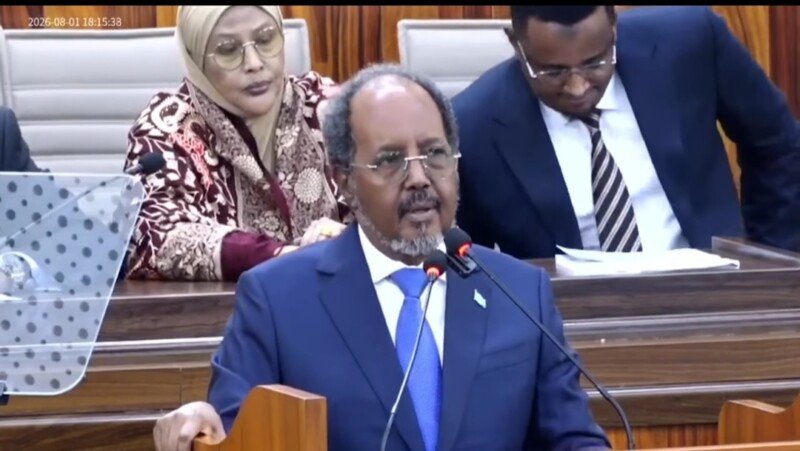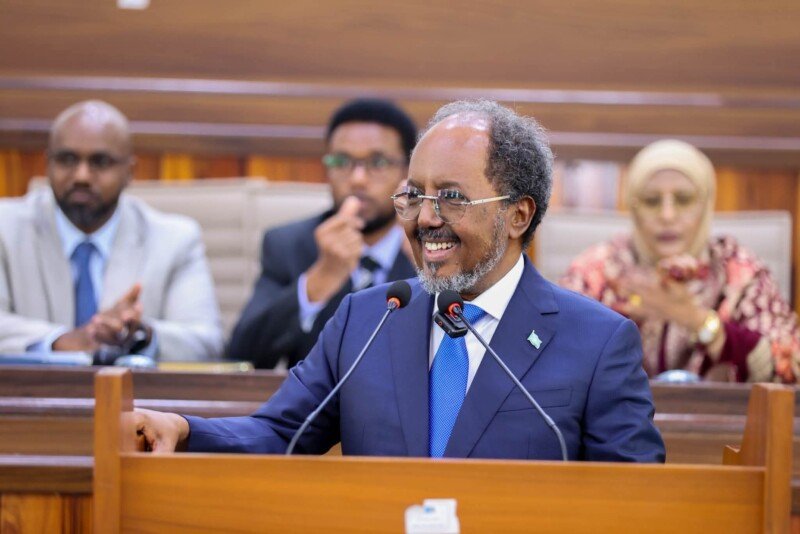

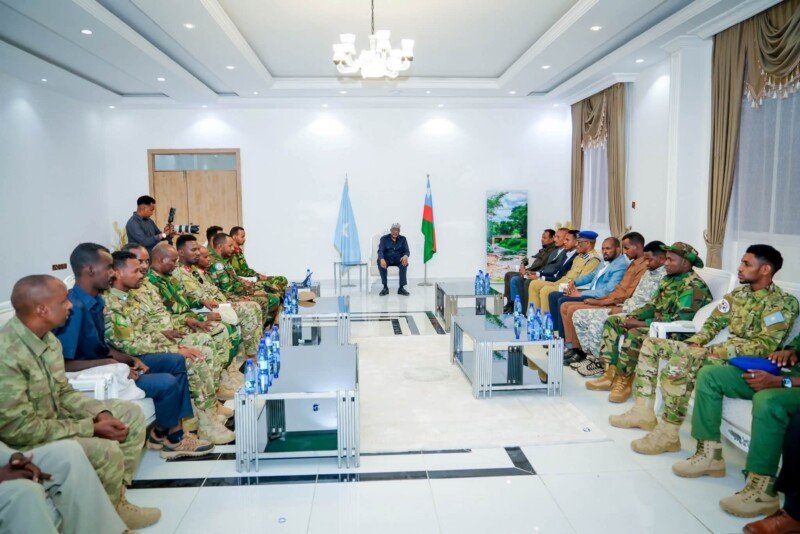
BAIDOA – The Leader of South West State, Sheikh Aadan Mohamed Nur (Madoobe), has chaired a high-level security meeting in Baidoa as the regional administration moves to consolidate its authority and address persistent security challenges in one of Somalia’s most volatile federal member states.
The meeting brought together the regional security minister, the governor of Bay region, the mayor of Baidoa, and senior military commanders. Discussions focused on strengthening public security, accelerating coordination among security agencies, and enhancing stability across South West State. The leader commended the ongoing efforts of security forces and local communities, emphasising that security is the foundation for development, quality governance, and economic growth.
A Test of Authority
The meeting comes at a critical moment for South West State. Sheikh Aadan Mohamed Nur, a former Speaker of the Federal Parliament, was elected leader of the regional state on June 10, 2026, securing a landslide victory with 88 votes out of 90 in the regional parliament. His inauguration on July 6 was attended by President Hassan Sheikh Mohamud and senior federal officials, signalling the federal government’s backing for the new administration.
Yet the security meeting also reflects the fragility of that authority. South West State has been a battleground for political rivalries and military operations against Al-Shabaab. The region’s instability has been compounded by federal interference, with Mogadishu having previously rejected the election of former president Abdiaziz Hassan Mohamed (Laftagareen) as a “pseudo-election” and sending federal forces into Baidoa on March 30 to enforce a political transition. The current leadership has consistently called for a fair process, aiming to hold the region’s house of representatives and district council elections as scheduled, in line with the shift to a universal suffrage system across all federal member states.
The Title Question
The meeting also takes place against the backdrop of a constitutional controversy that has deepened the rift between Mogadishu and regional states. Under the new constitution, which was passed by parliament despite strong opposition from regional leaders, the heads of federal member states are no longer to be referred to as “presidents” but as “leaders” (hoggaamiye). The change is intended to reflect the hierarchical relationship between federal institutions and federal member states. Interior Minister Ali Yusuf Ali (Hosh) announced the change, stating that the new designation applies to all federal member states, including those that have rejected the new constitution and remain in open dispute with the federal government.
South West State adopted the constitutional change and refer to Sheikh Aadan Mohamed Nur as “Hogaamiye” in its official communications, but the federal government has not consistently enforced the new designation. The ambiguity reflects the contested nature of the constitutional amendments and the unresolved tensions between Mogadishu and the regional states.
The security meeting in Baidoa is a necessary step, but it is also a reminder of the limits of the regional administration’s authority. South West State remains heavily dependent on federal security forces and international support for its counter-terrorism operations. The administration’s ability to deliver on its security promises will depend on its capacity to assert its authority over local security forces, address the grievances that fuel Al-Shabaab’s recruitment, and navigate the competing interests of Mogadishu and the region’s political elites.
The leader has already appointed a 26-member cabinet to advance his administration’s priorities, but the gap between ambition and execution is a recurring theme in Somalia’s federal experiment. The leader’s emphasis on security as the foundation for development is a familiar refrain. But without tangible improvements in governance, service delivery, and economic opportunity, the security gains will remain fragile. The meeting’s outcomes, and whether they translate into concrete action on the ground, will be a test of whether the new administration can rise to the challenges of governing one of Somalia’s most contested regions.