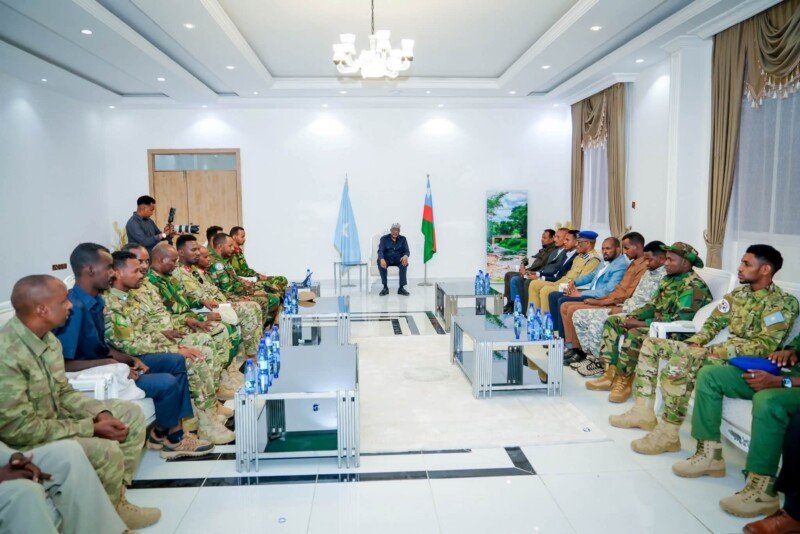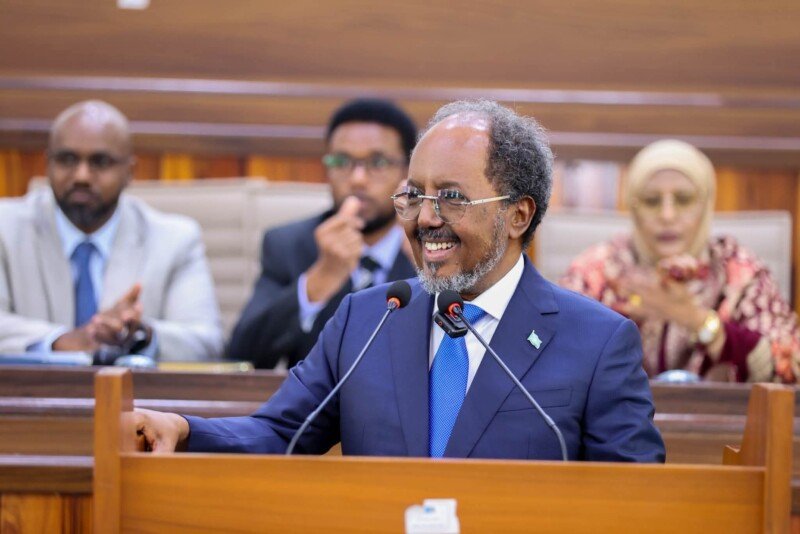

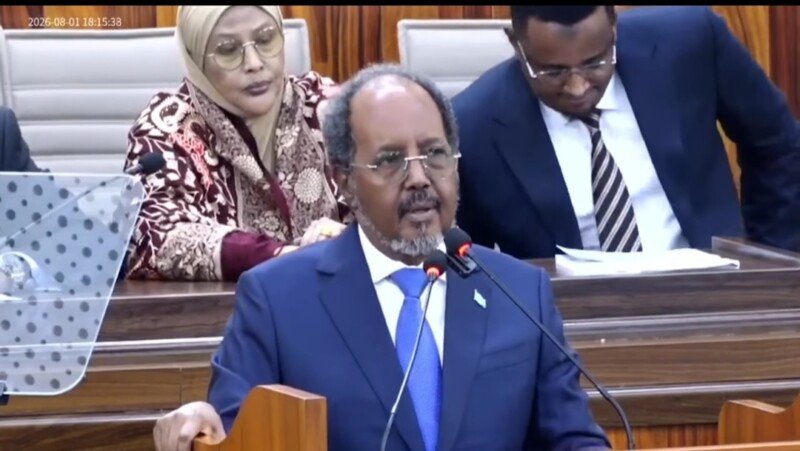
MOGADISHU – President Hassan Sheikh Mohamud has declared that Somalia’s political decisions will no longer be made abroad, asserting that the country has reclaimed its sovereignty and now plays an active role in shaping regional and international affairs. The remarks, delivered during the opening of the 8th Session of the Federal Parliament, reflect the government’s efforts to project strength and self-determination, even as Somalia remains deeply dependent on foreign aid and security assistance.
“Somalia’s political decisions cannot be made abroad,” the president said. He acknowledged that there were times when Somalia’s decisions were made outside the country, but insisted that those days are over. “Today, Somalia has become a country that participates in decisions affecting the region and the world.”
The Limits of Self-Reliance
The president’s assertion of sovereignty comes at a time when Somalia’s dependence on international support is more visible than ever. The country’s security transition, which is central to its claim of self-determination, is facing an existential crisis. The United States has notified the African Union that it will no longer finance the UN Support Office in Somalia (UNSOS) beyond December 2026, threatening the logistical backbone of the 12,000-strong African Union Support and Stabilization Mission in Somalia (AUSSOM). Without UNSOS, AUSSOM would lose critical logistical support, including food, water, fuel, transportation, medical services and casualty evacuation.
The United States has contributed nearly $2 billion to the UN support mission in Somalia but has grown frustrated with what it views as insufficient progress by Somali leaders in assuming responsibility for their own security. The Kampala summit, held on July 31, sought to chart a path forward, with African leaders agreeing to sustain AUSSOM for an additional 18 to 24 months. But the funding gap remains unresolved, and the transition to Somali-led security is proceeding without a credible plan.
A Parliament Divided
The president’s address to Parliament comes at a time of deep political uncertainty. The position of Speaker of the House of the People remains vacant following the resignation of the previous officeholder, and the election of a new Speaker is expected to be Parliament’s immediate priority. The session opens against the backdrop of growing political debate over the government’s tenure and the legal mandate of Parliament, with opposition politicians questioning aspects of the current political process.
The opposition Somali Future Council has proposed a transitional direct elections model that would maintain the 4.5 clan power-sharing system while introducing direct voting for parliamentary representatives. The proposal has drawn criticism from the government, which insists that political decisions cannot be made abroad. Yet the government’s own record on political inclusivity is mixed, with critics accusing it of centralising power and marginalising opposition voices.
The Economic and Security Dimensions
The president also addressed the interconnected challenges of economic development and security. “If we do not have a capable, armed military, if we do not have sufficient economic resources and a strong legal foundation, we will not attract investment and respect from the world,” he said.
Somalia has recorded an 80 percent increase in domestic revenue over three years, according to Finance Minister Bihi Iman Egeh, but this achievement is dwarfed by the scale of the country’s development needs. The World Bank-funded SPRING project, valued at $105 million, focuses on private-sector-led expansion, but the government’s ability to deliver on its economic promises remains constrained by weak institutions, limited resources, and persistent insecurity.
On security, the president claimed that Al-Shabaab is in its weakest phase and that the government will continue the fight to liberate the country. Somali security forces, supported by international partners, have intensified operations across southern Somalia, but Al-Shabaab still controls about 30 percent of the country. The drawdown of African Union forces has already shown signs that it can create gaps that the group could exploit to step up attacks.
Way Forward
President Mohamud’s address to Parliament reflects the government’s determination to assert Somalia’s sovereignty and self-determination. But the reality on the ground is more complicated. Somalia’s political decisions may no longer be made abroad, but the country’s dependence on foreign aid, security assistance, and diplomatic support remains profound. The president’s assertion that “Somalia’s political decisions cannot be made abroad” is a powerful statement of intent, but it also highlights the limited institutional capacity.
The question is whether Somalia can translate its rhetorical assertion of sovereignty into tangible improvements in governance, security, and economic development. The opening of the 8th Session of Parliament is a reminder that the country’s political institutions are still fragile, and that the path to self-reliance is long and uncertain.
Recommended Reading On ftlsomalia.com
- US Faces Critical Choice on Somalia Security Assistance as AUSSOM Mandate Nears Expiry
- 8th Session of Somalia’s Federal Parliament Opens Amid Political Uncertainty and Leadership Vacuum
- Somali Future Council Unveils Transitional Direct Elections Model for 2026
- Somalia Records 80% Increase in Domestic Revenue
- Somali Forces and International Partners Intensify Offensive Against Al-Shabaab