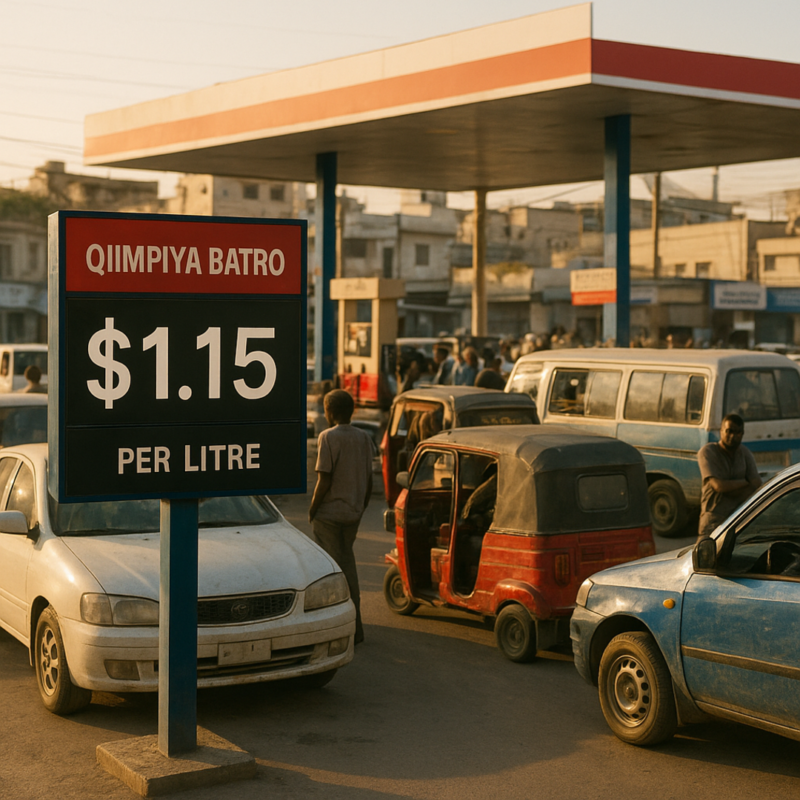

Ankara, Turkiye – The Turkish government has confirmed that exploratory drilling for oil and gas along Somalia’s maritime boundary is set to commence in 2026. This declaration comes after an extensive 3D seismic survey conducted in Somali territorial waters produced highly promising outcomes.
Turkiye’s Minister of Energy and Natural Resources, Alparslan Bayraktar, revealed that information gathered from three maritime zones each spanning more than 5,000 km² indicate a “significant potential,” suggesting Somalia possesses substantial hydrocarbon deposits. He confirmed that the complete results will be formally disclosed in January of the upcoming year.
Bayraktar also recognized Somalia’s desire to investigate land-based petroleum reserves but noted considerable obstacles pertaining to security and infrastructure.
“Additional transportation routes and improved security protocols are required to access potential inland drilling locations,” he explained, noting that both countries are working together to address these challenges.
The Somali administration is reportedly implementing comprehensive security measures in Mogadishu, Afgooye, Marka, and coastal regions to protect project sites.
Simultaneously, Turkiye is diligently developing essential transportation networks and facilities, having already finished significant harbor projects in Sabiib, Caanoole, and Awdhiigle, as well as the Türkiye Recep Tayyip Erdoğan Hospital (previously known as Erdogan Hospital).
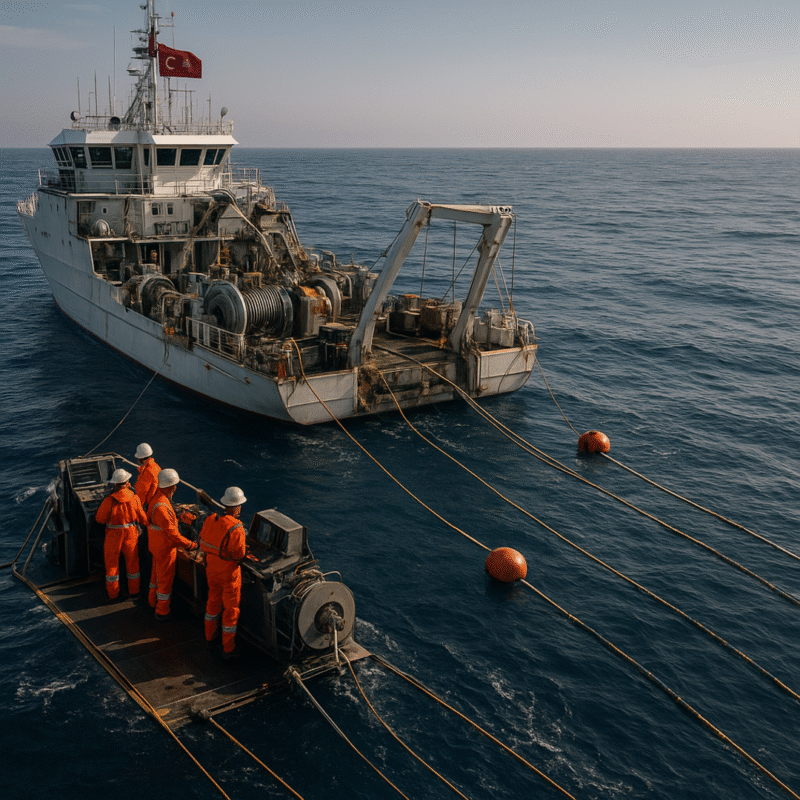
In October of the previous year, Turkiye deployed its sophisticated research vessel, the Oruç Reis, to conduct a detailed 3D seismic survey in preparation for the planned 2026 offshore exploration, anticipated to take place at depths of approximately 3,000 meters.
As a principal security and development collaborator with Somalia since 2011, Turkiye is establishing itself to assume a central role in defining the nation’s evolving energy landscape.
This announcement signifies a critical juncture for Somalia, potentially transitioning it from an assistance-reliant country into a future hydrocarbon producer.
For Turkiye, it represents the culmination of over a decade of intensifying political, military, and economic engagement with Somalia, extending beyond humanitarian aid and security to establish a lasting strategic and resource-oriented partnership.
The favorable seismic findings lend substantial credence to long-standing hypotheses regarding Somalia’s offshore energy resources. Successful development could provide the Federal Government of Somalia (FGS) with a transformative revenue source, fundamentally altering its fiscal autonomy and state-building capabilities.
The project’s viability depends entirely on securityboth at sea and on land. The reference to ongoing military operations by Somali authorities emphasizes that the initiative represents a high-value objective for entities such as Al-Shabaab. Turkiye’s capacity (and inclination) to provide direct security for offshore operations, likely through its naval deployment, will be crucial. Onshore, constructing transportation networks in insecure regions serves a dual purpose of development and military maneuverability.
Turkiye’s dominant position in Somalia’s emerging energy sector reinforces its standing as the most influential external power in the nation. This could generate tensions with other Gulf and regional actors with interests in the Horn of Africa. Moreover, it complicates the maritime boundary disagreement with Somaliland, as any substantial discovery could intensify territorial claims.
The prospect of petroleum wealth presents an extraordinary challenge for Somalia’s vulnerable institutions. Without transparent legal frameworks, robust revenue-sharing mechanisms between the FGS and federal member states, and effective anti-corruption safeguards, this opportunity risks intensifying existing political conflicts and could fall victim to the notorious “resource curse.”
Turkiye’s 2026 drilling initiative extends beyond merely an energy project; it constitutes a strategic wager on Somalia’s future. Its success relies on a precarious sequence of prerequisites: sustained security, political stability in Mogadishu, resolution of federal disputes, and navigating intricate regional rivalries.
If these conditions align, it could redefine Somalia’s trajectory. If they deteriorate, the endeavor could become a source of heightened instability, demonstrating the high-stakes character of frontier energy development in a conflict-affected state.