
MOGADISHU, Somalia – A new assessment by Turkey’s National Intelligence Academy has warned that Somalia is entering a period of acute fragility characterized by militant violence, political fragmentation, institutional weakness, climate shocks, and escalating geopolitical pressures.
The report, titled “A Multidimensional Partnership Model,” traces the evolution of Turkish-Somali relations into a layered strategic partnership while emphasizing that the environment for this model is increasingly volatile. Analysts describe a cluster of “hard risks” that will influence both Somalia’s stability and the future of Ankara’s engagement.
Militant Threats Resurgent
The assessment identifies Al-Shabaab as the primary and persistent threat. Despite joint Somali-Turkish-supported offensives in 2022, momentum declined the following year, enabling the group to regain influence across extensive rural areas.
The intelligence review notes that Al-Shabaab continues to carry out frequent bombings and targeted assassinations while operating parallel governance and taxation systems in regions where the state is absent. A smaller Islamic State faction in Puntland contributes a secondary, albeit more limited, layer of instability.
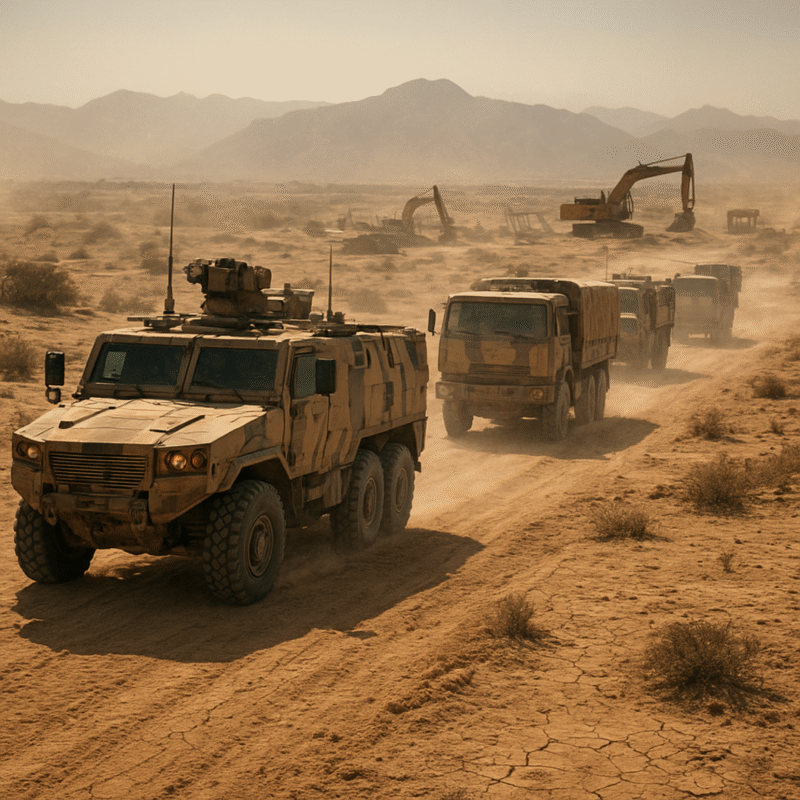
Crucially, the report observes that the Somali National Army remains incapable of securing the country without sustained external support – a security situation that directly shapes Turkey’s military role.
Unresolved Federal Structure Fuelling Political Discord
A second major risk stems from Somalia’s incomplete federal architecture. The report highlights prolonged disputes between Mogadishu and federal member states – particularly Puntland and Jubbaland – regarding elections, revenue distribution, and the division of executive authority.
These recurring standoffs have stalled national decision-making, and according to the intelligence analysis, have complicated Turkish development projects that rely on predictable coordination between central and regional authorities.
State Weakness and Donor Dependence
Somalia’s fragile institutions are described as suffering from limited administrative capacity, weak oversight mechanisms, and persistent reliance on donor funds to maintain basic public services.
While the government’s progress toward debt relief through IMF and World Bank programs is acknowledged as significant, the report cautions that Somalia still lacks the fiscal autonomy required for long-term resilience. Chronic procurement delays and slow project implementation continue to undermine development gains.
Climate Pressures Intensifying Instability
Recurrent droughts linked to climate change have devastated livelihoods, worsened food insecurity, and created opportunities for extremist recruitment. Intelligence officials warn that future climate shocks could trigger displacement on a scale that overwhelms already strained state institutions, further destabilizing the security landscape.
Geopolitical Rivalries and Information Warfare
Somalia’s strategic position on the Red Sea corridor exposes it to intense competition among regional and global powers. The report cites the 2024 Ethiopia-Somaliland memorandum – signed without Somalia’s consent – as an example of how geopolitical rivalries can escalate unpredictably and inflame domestic tensions.
Such volatility, analysts warn, threatens maritime flows through the Gulf of Aden and the Bab al-Mandeb Strait. The study also highlights increasingly sophisticated disinformation campaigns aimed at undermining Somalia’s foreign partnerships, including narratives portraying Turkey’s presence as purely militarized or extractive. Somalia’s fragile media environment, it says, allows such narratives to spread with ease.
Strategic Gains at Risk
Despite these pressures, the intelligence assessment notes significant progress: improved infrastructure in Mogadishu, military cooperation that could strengthen Somali forces by 2030, and new economic opportunities linked to Somalia’s entry into the East African Community.
Yet it concludes that such gains remain tenuous, vulnerable to the five core risks shaping the country’s trajectory.
Turkey’s Expanding Footprint
Turkey has gradually expanded its political, economic, and military role in Somalia since President Recep Tayyip Erdoğan’s landmark 2011 visit to Mogadishu. Camp TURKSOM, Turkey’s largest overseas military training base, has trained more than 15,000 Somali troops. Turkish companies now operate key infrastructure, including Mogadishu’s international airport and port.
Parliamentary debates in Ankara have cast Somalia as a strategic outpost, drawing parallels to Turkey’s approach in northern Syria – prioritizing security stabilization before opening avenues for Turkish commercial ventures. The two nations have exchanged land for embassy construction, and Turkey is currently building a new Somali embassy in Ankara.
Turkey’s total assistance to Somalia is estimated to exceed $1bn. However, some Turkish media outlets claim that portions of this aid have disproportionately benefited companies close to the Erdoğan administration, sparking domestic criticism.
Bilateral trade declined from $426m in 2023 to $384m in 2024, yet Turkey remains Somalia’s leading foreign investor. International scrutiny has also intensified: UN investigators reported in 2022 that Ankara supplied armed drones to Somalia without UN approval – potentially breaching sanctions.
Sweeping Privileges in Hydrocarbons Deal
Nordic Monitor recently published the full text of a comprehensive hydrocarbons agreement submitted to the Turkish Parliament on 22 April 2025. The document offers an unprecedented glimpse into Ankara’s deepening energy and defense partnership with Mogadishu.
According to the agreement, Turkey has secured extensive operational and financial privileges in Somalia’s offshore and onshore exploration zones – solidifying an energy partnership with major geopolitical implications.
A Stark Warning for Policymakers
The intelligence report concludes on a sober note: Somalia’s future, it argues, depends on its ability to build credible institutions, reduce militant threats, manage internal political disputes, resist external pressures, and strengthen its economic foundations.
Without improvements across these fronts, the strategic partnership Turkey and Somalia have cultivated over more than a decade will remain vulnerable to recurring crises in an increasingly contested region.