
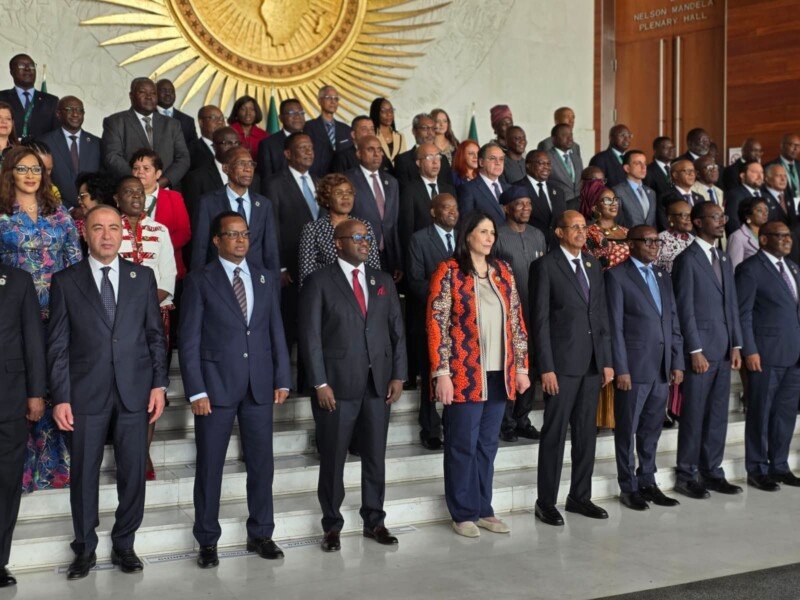
ADDIS ABABA – Somalia’s Minister of Foreign Affairs and International Cooperation, Abdisalam Abdi Ali, is leading the country’s delegation at the 49th Ordinary Session of the African Union Executive Council, where he is presenting Somalia’s efforts to strengthen water security through initiatives including the Barwaaqo Water for Rural Resilience Project and two new solar-powered boreholes. The session, held under the theme “Assuring Sustainable Water Availability and Safe Sanitation Systems to Achieve the Goals of Agenda 2063,” brings together African foreign ministers to address the continent’s severe water and sanitation crisis.
The minister’s presentation comes as the African Union warns that more than 400 million people across the continent lack access to basic drinking water, while over 700 million remain without safely managed sanitation. Somalia’s water crisis is among the most severe, with decades of conflict, weak institutions, and climate shocks leaving millions without reliable access to clean water.
A Crisis of Access, Not Ambition
Somalia’s presentation at the AU Council highlights the Barwaaqo Water for Rural Resilience Project, a World Bank-funded initiative launched in 2021 to improve water and agricultural services for pastoral and agro-pastoral communities in drought-prone areas. The project is part of a broader effort to expand access to clean water through solar-powered boreholes and other infrastructure.
The Barwaaqo project builds on earlier initiatives, including the Biyoole project launched in 2019 with a $42 million grant from the World Bank, which aimed to strengthen water, agriculture, and livestock resilience. In June 2026, the National Climate Fund approved a $25.8 million urban water project and a $232 million water investment plan, signaling the government’s stated commitment to addressing the crisis.
Yet the gap between policy and practice remains vast. Somalia’s water infrastructure has been systematically destroyed by decades of conflict, and the government’s capacity to deliver on its promises is severely constrained by weak institutions, limited resources, and ongoing insecurity. In April 2026, Somali Minister of Environment and Climate Change Bashir Mohamed Jama highlighted water security challenges at an African forum, pointing to factors including climate change, rapid urbanization, and insufficient investment as barriers to sustainable development.
A Platform for Rhetoric, Not Results
The AU Executive Council session is a platform for member states to present their achievements and aspirations, but it is also a venue for the kind of diplomatic theatre that has become a hallmark of Somali governance. The government’s presentation on water security is a welcome gesture, but it does little to address the immediate needs of the millions of Somalis who lack access to clean water.
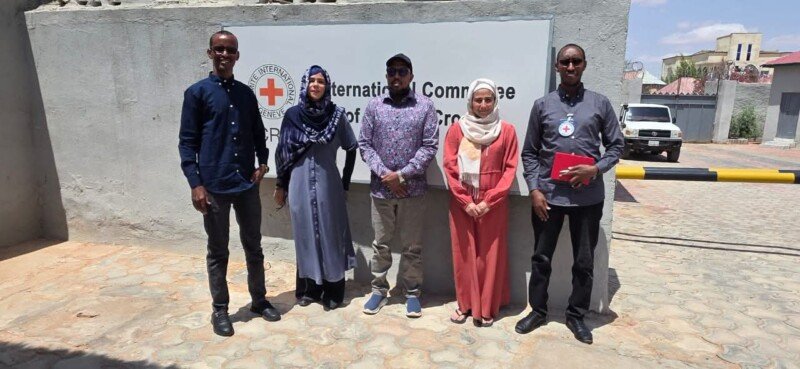
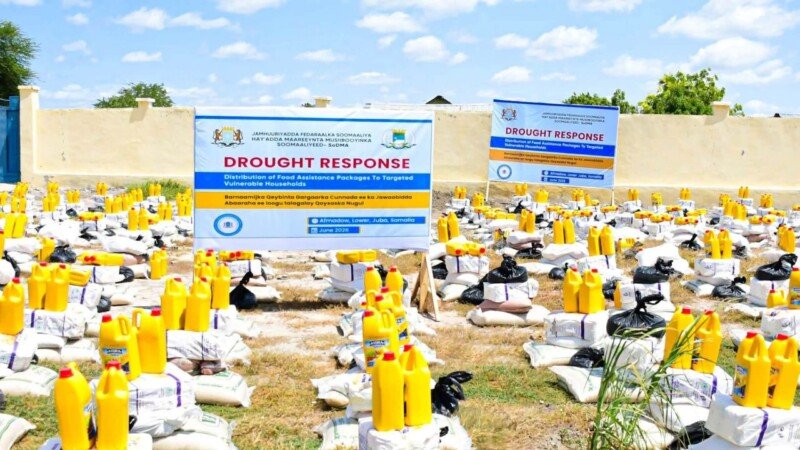
The reality on the ground is stark. In July 2026, the ICRC and Galmudug officials met to discuss water scarcity, highlighting the ongoing humanitarian needs in central Somalia. In April 2026, the army provided food aid to drought-hit Middle Shabelle, while the Gorgor Commandos initiated water distribution operations in Galgaduud. These emergency interventions are a testament to the failure of long-term planning, not its success.
The AU Council’s focus on water security is timely, but Somalia’s participation risks becoming another exercise in documentation rather than transformation. The government has become adept at attending international forums and presenting ambitious plans, but translating these into tangible improvements in the lives of ordinary Somalis has proven elusive.
Strengthening the AU: A Priority Without Follow-Through
Somalia will also contribute to discussions on strengthening the African Union Commission and advancing the continent’s shared priorities. This is a significant commitment from a country that has historically struggled to maintain a consistent diplomatic presence. In February 2026, Somalia secured a seat on the African Union Peace and Security Council for the first time, a diplomatic milestone that reflects the country’s growing engagement with continental institutions.
Yet this diplomatic engagement has not translated into tangible benefits for the Somali people. The Peace and Security Council seat is a significant achievement, but it does not address the governance failures and institutional weaknesses that continue to undermine Somalia’s stability.
Way Forward
The 49th Ordinary Session of the AU Executive Council is an opportunity for Somalia to showcase its efforts and reaffirm its commitment to continental priorities. But the gap between rhetoric and reality remains wide. The government’s presentation on water security is a necessary step, but it is far from sufficient.
For the people of Somalia, the promise of clean water remains distant. The Barwaaqo project and the solar-powered boreholes are welcome initiatives, but they are a fraction of what is needed. Without sustained investment, genuine political will, and a commitment to transparency and accountability, the water crisis will continue to deepen, and the AU Council’s deliberations will remain a distant echo of the suffering on the ground.
Recommended Reading On ftlsomalia.com
- Somali Minister Highlights Water Security Challenges at African Forum
- ICRC and Galmudug Discuss Water Scarcity and Humanitarian Needs in Central Somalia
- Somalia Joins African Union Peace and Security Council for First Time
- Somalia Wins Seat on African Union Peace and Security Council for 2026–2028
- Army Provides Food Aid to Drought-Hit Middle Shabelle