
WASHINGTON – The breakaway republic of Somaliland provided Israel with a covert military position during the recent war with Iran, allowing Israeli aircraft a potential stopping point on long-range flights to the Islamic Republic, according to a CNN investigation published Thursday.
The report, citing four sources familiar with the matter, revealed that Israel secretly deployed elite military and intelligence units to Azerbaijan as well as maintaining positions in Iraq, the United Arab Emirates, and Somaliland. Together, these deployments placed Israeli forces along Iran’s southern, western, and northern periphery during the war, extending the military’s range by hundreds of miles deep into Iranian territory.
CNN, which reported for the first time on the use of covert Israeli military sites in Somaliland, noted that the facilities were among numerous covert military sites and bases in multiple countries. The forces, initially planned as potential rescue teams in the event of an emergency, expanded in scope to become military and intelligence gathering positions.
Israel’s Recognition of Somaliland Preceded Deployment
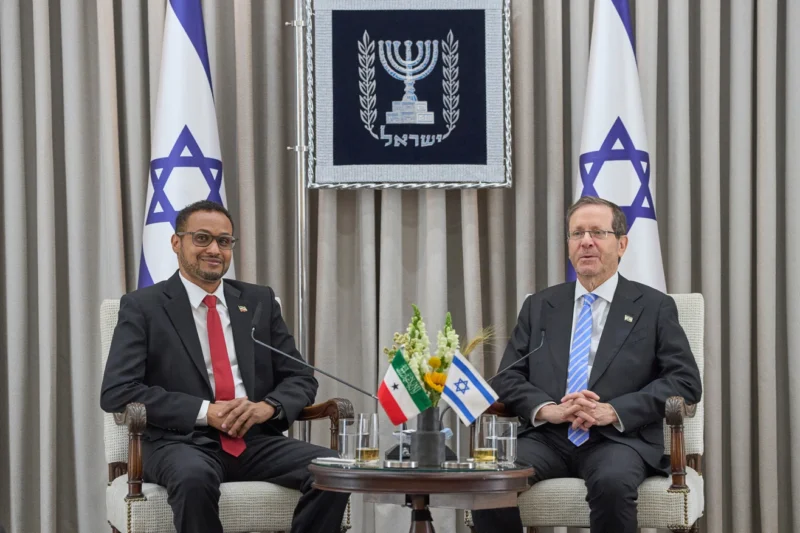
The report comes six months after Israel formally recognized Somaliland in December 2025, becoming the first country to do so. Both parties rapidly advanced plans to establish embassies, with Somaliland declaring it would open its diplomatic mission in Jerusalem, a choice that provoked criticism from Mogadishu and eighteen other countries with Muslim majorities.
Israel formally recognized Somaliland in late 2025, with both parties announcing plans to establish embassies. The recognition attracted attention not only as a direct challenge to Somalia’s territorial integrity but also as a destabilizing development for the broader regional order.
Strategic Importance of Berbera Port
The CNN report highlighted the strategic importance of Somaliland’s location on the Horn of Africa, noting that the UAE maintains an expansive commercial and military presence in the port city of Berbera. The development of the Berbera corridor as an alternative logistics gateway for landlocked Ethiopia has drawn increasing international attention.
The Berbera corridor has emerged as a strategic trade and transportation hub for Somaliland and neighboring Ethiopia, offering an alternative logistics gateway to the congested ports in Djibouti and facilitating increased regional commerce.
The report’s revelations about Israeli military positions in Somaliland add a new dimension to the growing geopolitical competition in the Red Sea corridor. The Horn of Africa has increasingly become an arena of strategic contestation, with external actors including the UAE, Turkey, China, and now reportedly Israel expanding their military and commercial footprints.
Mogadishu’s Response to Israeli Recognition
The Somali federal government has consistently condemned any international engagement with Somaliland that it perceives as undermining its sovereignty. Following Israel’s recognition in December, Mogadishu recalled its ambassador to Tel Aviv and issued a formal protest.
The Somali federal government has concentrated much of its diplomatic pressure on the United Arab Emirates, which Mogadishu accuses of financing global advocacy campaigns for Somaliland. Last week, Prime Minister Hamza Abdi Barre claimed that Abu Dhabi was investing millions of dollars to promote Somaliland’s recognition process, an assertion that Emirati representatives have not publicly responded to.
Azerbaijan Rejects CNN Claims
A spokesperson for the Azerbaijani embassy in the United States rejected the CNN report, stating, “We firmly reject unfounded claims regarding the alleged use of Azerbaijan’s territory for operations against third countries.” After the story published, Azerbaijan’s Media Development Agency said the publication was “aimed at creating confusion with the international community, undermining regional stability and interstate relations, and generating tensions in the region.”
CNN has reached out to the Israeli Prime Minister’s Office and Israel Defense Forces for comment, as well as Somaliland’s foreign ministry.
U.S. Congressional Report Highlights Somaliland’s Strategic Value
The CNN investigation follows a recent U.S. congressional report that outlined multiple avenues for enhanced cooperation with Somaliland, focusing on security collaboration, diplomatic relations, trade, and investment opportunities. The report underscored Somaliland’s strategic positioning near the Bab al-Mandab Strait and the Red Sea, characterizing it as a potentially valuable partner in addressing common security challenges.
Former U.S. ambassador to Somalia Larry Andre has accused President Hassan Sheikh Mohamud of deliberately breaking down the nation’s federal system, arguing that this has unexpectedly supported Somaliland’s quest for independence. “President HSM has become a significant backer of Somaliland independence through his actions that dismantle Somalia’s federal structure,” Andre stated.
Growing International Engagement with Somaliland
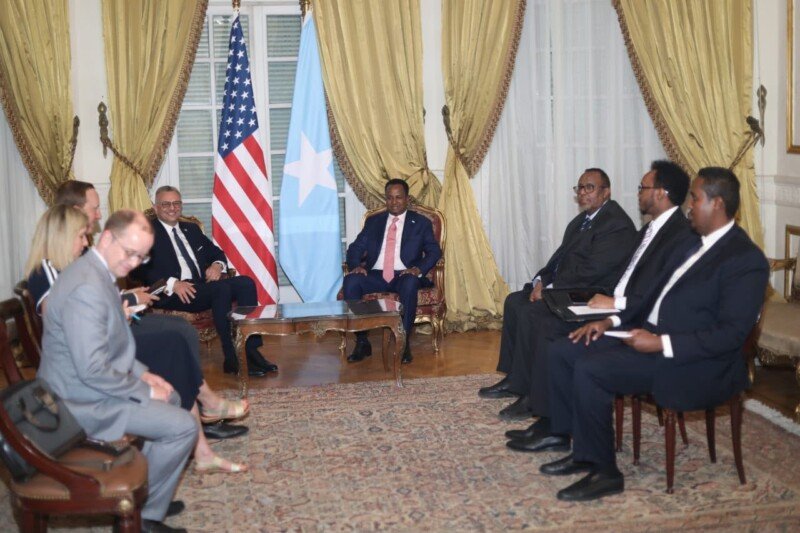
The CNN report adds to a growing list of international engagements with Somaliland that have drawn Mogadishu’s concern. While the United States continues to officially recognize Somalia’s sovereignty and territorial integrity, Washington has pursued practical cooperation with Somaliland on security and trade matters.
The United States has moved toward direct bilateral engagement with Somalia’s regional states, departing from its traditional approach of conducting diplomacy through Mogadishu. This revised approach has raised concerns in Mogadishu that Washington is recalibrating its strategy in the Horn of Africa.
The congressional report demonstrates that Somaliland is becoming an increasingly influential element in U.S. strategic planning for the Horn of Africa, particularly concerning maritime security, counterterrorism, and regional trade. However, political barriers persist. Washington continues to support Somalia’s sovereignty while pursuing practical cooperation with Somaliland, reflecting a policy of increased engagement without formal recognition.
For Somaliland, the CNN report and the U.S. congressional document represent positive developments as they formally recognize the territory’s strategic significance and the potential for deeper engagement with international partners. Supporters of Somaliland are likely to contend that such cooperation strengthens their argument for enhanced international recognition.
However, for the Somali federal government, these developments are deeply concerning. The combination of Israel’s formal recognition, the reported covert military positions, and growing American strategic interest in Berbera poses significant challenges to Mogadishu’s long-standing efforts to maintain Somalia’s territorial integrity.
Recommended Reading On ftlsomalia.com: