
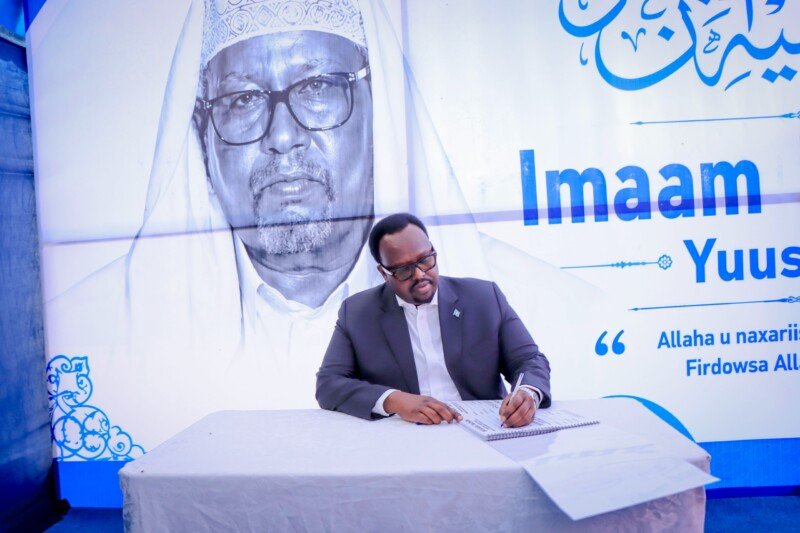
MOGADISHU – Deputy Prime Minister Salah Ahmed Jama, accompanied by Minister of Information, Culture and Tourism Abdifatah Qasim Mohamud, Minister of Interior, Federal Affairs and Reconciliation Ali Yusuf Ali (Hosh), and other officials, have signed the condolence book opened in memory of the late Imam Mohamed Yusuf.
The officials visited the venue to offer their condolences to the family and relatives of the deceased, expressing their sympathies to the Somali people on the passing of Imam Mohamed Yusuf. The delegation prayed for the late Imam’s soul to rest in paradise and for his family and the Somali people to be granted patience and faith.
The officials praised the late Imam’s prominent role in strengthening peace, promoting social cohesion, and enhancing unity among the Somali people. His contributions to reconciliation and community harmony were widely recognised across the country.
The late Imam was a respected religious figure whose work in peacebuilding aligned with national efforts to strengthen reconciliation, including the National Reconciliation Framework launched by Prime Minister Hamza Abdi Barre as a joint effort between the UNDP and the Ministry of Interior.
A Life Dedicated to Peace and Unity
Imam Mohamed Yusuf was known for his commitment to fostering peace and social harmony in Somalia. His work emphasised the importance of unity and reconciliation, values that have been central to the country’s state-building efforts.
The late Imam’s contributions to peacebuilding are reflected in the work of the Peace Education Steering Committee, which was established to direct and coordinate the nationwide implementation of peace education programs across the country.
Government Recognises Religious Leaders’ Role in Reconciliation
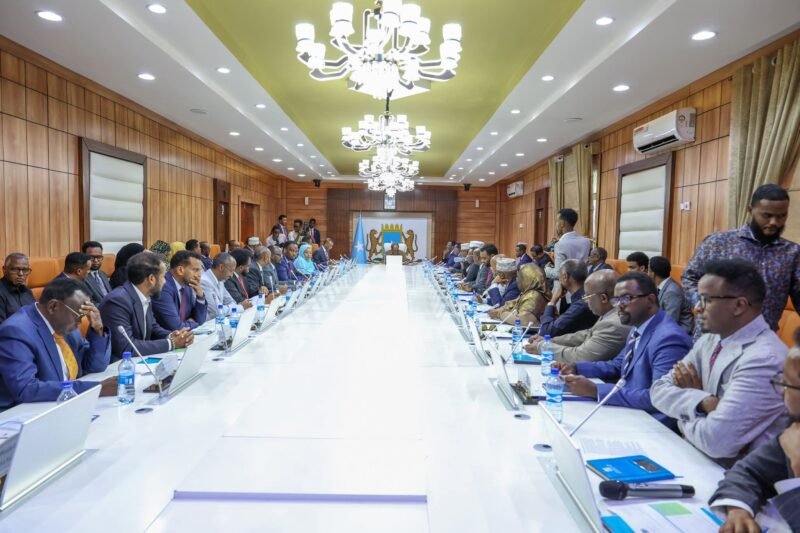
The presence of senior government officials at the condolence signing reflects the federal government’s recognition of the role religious leaders play in promoting peace and stability. The government has accelerated the national Peace Education initiative as a core pillar of the National Reconciliation Framework, which was officially launched to structurally strengthen the infrastructure for peace across the country.
The Role of Religious Scholars in State-Building
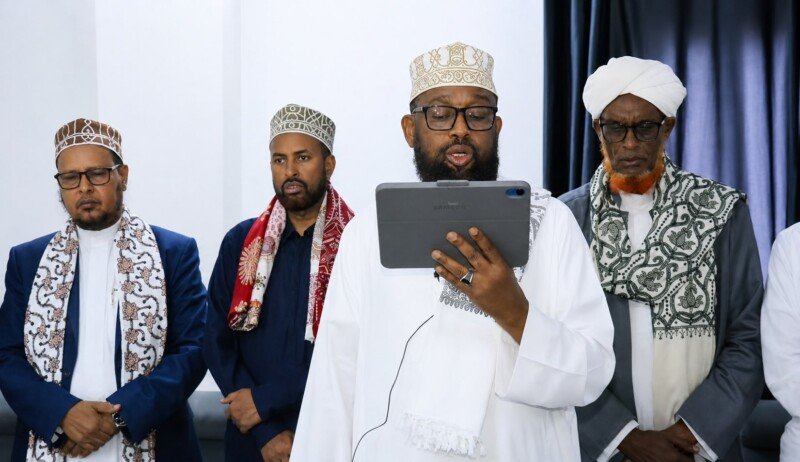
Religious leaders have been actively involved in promoting social cohesion and reconciliation, and the government has previously engaged with them on issues ranging from child protection to peacebuilding. The signing of the condolence book underscores the importance of religious figures in Somalia’s social fabric.
Way Forward
The late Imam’s legacy of peace and unity serves as a reminder of the importance of reconciliation and social cohesion in Somalia’s ongoing state-building efforts. The government has reaffirmed its commitment to working with religious and community leaders to advance peace and stability in the country.