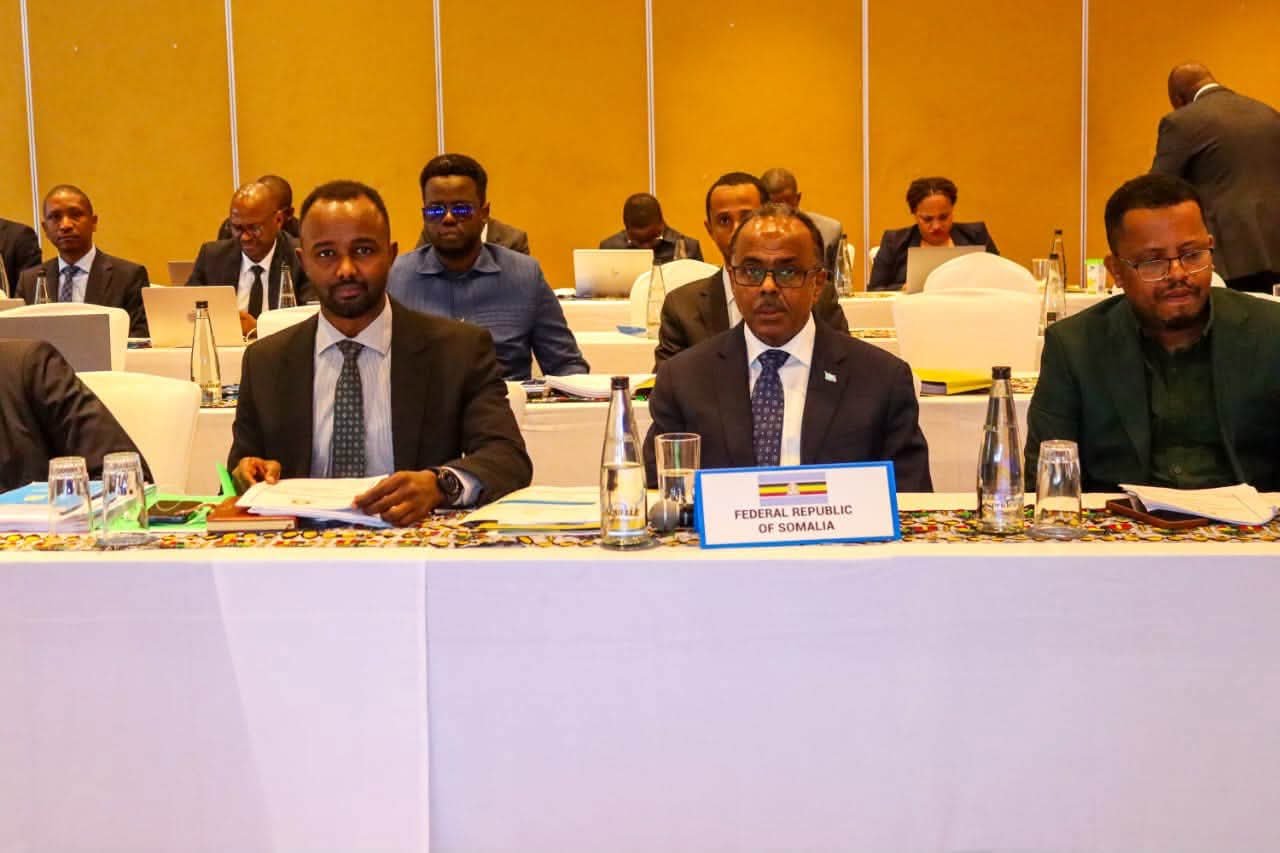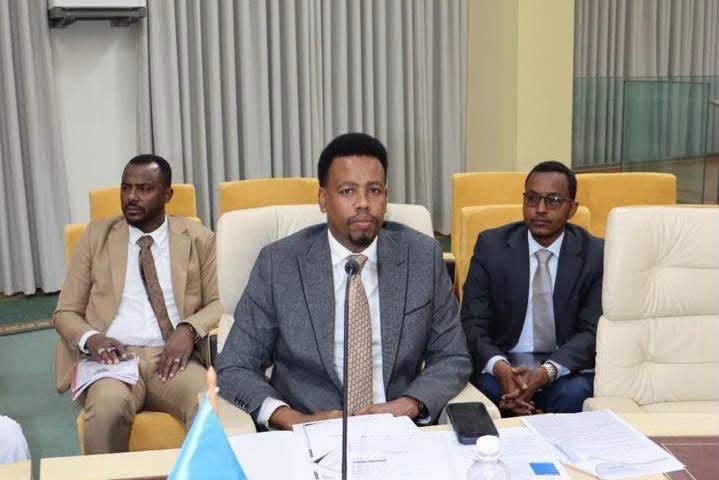

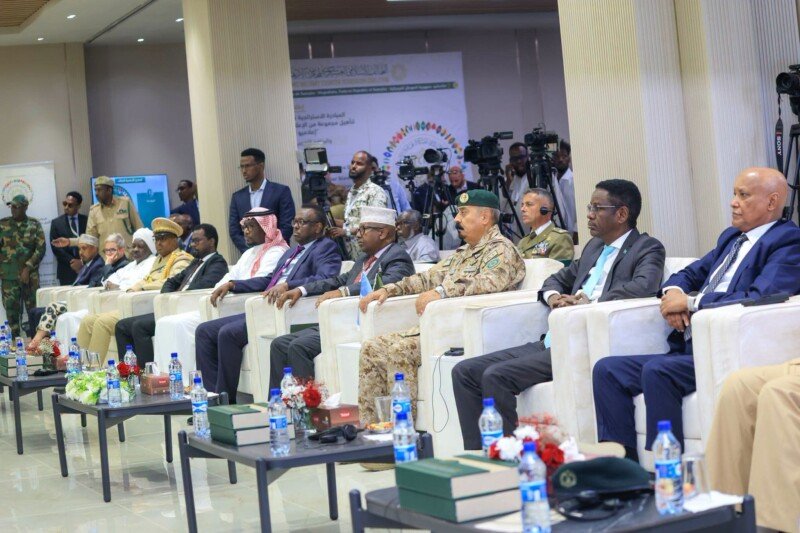
MOGADISHU — The Islamic Military Counter-Terrorism Coalition (IMCTC) has officially launched a series of projects in Somalia, beginning with a three-day training programme for journalists and social media influencers focused on media and peace.
The launch event in Mogadishu drew representatives from 43 countries, more than 20 international embassies, and 21 Somali government institutions that are to receive projects under the programme. Defence Minister Ahmed Moalim Fiqi, Justice Minister Hassan Macallin Mohamud and Internal Security Minister Abdullahi Sheikh Ismail (Fartaag) attended alongside senior military commanders, ambassadors, IMCTC representatives and international partners.
Opening the training, Defence Minister Fiqi said the government has adopted a national approach to countering terrorism that links the military, security, ideological, media and economic fields while strengthening state institutions. He said Somalia has made measurable progress across those fields, citing military gains against armed groups, the drying up of their sources of finance, work against extremist thinking, and the closure of hundreds of websites and internet accounts belonging to them.
IMCTC Secretary-General Major General Mohammed bin Saeed al-Moghedi told participants that Somalia’s decision to carry out the initiative carries particular weight, and that the country has a young and active media sector able to build public awareness and strengthen a culture of peace. “Informed words build awareness,” he said, “professional information counters disinformation, and responsible media protects a society from ideas directed at its security, its unity and its future.”
The coalition regards those working in the media as partners in the making of security.
Peace Journalists Programme and Wider Initiatives
The ‘Peace Journalists’ initiative aims to strengthen the role of journalists and media organisations in preventing extremism and terrorism while promoting peace, social cohesion and public awareness. Forty participants are taking part, drawn from government media, the media of the federal member states, private television and radio stations, and social media influencers.
Beyond the media project, the wider IMCTC programme is to cover the training and equipping of the armed forces, rehabilitation programmes addressing ideology, economic security, and the judicial handling of terrorism cases and money laundering, work involving the Military Court and the Ministry of Justice. Among the institutions receiving projects are the ministries of Defence, Internal Security, Information, Finance and Endowments, the Tubsan agency, the Stabilisation Fund, the National Security Office, Immigration and Communications.
The programme is structured across four domains: ideology, communications, counter-terrorist financing and the military, following the coalition’s own structure. The IMCTC holds memoranda of understanding with the United States, the United Kingdom and France as supporting countries, and with the United Nations Office of Counter-Terrorism. The Somali programme applies all four domains to a single member state at once.
Background and Strategic Context
The launch follows a consultative meeting held in September 2025, chaired by Deputy Defence Minister Idiris Osman Haji, focused on coordinating national efforts for the effective rollout of IMCTC-supported projects in 2026.
The initiative reflects a growing emphasis on using communication and community engagement alongside security operations in efforts to counter extremist ideologies. Somalia has been battling Al-Shabaab for more than a decade, with government and allied forces continuing military operations against the group while authorities and international partners have increasingly stressed the importance of addressing the ideological and social factors that help extremist groups recruit and operate.
What has been launched is a framework rather than its content. No budget has been published for any project, and no account has been given of how the forty media participants were selected or by whom. The programme names its institutions and its end date, which is more than most such initiatives set out at the start, and those are the terms on which it can be measured when 2027 arrives.
Critical Note
The launch of the IMCTC’s Peace Journalists Programme represents a significant expansion of Somalia’s counter-terrorism cooperation with the Saudi-led coalition. The emphasis on media and communications alongside military operations reflects a welcome recognition that defeating extremism requires more than just military force.
However, the absence of published budgets and selection criteria raises questions about transparency and accountability. The government’s claim of closing hundreds of websites and accounts belonging to armed groups, while difficult to verify, suggests progress in countering extremist messaging. Yet the broader programme’s success will depend on whether it can deliver lasting institutional capacity and genuine community engagement, rather than serving primarily as a diplomatic gesture.
The Somali government must ensure that these initiatives are implemented transparently and effectively, with clear benchmarks for success. The international community should support these efforts while maintaining robust oversight to ensure that resources reach the intended beneficiaries and that the programme contributes meaningfully to Somalia’s long-term stability and resilience.