
MOGADISHU — The United Nations Children’s Fund (UNICEF) has warned that unprecedented cuts in humanitarian aid are forcing the closure of health and nutrition facilities across Somalia, leaving hundreds of thousands of children at greater risk of malnutrition and preventable death.
In Somalia today, aid cuts are closing doors to healthcare, shutting down nutrition services, and pushing water, education and protection further out of reach. As ever, children are paying the price. On the back of unprecedented cuts in humanitarian aid, 205 health and nutrition facilities have already closed.
The impact on children has been immediate: in the first six months of this year, Somalia has seen a 32 per cent increase (from the same period last year) in children being admitted to stabilization centres with severe acute malnutrition and complications.
UNICEF spokesperson James Elder said from Nairobi that he had met dozens of malnourished children in stabilization centres who arrived at hospitals severely ill because community facilities had closed.
“Fewer Facilities Mean Longer Journeys”
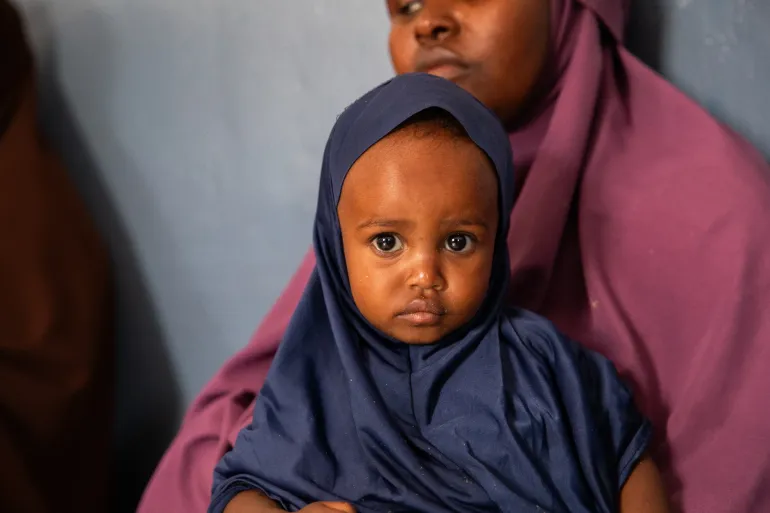
Elder warned that the closures are making it increasingly difficult for vulnerable children and their mothers to access urgent medical and nutritional care, particularly in remote communities. “Fewer facilities mean longer journeys for mums and their babies; longer journeys mean later treatment; later treatment means more severe illness and a greater risk of preventable death.”
The funding cuts have already contributed to a 30 per cent reduction in health and nutrition service coverage. Under severe funding scenarios, as many as 618 health facilities could close nationwide.
Nearly one million children under five, adolescent girls and women risk losing access to nutrition services in Somalia. The increase in children at stabilization centres is not because more children are becoming sick. It is because preventive and community-based nutrition services have been cut, meaning vulnerable children are less likely to be identified and treated early.
According to the latest Integrated Food Security Phase Classification (IPC) analysis, 6 million people, 31 percent of Somalia’s population, are experiencing crisis levels of food insecurity (IPC Phase 3 or above) between April and June 2026. This includes close to 1.9 million people facing Emergency (IPC Phase 4), a number that has tripled in less than a year. Approximately 1.9 million children are suffering from acute malnutrition, including 493,000 facing severe acute malnutrition, children who are 12 times more likely to die than well‑nourished children.
UNICEF Somalia Representative Sandra Lattouf said: “Across Somalia, children are facing a rapidly worsening crisis and time is running out. While communities and frontline workers remain resilient, they cannot do it alone.” According to UNICEF data, the number of children needing treatment for severe acute malnutrition now exceeds the levels seen during the 2011 and 2022 droughts.
War Impact Worsens the Crisis
For Somalia’s malnourished children, already facing the dual crises of severe drought and sharp reductions in international aid, the escalation of conflict in the Middle East has brought more than rising fuel costs. It has become a question of survival. Critical shortages of essential therapeutic foods, worsened by shipping disruptions linked to the Iran crisis, have compelled clinics to reject severely malnourished children and ration available supplies.
Healthcare professionals in Baidoa and Mogadishu report having to conserve limited supplies of specialized therapeutic milk and Plumpy’Nut, a nutrient-rich peanut-based paste crucial for stabilizing severely malnourished children. “Given the extensive needs and insufficient supplies, we’ve been forced to continually decrease the portions provided to children,” stated nurse Hassan Yahye Kheyre. According to the International Rescue Committee (IRC), which supports the facility, the 225 cartons of peanut paste remaining at his clinic, serving over 1,200 children, will likely be depleted within two weeks. “When treatment is inconsistent, children become extremely weak both physically and mentally. At that point, it might be irreversible,” Kheyre added.
An IRC order for peanut paste sufficient to feed more than 1,000 children has been stranded for two months at the Indian port of Mundra, now overwhelmed with redirected shipments unable to enter the Gulf. CARE International reported that the cost of a single carton of therapeutic food has risen to $200 from $55, meaning available funds now provide enough for only 83 children instead of 300.
Personal Stories Amid Worsening Hunger Crisis
At the clinic in Baidoa operated by IRC’s local partner READO, mother-of-nine Muumino Adan Aamin has been attempting to obtain peanut paste for Ruweido, her 11-month-old daughter. Ruweido requires a daily regimen of three sachets, but Aamin has been refused twice as the clinic had no stock available either time. Aamin nearly lost her daughter Anisa to hunger during a previous drought that brought Somalia to the edge of famine in 2017. “Just bones and skin,” the toddler only survived because of peanut paste, Aamin said. Nine years later, a new drought has driven 6.5 million people, or one in three Somalis, into acute hunger.
In Puntland, communities are struggling to survive after three years without steady rainfall. Abdi Ahmed Farah, a 70‑year‑old pastoralist, once owned 680 goats. Drought‑related diseases and lack of food and water have killed all but 110 of them, and those that remain are too emaciated to sell. “No market exists for my goats due to their emaciation. Formerly we exchanged them for rice, but now that’s impossible,” he said. His family survives on one meal of rice with sugar and oil per day.
A Terrifying Reality
This year nearly 1.9 million children are projected to be affected by malnutrition, including almost half a million with severe acute malnutrition, the deadliest form. Even getting life-saving assistance to the children who need it is becoming harder: the budget for UNHAS in Somalia, the UN’s humanitarian air service that provides critical air connectivity for UNICEF’s life-saving cargo and operations, was cut by 40 per cent between 2025 and 2026.
Elder highlighted the case of Hajio, a mother who once had a home, sent her children to school and owned cattle before drought killed her entire herd. She fled to Burhakaba, southwest Somalia, in search of support but received only clothes and tomatoes from a nearby community, itself among the poorest in the country, and nothing from the international community.
The compounding shocks, including severe drought, insecurity, rising food and fuel prices, and supply chain disruptions, have been exacerbated by a dramatic reduction in humanitarian assistance due to funding constraints. More than 500 health and nutrition facilities have been closed across the country, disease outbreaks are not being controlled, and mortality risks are rising. Total measles cases doubled between January and March 2026 compared to the same period in 2025, particularly affecting already malnourished children.
Funding Crisis and International Response
The 2026 Somalia Humanitarian Needs and Response Plan is currently only 15.2 percent funded. Hameed Nuru, WFP’s Country Director for Somalia, warned: “We are reaching a point where any further delay could cost lives. Families have exhausted their coping mechanisms, services and emergency assistance are extremely limited, and children are slipping into severe malnutrition across the country.”
Oxfam stated that food prices had increased by 30 percent and fuel prices by 50 percent due to disruptions affecting regional trade and supply routes. “Three poor rainy seasons have pushed communities in the country at risk of famine,” said Oxfam’s Somalia humanitarian lead, Sameer Kariya.
Somalia’s Minister of Planning, Investment and Economic Development, H.E. Mohamud Beenebeene, held high-level strategic discussions with UNICEF Representative Sandra Lattouf to align international aid programs with the federal government’s long-term economic vision. The primary focus centered on the coordination of UNICEF’s Country Programme (2026-2030) with the strategic objectives outlined in Somalia’s National Transformation Plan (2025-2029).
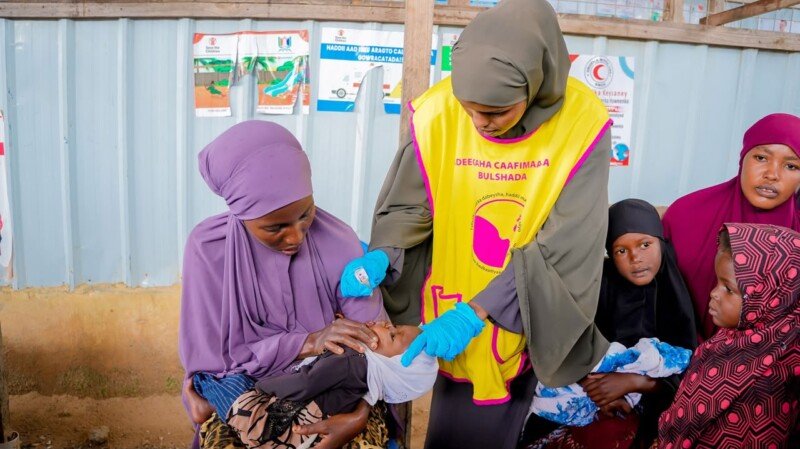
UNICEF has also been actively engaged in other critical health interventions. UNICEF delivered nearly 3 million doses of routine vaccines to Las Anod, including life-saving immunizations against pneumonia and rotavirus diarrhea, two of the leading causes of child mortality in the region. The initiative is part of broader efforts to rebuild the health system and restore trust in public health services.
The Ministry of Health, in partnership with UNICEF, has also concluded a nationwide training program for 45 journalists aimed at enhancing public awareness about childhood vaccines, equipping media professionals with accurate, science-based knowledge about vaccines.
Minister of Defence Ahmed Moallim Fiqi has held a meeting with Deputy Special Representative George Conway and UNICEF Representative Sandra Lattouf to discuss strengthening cooperation on the protection of civilians, particularly children affected by armed conflict. The meeting focused on implementing the National Policy on the Protection of Civilians and developing an integrated system for reporting and documenting allegations of violations.
Minister Fiqi briefed the UN officials on the progress made by the Somali National Army in protecting civilians, especially children, emphasising that military operations are conducted in accordance with national policies and international obligations.
Critical Note
UNICEF’s warning paints a devastating picture of Somalia’s child malnutrition crisis, with 205 health facilities already closed and nearly 1.9 million children projected to suffer from malnutrition this year. The closure of these facilities comes at precisely the wrong moment, as Somalia confronts a worsening climate crisis, severe drought, conflict, and the threat of record-strength El Niño flooding.
The 32 per cent increase in children admitted to stabilization centres is not because more children are becoming sick; it is because preventive services have been cut. The international community’s retreat from Somalia at this moment is not a saving; it is a decision to pay more later, in money, in security, in lost development and, for some children, in lives.
The Somali government must urgently prioritize resource mobilization for humanitarian assistance, engaging donors and international financial institutions to bridge the funding gap. Without immediate funding to sustain life-saving operations, the country risks a humanitarian catastrophe that could reverse years of progress in child survival and development.
Recommended Reading On ftlsomalia.com
- Nearly 500,000 Children Face Severe Malnutrition as Drought and Funding Cuts Push Somalia to Brink
- War Impact Worsens Somalia’s Child Malnutrition Crisis
- Somalia and UNICEF Coordinate Development Strategies to Address Food and Nutrition Emergency
- UNICEF Delivers 3 Million Routine Vaccine Doses to Las Anod
- Defence Minister Fiqi and UN Deputy Envoy Conway Discuss Protection of Civilians in Somalia
- Somalia Trains 45 Journalists to Promote Childhood Vaccination Awareness