
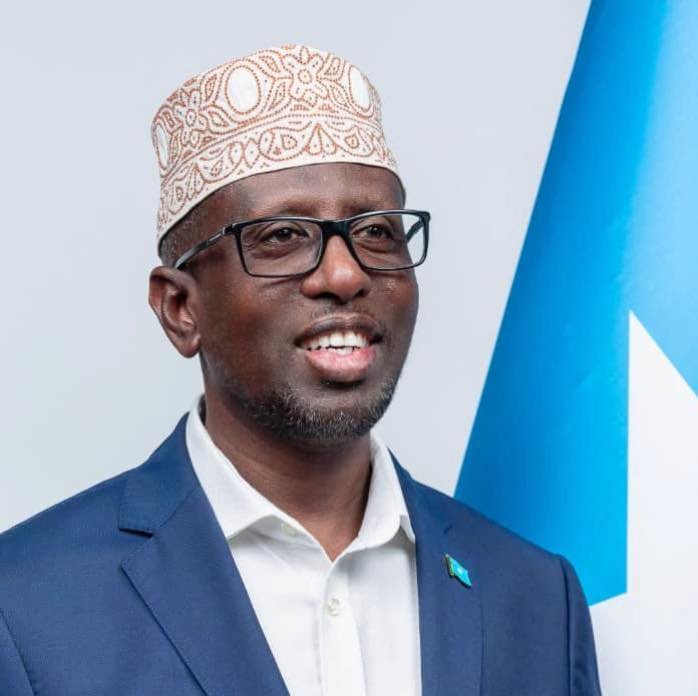
MOGADISHU – Former President Sharif Sheikh Ahmed has revealed that opposition forces were joined by other armed groups during the recent clashes with government troops in Mogadishu, in an interview with Universal Television. The former president said he and his allies were accompanied only by their personal security detail, but that other parties, including relatives and friends, joined the fighting of their own accord.
The interview comes amid ongoing political tensions and a deepening constitutional crisis, as opposition leaders continue to challenge President Hassan Sheikh Mohamud’s extended mandate and the government’s proposed electoral framework.
The clashes erupted in the Abdiaziz, Howlwadaag, and Heliwaa districts in early June, following a standoff in the Mirinaayo area – where Sharif had positioned himself in what observers described as “Marinayo 2.0”, echoing the tactics used by President Mohamud during the 2021 political crisis. The violence marked one of the most serious confrontations between government forces and opposition-aligned groups since the collapse of US- and UK-mediated talks in May.
Other Armed Groups Joined the Fighting
When asked about the composition of the forces that fought alongside the opposition, Sharif clarified that his side was limited to his personal security detail. However, he acknowledged that other armed individuals entered the fray spontaneously.
“The forces that were with us were our security guards, no other forces were present. The people living in the area, who have clan and friendship ties with us, saw that we were being oppressed and they took part in the fighting, they were there,” Sharif said. “But our side, what we brought, was just our guards, some of whom we lost in the fighting.”
Sharif’s statement suggests that clan networks and local solidarity played a significant role in the clashes, which were concentrated in the Abdiaziz and Howlwadaag districts – areas where the former president enjoys strong clan support.
Defensive Positions and Escape Routes
The former president also disclosed that the residences where he and his allies were staying had been prepared with escape routes in case of an attack, reflecting a high level of preparedness for the confrontation.
“The houses we were staying in – of course, in Mogadishu, where there is a lot of pressure – had escape routes prepared. If pressure came, we could escape. Nothing was done during the fighting,” he explained.
This detail underscores the extent to which opposition leaders had anticipated a military response from the federal government. Following the clashes, Somali police seized six vehicles and a cache of weapons in the Abdiaziz district, which authorities claimed had been concealed by supporters of the former president.
Protests Remain a Constitutional Right
Despite the escalation into armed confrontation, Sharif insisted that the opposition has not abandoned its right to peaceful protest, describing it as a constitutional right that will be exercised when necessary.
“We have not abandoned the protest. It is a constitutional right – everyone has the right to express their opinion and to protest peacefully,” he said.
The opposition had planned major demonstrations on June 4, but the government pre-emptively moved to isolate opposition leaders, cutting off electricity, water, and food supplies to Sharif’s compound and surrounding the residences of key opposition figures, triggering the clashes.
Sharif and former President Mohamed Abdullahi Farmaajo had earlier held a joint press conference in which they accused the government of imposing restrictions on opposition leaders and warned that a “stolen election” would not be accepted.
A Crisis Rooted in Constitutional Disputes
Sharif’s interview comes as Somalia grapples with a deepening political crisis over the president’s mandate. President Mohamud’s official term expired on May 15 under the 2012 Provisional Constitution, but he maintains that constitutional amendments passed in March 2026 have extended his mandate by one year. Sharif has sharply criticised Mohamud, warning that “he is standing in the very place where his political downfall could begin” and accusing him of violating the constitution.
The opposition Somali Future Council, which includes Puntland and Jubaland leaders, has declared that it no longer recognises President Mohamud’s authority and has warned that it will not accept a power vacuum or unconstitutional rule.
International Mediation and Way Forward
Following the clashes, international partners including the United States and Turkey stepped in to mediate. Sharif eventually agreed to move away from the Mirinaayo area and return to his home near Aden Adde International Airport, signaling a potential de-escalation. Both he and former Prime Minister Hassan Ali Khaire withdrew from their strategic positions after receiving assurances that President Mohamud would be brought to the negotiating table.
The collapse of the Halane talks in May left the country in a constitutional vacuum, with both sides holding irreconcilable positions on the president’s term length and the electoral model. The international community has urged renewed dialogue between the government and opposition groups, warning that prolonged instability could undermine security gains and distract from the fight against Al-Shabaab.
As Sharif’s interview makes clear, the opposition remains mobilised – both politically and, as the clashes demonstrated, militarily – and the path to a resolution remains uncertain.
Recommended Reading On ftlsomalia.com:
- Turkey Joins Mediation Efforts as Former Presidents Move Away from Marinayo
- Former Presidents Sharif and Farmaajo Accuse Government of Targeting Opposition
- Ex-Somali President Sharif: Hassan Sheikh Stands Where Political Downfall Could Begin
- Police Seize Six Vehicles and Weapons in Marinayo After Sharif’s Departure
- Somali Minister Accuses Former Leaders of Coup Attempt After Mogadishu Clashes
- Mogadishu Talks Collapse as Election Deadlock Deepens Ahead of Critical Deadline