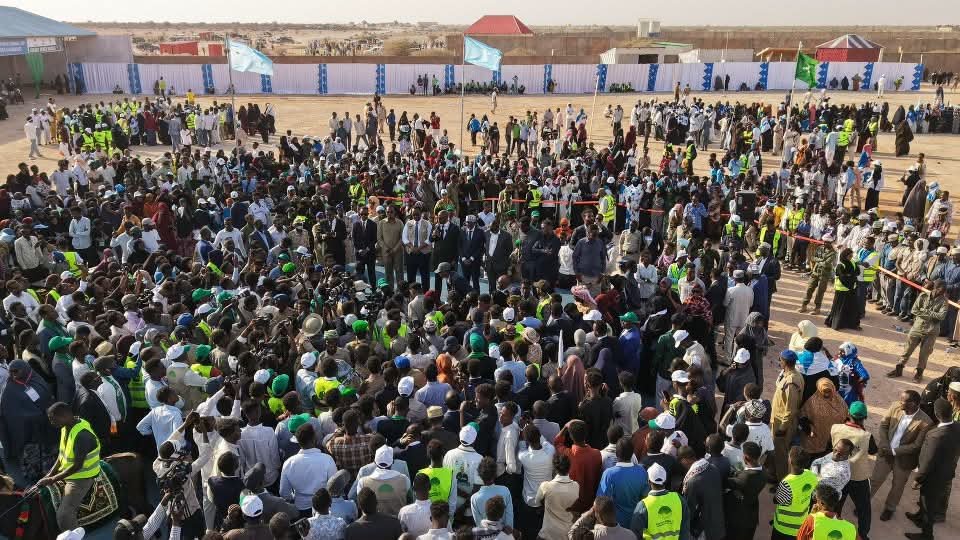

CAABUDWAQ – The Talo Qaran political party has held a large campaign rally in the remote Caabudwaq district of the Galgaduud region, as political activity intensifies across Galmudug State ahead of the upcoming local council and parliamentary elections.
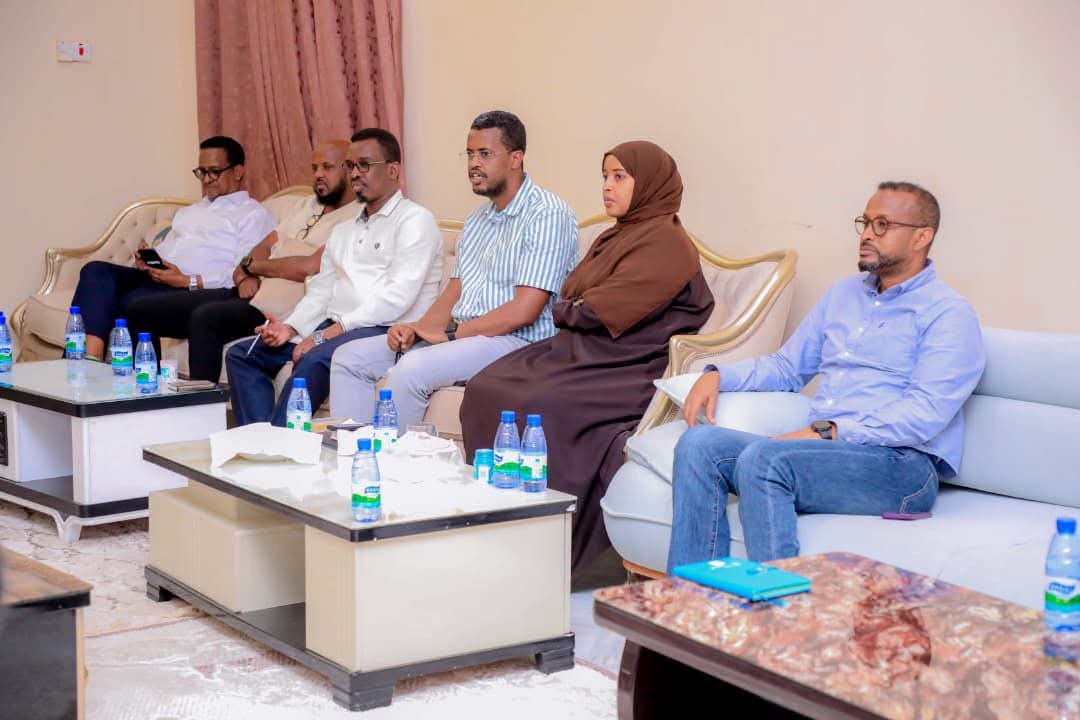
A delegation led by the Chairman of the Talo Qaran Youth Party, Cabdiwali Cismaan Cabdi (Shancad), arrived in Caabudwaq to a warm welcome from residents. The delegation held meetings with various segments of the community to rally support for the party’s candidates in the local council and House of Representatives elections, which are expected to take place across Galmudug’s districts later this month.
A Remote District at the Centre of Political Activity
Caabudwaq, the administrative seat of the Abudwak District in the northern Galgaduud province, is known for its remote location near the Ethiopian border and its long history of pastoralism. The district has traditionally been represented by the Marehan clan in the Galmudug Assembly. Despite its distance from the regional capital Dhusamareb, the district has become a focal point for campaign activity as political parties seek to mobilise support across Galmudug’s vast and far-flung territories.
The Talo Qaran rally comes as the National Independent Electoral and Boundaries Commission (NIEBC) has approved 35 political organizations to participate in the upcoming Galmudug elections. Among the approved groups is Talo Qaran Youth, the party’s youth wing, which is now actively campaigning across the region.
Election Delays and Political Uncertainty
The campaign in Caabudwaq takes place against a backdrop of electoral uncertainty. The NIEBC has postponed local council and parliamentary elections in Galmudug State, issuing a new timetable for the vote following an assessment of election preparations and requests from political parties seeking more time to complete their preparations. The electoral commission had previously scheduled the Galmudug presidential election for July 20, 2026, with 215,860 individuals successfully enrolled and issued voting cards across the Galgaduud and Mudug regions. However, the date was later rescheduled to July 25, and further delays have now been announced.
The delays have sparked frustration among political parties and candidates, who argue that the compressed timeline does not provide sufficient opportunity to engage with voters in remote areas like Caabudwaq. The NIEBC has insisted that the schedule will not be altered further, stating that any delay would disrupt the broader electoral calendar.
A Pattern of Federal Interference
The campaign in Caabudwaq also reflects the broader political dynamics shaping Galmudug’s electoral process. The federal government has designated Liban Ahmed Hassan (Liban Shuluq) as the sole candidate to represent the Justice and Solidarity Party (JSP) in the Galmudug presidential election, effectively clearing the field of internal challengers. Galmudug President Ahmed Abdi Kariye (Qoor-Qoor) announced his withdrawal from the presidential race following talks with Federal Government officials, paving the way for the federal government’s preferred electoral model.
The federal government’s heavy-handed role in shaping the electoral outcome has raised concerns among political parties and civil society observers about the legitimacy of the process. A bitter disagreement between President Hassan Sheikh Mohamud and NISA Director Mahad Mohamed Salad over who should lead Galmudug exposed deep fractures within the ruling party and raised questions about the independence of the electoral process.
A Commission That Follows Orders
The electoral commission’s refusal to grant an extension to the campaign period, despite requests from political parties, raises fundamental questions about its independence and commitment to a level playing field. In a region where many voters lack access to information and candidates struggle to reach remote communities, the decision to rush the process serves the interests of well-funded candidates with federal backing, not the voters who deserve meaningful engagement. The commission’s insistence that it is simply following the law conveniently overlooks the fact that electoral timelines are not fixed in stone; they can and have been adjusted in response to practical realities.
Way Forward
The Talo Qaran rally in Caabudwaq reflects the intensifying political activity across Galmudug as the region prepares for its local council and parliamentary elections. However, the electoral process remains clouded by uncertainty, with repeated delays and growing concerns about federal interference. For the people of Caabudwaq and other remote districts, the promise of direct elections remains distant, and the gap between rhetoric and reality continues to widen. The success of the electoral process will ultimately depend not on the number of rallies held, but on whether the government can deliver a genuinely free, fair, and transparent vote that reflects the will of the people.
Recommended Reading On ftlsomalia.com
- Galmudug Electoral Commission Rejects Calls to Delay July 25 Polls
- NIEC Releases Official Timeline for Galmudug State Elections
- Deputy Minister Al-Cadaala Rallies Galmudug Support for JSP Candidate
- Tawfiq Party Chairman Launches One-Person-One-Vote Campaign in Hobyo
- Galmudug President Qoor-Qoor Withdraws from Presidential Race
- Growing Rift Over Galmudug Leadership at Villa Somalia