
MOGADISHU – Somalia’s security forces and intelligence operatives launched a sweeping counter-weapons operation across an affluent opposition stronghold in Mogadishu on Saturday, hours after troops loyal to former President Sharif Sheikh Ahmed withdrew from frontline positions following a two-day urban battle with federal forces.
The aggressive house-to-house searches in the affluent Abdiaziz district follow 48 hours of intense clashes that paralyzed parts of the capital. Opposition forces holding the strategic sector ultimately withdrew on Friday, succumbing to diplomatic pressure from Western envoys seeking to prevent broader civil conflict over delayed national elections and controversial extensions to the presidential mandate.
The severe political crisis escalated after hours of heavy fighting around the Mogadishu residences of former prime minister Hassan Ali Khaire and former president Sharif Sheikh Ahmed, sparking fears of wider conflict. Defense Minister Ahmed Moalim Fiqi accused the opposition figures of orchestrating an armed coup attempt, comparing their forces to Sudan’s paramilitary Rapid Support Forces (RSF).
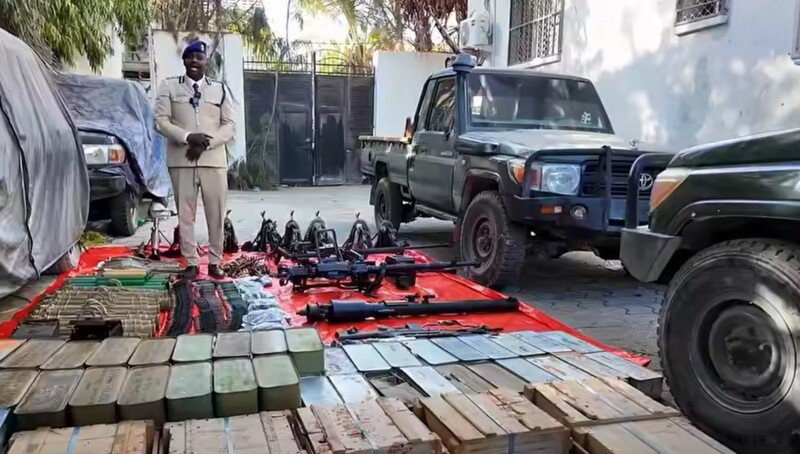
Police Announce Weapons Recovery Operation
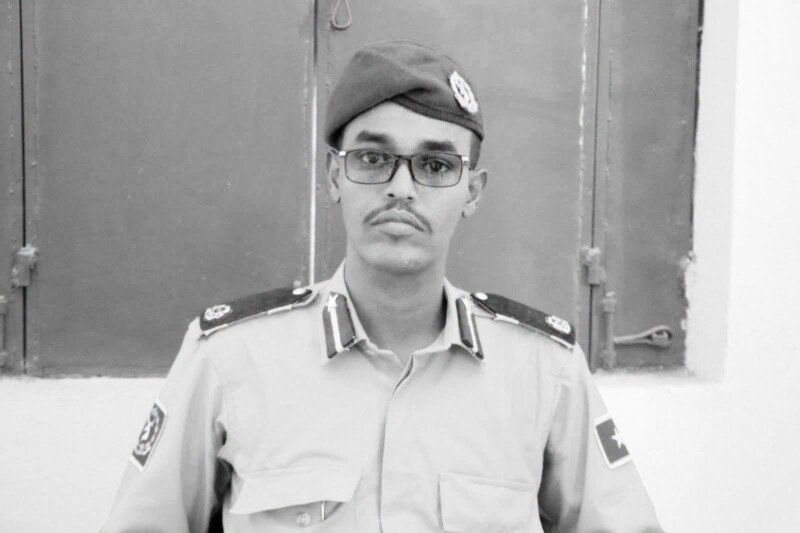
“Security forces are conducting an operation aimed at recovering illegal weapons hidden in various locations by militias who attacked the Abdiaziz district of Banadir region,” said Mogadishu police commander Mahdi Omar Mumin in a statement.
Authorities claimed that weapons belonging to supporters of former President Sharif Sheikh Ahmed were concealed throughout various locations in the area. The police command urged residents of Abdiaziz and adjacent neighborhoods to assist security personnel conducting searches, stating that the operation aimed to restore stability and prevent further violent incidents.
“Citizens in the Abdiaziz district and surrounding areas are urged to cooperate with police as they fulfill their duty to ensure public safety and stability. No one will be permitted to store or hide illegal weapons in their homes to undermine Mogadishu’s and the nation’s security. Security forces will take strict, legally authorized measures against anyone found storing, hiding, or facilitating the movement of illegal weapons,” the statement read.
The Federal Government has previously accused regional leaders of orchestrating attacks through loyal militias, describing such actions as “premeditated acts of aggression aimed at undermining national authority and destabilizing the region.”
Marinayo Neighborhood at Center of Standoff
The cordoning of Abdiaziz, a high-income coastal district and traditional opposition support base, threatens to shatter a fragile, hours-old truce. The district’s Marinayo neighborhood had served as the primary staging area where opposition-aligned forces and militias mobilized to reinforce Sharif Sheikh Ahmed after federal forces initiated an assault against him on Wednesday.
The Marinayo neighborhood holds deep political significance, as it was used in 2021 by current President Hassan Sheikh Mohamud, then an opposition leader, as his headquarters while organizing forces against former President Farmajo’s bid to extend his term without elections. By positioning himself in the same area, Sharif had effectively declared a Marinayo 2.0.
Tense Military Standoff with Former Army Chief
The state’s forceful disarmament posture immediately triggered a tense, bloodless military standoff on Saturday. Local media reports indicate that government forces executing the sweep are locked in an uneasy face-off with troops loyal to former Somali army chief Odowa Yusuf Rageh, sparking fears of a fresh confrontation. General Rageh, who defected to side with the opposition during Wednesday and Thursday’s hostilities, has resisted attempts by federal authorities to search his personal compound and disarm his remaining loyalists.
Compounding the crisis, the security lockdown has left displaced populations stranded. Local journalist Hafid Nor, reporting for Somali Cable TV, said widespread looting was underway within the upscale district, where state authorities blocked residents from returning to their properties after fleeing heavy exchanges of fire.
Opposition Leaders Withdraw Following Mediation
The security crackdown follows frantic behind-the-scenes mediation that persuaded Sharif Sheikh Ahmed to abandon his fortified positions in Abdiaziz and relocate to his primary residence near Mogadishu’s heavily fortified international airport.
Both opposition leaders have now withdrawn from the strategic positions they had occupied during the height of the crisis, signaling a potential de-escalation after days of intense confrontations that saw heavy fighting across the capital. Former President Sharif moved away from the Mirinaayo area in the Abdiaziz district, and former Prime Minister Khaire was escorted from his Howlwadaag residence by NISA Director Mahad Mohamed Salad.
While international and local mediators attempt to salvage broader political dialogue over the electoral impasse, analysts warned that the federal government’s subsequent tactical maneuvers appear overtly retaliatory, threatening to further inflame deeply entrenched political and clan factions across the Horn of Africa nation.
Conflicting Accounts of the Violence
The recovery effort follows confrontations that broke out in several parts of Mogadishu between government forces and armed individuals associated with opposition figures, including former President Sharif Sheikh Ahmed and former Prime Minister Hassan Ali Khaire. The conflict involved heavy weaponry and sparked concerns about potential wider political and security instability.
Although the government has blamed opposition-affiliated groups for destabilizing the capital, opposition representatives have asserted that security forces targeted their homes and followers. These conflicting accounts could not be verified independently.
Political Context of the Clashes
The violence occurred amid escalating tensions regarding Somalia’s electoral process, constitutional amendments, and the nation’s political direction. The standoff drew direct comparisons to the 2021 crisis, when Mogadishu endured confrontations between competing security forces over a previous term-extension dispute.
The Federal Government of Somalia extended its mandate for one year under the newly adopted constitution, a move that opposition figures and several federal member states have rejected as lacking national consensus. President Mohamud has insisted that constitutional amendments endorsed earlier this year effectively extend his administration’s mandate beyond May 2026.
Opposition leaders have drawn sharp battle lines against what they describe as “illegitimate term extensions” and “disputed elections”, warning the government not to push the country into another cycle of political turmoil.
International Concern and Mediation
The situation drew concern from the United Nations, regional bodies, and international entities, all of which called on all parties to address their differences through dialogue.
International partners including the UN, African Union, EU, IGAD, the United States, and the United Kingdom have urged renewed dialogue between the Somali government and opposition groups. The United States delivered one of its most explicit public statements against the use of force on political protesters in Somalia, with U.S. Chargé d’Affaires Justin Davis stating that violence against peaceful demonstrators was “never acceptable.”
Following mediation that helped reduce tensions between the government and opposition figures, Mogadishu was mostly peaceful on Friday. Nevertheless, security personnel continue to maintain heightened deployment in numerous areas across the capital.
Puntland leader Said Abdullahi Deni has accused President Mohamud of breaking the country apart, stating that the federal government’s actions have systematically dismantled the federal system and undermined the power-sharing arrangements that form the basis of Somalia’s post-conflict governance structure.
Recommended Reading On ftlsomalia.com:
- Somali Minister Accuses Former Leaders of Coup Attempt After Mogadishu Clashes
- Federal Government Blames Jubbaland Leader for Beled-Hawo Clashes
- From Badbaado Qaran to Marinayo 2.0: Somalia’s Never-Ending Cycle of Term Disputes and Electoral Violence Returns to Mogadishu
- Turkey Joins Mediation Efforts as Former President’s Move Away from Marinayo Signals Potential De-escalation
- Somalia Government Extends Mandate for One Year Under New Constitution
- Opposition Warns Against ‘Red Lines’ on Term Extension and Disputed Elections
- International Community Urges Renewed Dialogue Between Somali Government and Opposition Groups
- Deni Accuses Hassan Sheikh of ‘Breaking the Country Apart’ as Puntland Leader Departs Mogadishu