
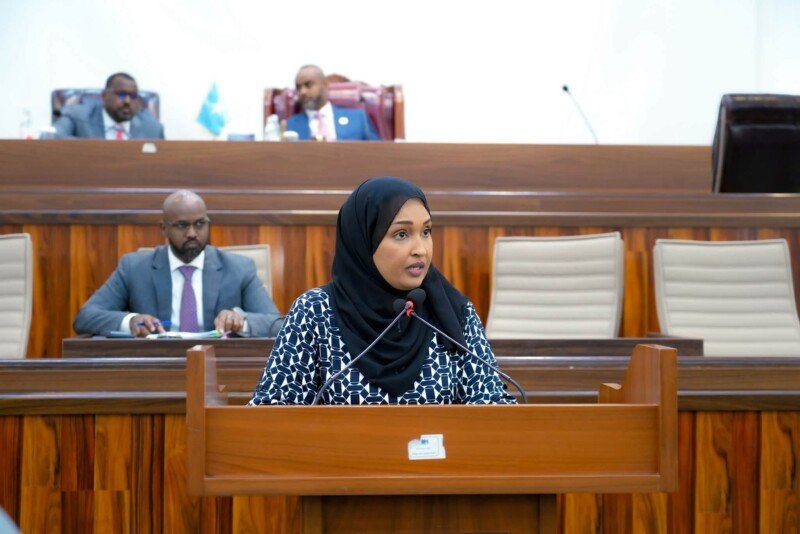
MOGADISHU — The Minister of Family Affairs and Human Rights Development, Ambassador Khadiija Mohamed Al-Makhzoumi, has presented two significant pieces of legislation to the House of the People, seeking parliamentary approval on the Family Law Bill and the Child Rights Bill.
During the parliamentary session, the Minister emphasized that the proposed laws address critical needs in Somali society, particularly concerning family protection, child welfare, and the safeguarding of fundamental rights. Ambassador Al-Makhzoumi highlighted that the Family Law Bill would play a key role in resolving disputes affecting families and protecting vulnerable children from neglect and abuse within their homes.
She further underscored the importance of the Child Rights Bill, which is intended to strengthen the protection, care, and legal rights of Somali children. The Minister called on parliamentarians to prioritize the legislation, stating that its approval is essential for building a stable family structure and ensuring children have the opportunity to grow in a safe and nurturing environment.
Somalia has recently ratified the African Charter on the Rights and Welfare of the Child, with Minister Al-Makhzoumi formally presenting the instrument of ratification to the African Union in April 2026. The move underscores Somalia’s commitment to advancing child welfare, fulfilling its regional and international obligations, and strengthening national systems to safeguard the rights and well-being of every Somali child .
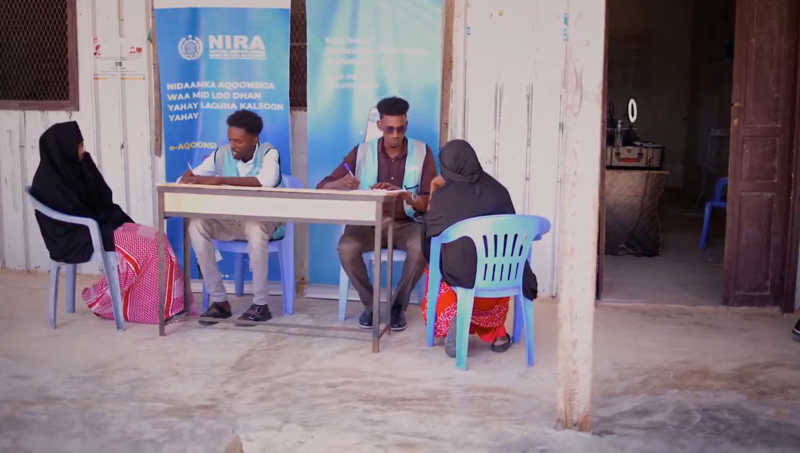
The ratification builds on existing national efforts to strengthen child welfare systems. In November 2025, the Ministry introduced a National Child Helpline Centre to manage the toll-free emergency line 116, which officials describe as Africa’s busiest child-support hotline. The centre offers prompt and confidential support to children encountering abuse, neglect, or other threats, staffed by trained child-protection specialists .
In November 2025, Somalia marked the 10th anniversary of ratifying the United Nations Convention on the Rights of the Child (CRC) in a ceremony at Mogadishu’s National Theatre, bringing together government officials, diplomats, civil society leaders, and hundreds of children . Prime Minister Hamza Abdi Barre led the commemoration, reaffirming the government’s dedication to protecting children and ensuring they grow up in safe, nurturing environments .
The parliamentary debate comes as the Ministry has recorded 187 cases of abuse against women and girls through the government’s Helpline 116. According to MP Ilyas Sheikh Ahmed, who raised the issue during the debate, the cases have been reported across several federal member states, with the highest number coming from the Banaadir region.
MP Ilyas stated that the helpline has facilitated the reporting of cases and that the government is working to strengthen response systems, including health and legal support for victims. The figures, he said, highlight the urgent need for stronger protections and swifter action to address complaints. The Ministry of Family Affairs and Human Rights Development is also working to expand these services across the country.
The Somali Women Journalists Association (SOMWA) has warned of a sharp increase in harassment and violence against female reporters, describing the past year as the most dangerous yet for women in Somalia’s media sector . In its latest annual report, released during the International Day to End Impunity for Crimes Against Journalists, SOMWA documented a surge in cases involving physical assaults, unlawful detentions, and digital intimidation of women journalists . The figures mark the highest number of violations recorded since the association began its monitoring work .
SOMWA’s report calls on the Somali government to strengthen laws that protect journalists, ensure prompt investigations into attacks, and promote gender-sensitive policies within media institutions .
The introduction of the Family Law and Child Rights Bills is part of a broader effort to address sexual violence and abuse, with the government continuing to push for legal reforms to protect the most vulnerable members of society. The two bills are now awaiting further debate and approval by the House of the People.
Critical Note
The presentation of these two bills marks a significant step forward for the protection of families and children in Somalia, yet the broader context reveals the scale of the challenge. The 187 abuse cases recorded through Helpline 116 represent only the incidents that have been reported; the actual number of abuses occurring across the country is likely much higher. The government’s ability to effectively address these cases will depend not only on passing legislation, but also on ensuring adequate resources, training for law enforcement and judicial actors, and a functioning referral system that connects survivors to health and psychological support.
While these bills are a crucial component of legal reform, they must be part of a broader strategy that includes community awareness and a shift in cultural norms. Parliamentarians must move swiftly to pass the legislation, ensuring that the laws are comprehensive and protective, and that they are implemented transparently and with the necessary support to guarantee that they benefit the Somali people.