

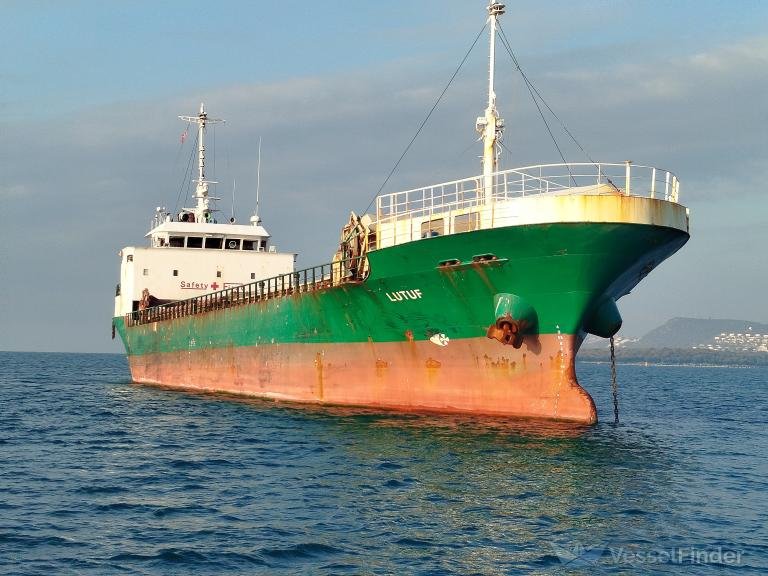
GARMAAL — Somali pirates have hijacked a Cameroon-flagged cargo vessel carrying Turkish weapons and communications equipment destined for a Turkish military training facility in Mogadishu, according to a Somali official who spoke to the Associated Press.
The merchant vessel LUTUF was seized on Monday approximately three and a half nautical miles off Marraya in Puntland’s Eyl district. Eight pirates, believed to be members of a group previously involved in the hijacking of the merchant vessel Sward on April 26, reportedly took the ship toward the coast near Garmaal in Puntland’s Dangoroyo district.
The ship was carrying weapons bound for a Turkish military training facility in Mogadishu, as well as communications and satellite equipment, and was owned by Polar Movement Shipping, the official said. Among the 10 crew members were six Indian nationals, one Turkish national, one Georgian, and two Serbian security guards.
So far, neither Indian nor Turkish authorities have issued any statement on the matter.
Turkish Response and Airstrike
According to reports, two Turkish-owned vessels later approached the hijacked ship, while Turkish helicopters and drones monitored the area. On Tuesday, a small boat carrying two men approached the vessel and delivered khat, a stimulant commonly chewed in Somalia. After the boat returned to shore, an airstrike followed, killing four men and wounding two others. The circumstances of the strike—including who carried it out and whether those killed were involved in the hijacking—could not be independently verified.
The hijacking comes amid fears that military operations to rescue hostages could endanger the lives of crew members. The Egyptian Marine Officers Union previously warned that pirates holding the MT Eureka were increasingly concerned about a potential military intervention, complicating negotiations for the release of eight Egyptian sailors .
The International Maritime Organization has issued an urgent appeal for the release of 44 seafarers who have been held hostage by pirates off the Somali coast for several months, warning that their humanitarian situation is deteriorating rapidly due to severe shortages of food and water and mounting security threats .
A Resurgence of Piracy
The LUTUF hijacking follows a troubling resurgence of piracy off the Somali coast. The UK Maritime Trade Operations (UKMTO) has raised the piracy threat level to “substantial”. Naval analysts attribute the resurgence to a shift in international naval resources toward the Red Sea, where Iran-backed Houthi rebels have been attacking shipping, creating a security vacuum that pirate groups are exploiting .
The IMO reported that 24 attacks, including both attempted and successful incidents, have been recorded in the past three months, with perpetrators using increasingly heavy weaponry and violence . The agency also highlighted a 17 percent increase in global piracy and armed robbery incidents between 2024 and 2025 .
The LUTUF hijacking is also connected to a broader pattern of maritime crime. The MT Eureka, a Togo-flagged product tanker carrying approximately 2,800 tonnes of diesel, was boarded by armed attackers on May 2 off the coast of Yemen’s Shabwa province and forced toward Somali waters . The MT Honour 25 was hijacked off Somalia’s Puntland region on April 21 with 17 crew members aboard, including ten Pakistani sailors. In total, 44 seafarers are being held across multiple hijacked vessels .
On Thursday, six armed men also forcibly boarded a fuel tanker in the Gulf of Aden and directed it toward Somalia, according to UKMTO. It remains unclear whether the incident is linked to the LUTUF hijacking.
Strategic Implications
The hijacking of a vessel carrying Turkish military supplies is particularly significant. Turkey has been a key partner in rebuilding Somalia’s security forces for years, with the TURKSOM facility in Mogadishu training thousands of Somali soldiers and officers. In July, Turkey’s parliament extended its military deployment in Somalia for another two years until July 2028, authorizing Turkish forces to support Somalia in counterterrorism, piracy, illegal fishing, and smuggling.
The LUTUF hijacking represents a new challenge for maritime security in the region, at a time when pirate groups are once again demonstrating their capability to seize vessels operating off the Somali coast and in the Gulf of Aden. The involvement of Turkish military supplies adds a geopolitical dimension to the incident that could complicate diplomatic efforts to secure the crew’s release.
Pirates have demanded $10 million for the release of the MT Eureka’s crew, severely restricted food and water supplies, and increased the number of armed guards on board . Relatives reported that the captors have issued direct death threats and warned they will kill the hostages unless a ransom is paid within an extremely tight deadline .
Critical Note
The hijacking of the LUTUF marks a significant escalation in the resurgence of Somali piracy, representing the first known seizure of a vessel carrying military cargo in recent years. The incident raises serious questions about the effectiveness of current maritime security arrangements and the ability of regional and international forces to protect shipping lanes off the Horn of Africa.
The Turkish response, deploying helicopters, drones, and conducting an airstrike, demonstrates Ankara’s determination to protect its interests in Somalia, but it also carries risks. The strike on the beach killed four men, but it remains unclear whether they were pirates or innocent civilians, and there is no evidence that the LUTUF itself has been recovered or its crew freed. The involvement of Indian, Turkish, Georgian, and Serbian nationals adds an international dimension that will require coordinated diplomatic efforts.
The Somali government, Puntland authorities, and international partners must address the root causes of piracy resurgence, including the security vacuum created by the redeployment of naval assets to the Red Sea. Without a comprehensive approach that includes sustained naval presence, support for coastal communities, and effective prosecution of captured pirates, these attacks are likely to continue and potentially escalate.