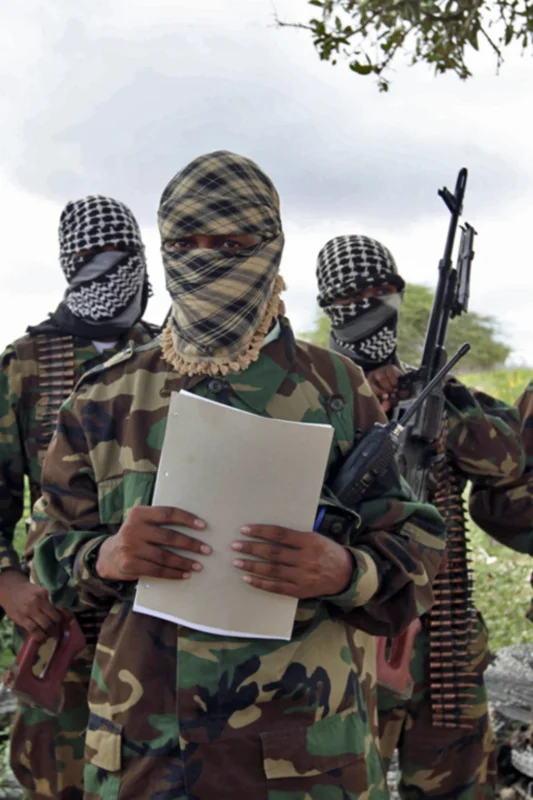

MAHADAAY — Hirshabelle State Police forces have killed two Al-Shabaab militants who were planting landmines at the livestock market in the Mahadaay district, successfully thwarting a planned attack on civilians, according to a police statement.
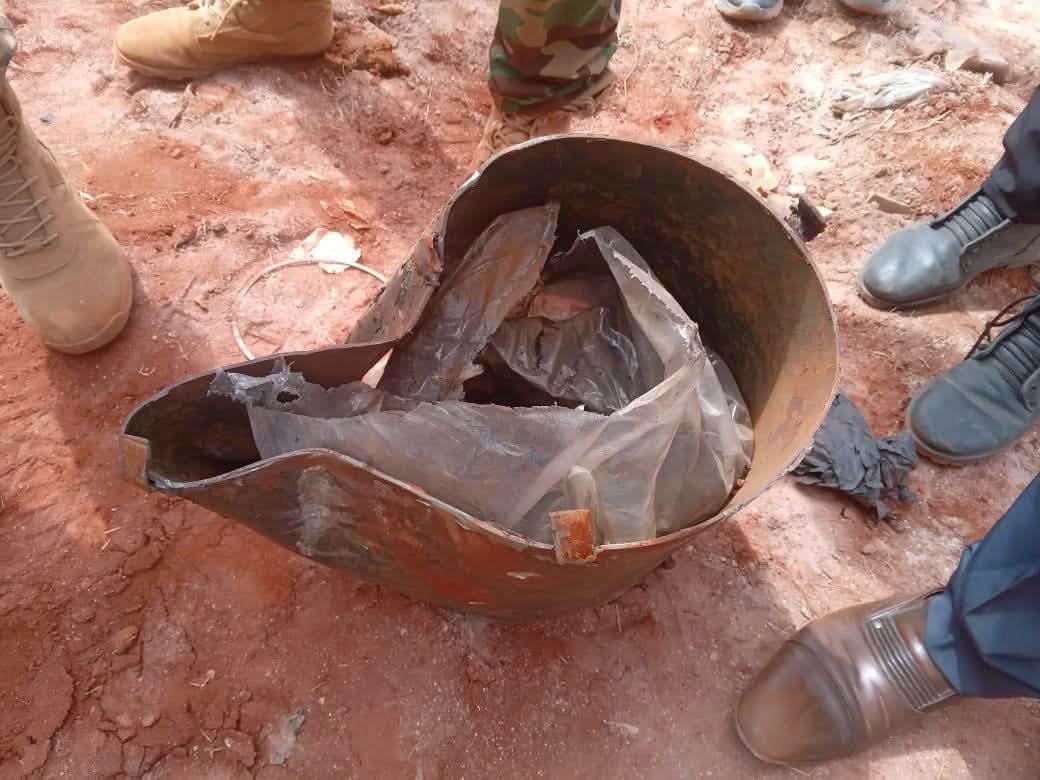
Commander of the Mahadaay Police Station, Major Suleyman Cowsey, told the Somali National News Agency that security forces received intelligence about the threat and responded swiftly, engaging and shooting dead both militants at the scene [citation:6][citation:11]. Authorities displayed the bodies of the two militants and one of the landmines they had been planting at the market, while a second mine exploded during the operation [citation:6]. The operation successfully neutralized the threat that the Khawaarij militants had planned for the residents of Mahadaay [citation:11].
The incident highlights the continued threat posed by improvised explosive devices in parts of central Somalia, where Al-Shabaab has used explosives and other attacks to target security forces and civilians [citation:11].
Context of Security Operations in Hirshabelle
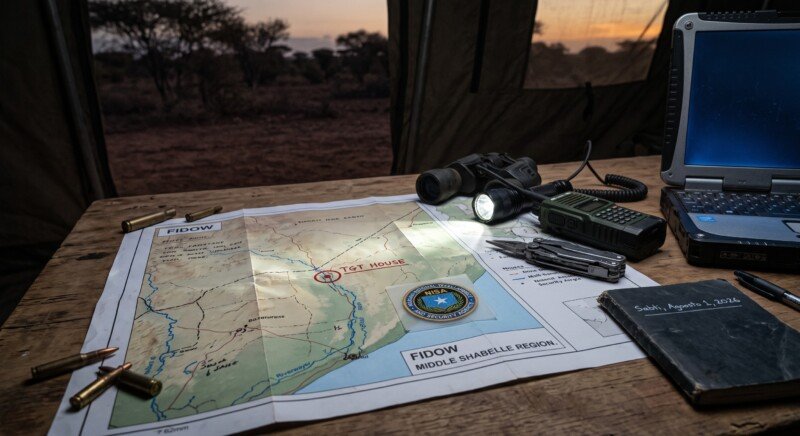
The Mahadaay operation is part of a broader pattern of intensified security operations across the Middle Shabelle region. NISA and international partners recently conducted a planned operation in the Fidow area of the Middle Shabelle region, targeting a house where Al-Shabaab militants were reportedly sheltering. The operation successfully eliminated the militants inside the targeted house [citation:1].
Middle Shabelle has been a particular focus of NISA operations, as the region has long been identified as a vital logistical pathway used by insurgents to transport fighters and explosives between remote hideouts and urban centers [citation:1]. In August 2026, two young herders killed a senior Al-Shabaab commander in the Ruunningood district of the Middle Shabelle region, highlighting the growing willingness of communities to resist the group’s abuses [citation:2].
The slain commander was identified as Xasan Calasow Raage, also known as Xasan Xusuleey, a 50-year-old native of the Ruunirgood district who served as the transport commander for the area and had previously held the position of head of the group’s “Sakawaad” (extortion) unit [citation:3].
The Somali National Armed Forces have also conducted a 72-hour planned security operation across the Buulo Cabdalla corridor in Lower Shabelle, resulting in the death of 22 Al-Shabaab militants, including their regional commander, Cabdiraxmaan Jeeri [citation:12]. The military campaign forms part of a broader offensive to dismantle militant strongholds in the region [citation:12].
Pattern of Intelligence-Led Operations
NISA has conducted a series of coordinated strikes across the Middle Shabelle and Hiiraan regions, targeting the group’s media infrastructure and militant assembly points [citation:1]. In July 2026, NISA forces eliminated eight Al-Shabaab militants, including two commanders, on the outskirts of the Basra area in Middle Shabelle. That operation struck a militant assembly point near the riverbank, killing the commander in charge of the group’s mine operations and the commander responsible for 107mm rocket attacks, along with six other members of his unit [citation:1].
In August 2026, NISA killed three Al-Shabaab commanders and seriously wounded senior leader Mustaf Caato in a planned operation in the Maxaas district of the Hiiraan region. Caato, who was the group’s overall commander for the so-called “fronts” in the Hiiraan region, had long been involved in planning and coordinating terrorist attacks [citation:1].
NISA and international partners have also eliminated two senior commanders within the Khawaarij network in highly synchronized precision operations [citation:1]. The operations eliminated Abdihamid Ali Abdullahi Maalim, who served as the primary link connecting the domestic insurgency with broader international terrorist syndicates, and Suleyman Omar Fidow, the supreme commander of the group’s suicide bomber divisions [citation:1].
Critical Note
The successful operation by Hirshabelle Police in Mahadaay demonstrates the effectiveness of intelligence-led security operations in countering Al-Shabaab’s tactics. However, the fact that militants were able to reach the livestock market—a crowded civilian area—highlights the ongoing security challenges facing rural communities in the Middle Shabelle region. The government’s inability to fully secure and hold recovered areas remains a significant challenge, allowing Al-Shabaab to continue posing a threat to local populations [citation:1].
While the police’s swift action prevented civilian casualties, the broader security situation in Hirshabelle requires sustained attention. Al-Shabaab has demonstrated resilience, adapting its tactics to target civilian gatherings and economic infrastructure [citation:2]. The government must ensure that security forces are adequately equipped and supported to maintain these operations and prevent militants from regrouping. Without a comprehensive approach that combines security operations with governance and economic development, the cycle of violence in the region is likely to continue [citation:1][citation:2].