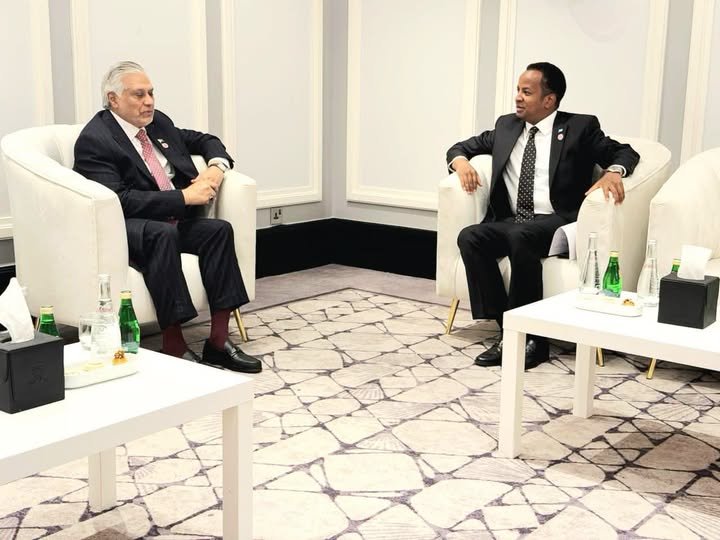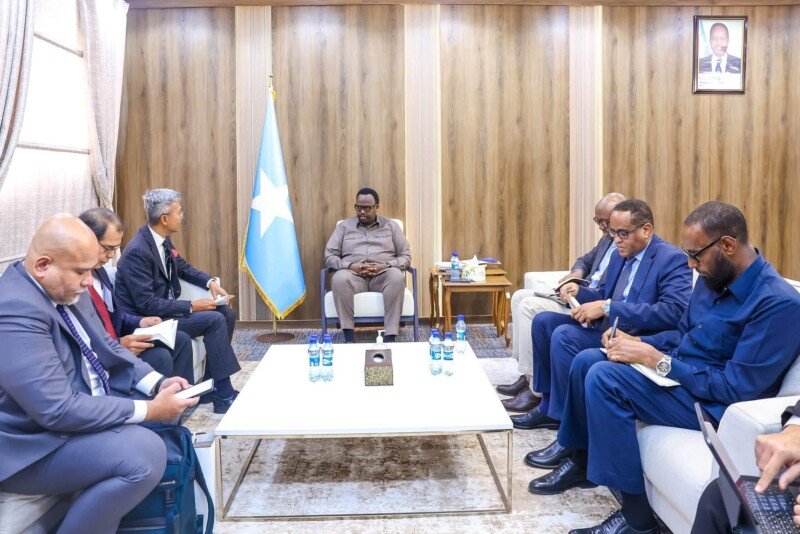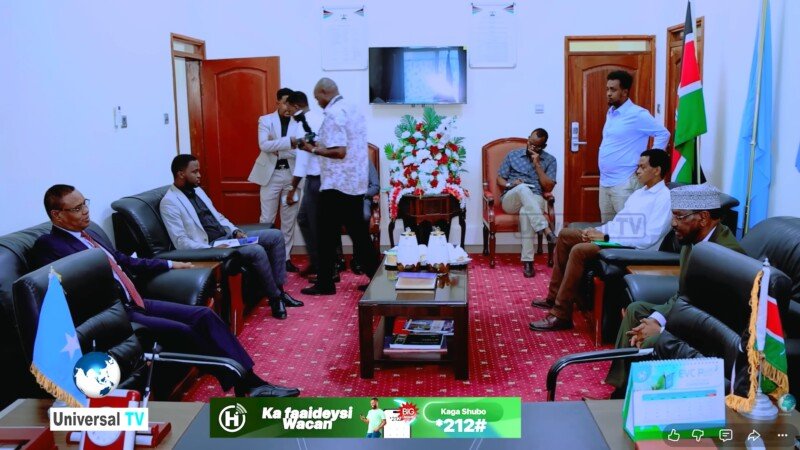

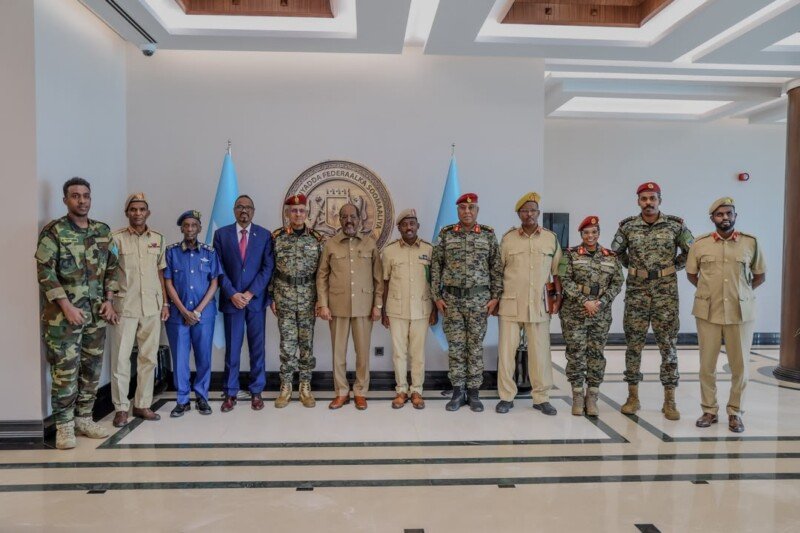
MOGADISHU — President Hassan Sheikh Mohamud has received the Chief of the General Staff of the Djibouti Armed Forces, General Zakaria Sheikh Ibrahim, at Villa Somalia for talks focused on deepening defence cooperation, enhancing security coordination, and accelerating joint counter-terrorism operations under the African Union Support and Stabilization Mission in Somalia (AUSSOM).
The meeting, which took place on Wednesday, August 5, 2026, was attended by senior military officials from both countries. General Zakaria and his delegation are in Mogadishu to participate in the AUSSOM Military Chiefs Conference, which brings together defence leaders from troop-contributing countries to coordinate operations against Al-Shabaab and advance Somalia’s security transition.
President Mohamud expressed gratitude to the government and people of Djibouti for their continued support to Somalia’s security sector, particularly their role in peacekeeping, counter-terrorism, and the rebuilding of Somali defence institutions. The President had previously travelled to Djibouti in March 2026 for a strategic working visit focused on enhancing bilateral ties and deepening cooperation between the two Horn of Africa nations.
Djibouti’s Enduring Role in Somalia’s Security
Djibouti has remained one of Somalia’s closest allies, playing a significant role in peacekeeping, mediation, and security sector development. The two countries have reached an agreement to enhance defence and security cooperation, a development officials say will bolster Somalia’s stabilisation initiatives and improve regional coordination against common threats. The consensus was established during discussions between Somali Defence Minister Ahmed Moalim Fiqi and his Djiboutian counterpart, Hassan Omar Mohamed, in Mogadishu alongside a regional defence conference.
Defence Minister Fiqi has welcomed his Djiboutian counterpart for high-level talks focused on enhancing strategic cooperation in security and defence matters, emphasising Djibouti’s active involvement in AUSSOM and its enduring support and fraternal bond with Somalia.
Djibouti’s commitment to Somalia is further demonstrated by its participation in AUSSOM, the African Union mission supporting Somali security forces. The Djiboutian contingent, known as “Hiil-Walaal,” has been instrumental in stabilising the Hiiraan region, working alongside the Somali National Army to secure key areas and protect civilians from militant threats.
President Ismail Omar Guelleh has reaffirmed Djibouti’s commitment to Somalia’s peace and reconstruction, calling for continued collaboration to eliminate terrorism and ensure long-term regional stability.
AUSSOM Military Chiefs Conference
General Zakaria’s visit coincides with the AUSSOM Military Chiefs Conference in Mogadishu, which is focused on drafting a joint operational plan to implement decisions adopted at the recent Extraordinary Summit of AUSSOM troop-contributing countries held in Kampala, Uganda. The conference brings together defence chiefs from troop-contributing nations to accelerate operations against Al-Shabaab, strengthen intelligence sharing, and improve coordination of military capabilities and resources.
Military experts have already finalised a joint action plan, which will be presented to the defence chiefs for review and approval, serving as a framework for the next phase of operations aimed at strengthening security and stability in Somalia and the region.
The Djiboutian forces stationed in the Hiiraan region, widely known as “Hiil-Walaal” (Somali for “brothers in arms”), have been at the forefront of stabilisation efforts in central Somalia, particularly in areas still facing threats from Al-Shabaab. Their contribution has been widely praised by Somali officials, who have described Djibouti as a “steadfast ally” in the quest for security and stability.
A Relationship Rooted in Brotherhood
The meeting between President Mohamud and General Zakaria builds on a series of high-level engagements that have deepened the strategic alliance between Mogadishu and Djibouti. Prime Minister Hamza Abdi Barre has held talks with Djibouti’s Ambassador and Police Commander, reaffirming the longstanding fraternal ties and strategic partnership between the two Horn of Africa nations.
Somalia and Djibouti have signed a Memorandum of Understanding on political consultations, establishing a framework for regular dialogue between the two governments on pressing political, economic, and security matters.
President Mohamud has previously bestowed Somalia’s National Honor Medal upon Djibouti’s President Ismail Omar Guelleh, recognising his enduring solidarity and contributions to Somalia’s stability and progress.
Critical Note
While the meeting between President Mohamud and General Zakaria reflects the strength of the Somalia-Djibouti security partnership, the effectiveness of this cooperation ultimately depends on the ability of both nations to translate diplomatic goodwill into tangible operational outcomes. Djibouti’s Hiil-Walaal forces have been instrumental in stabilising the Hiiraan region, but the persistent threat of Al-Shabaab and the broader security challenges facing Somalia require sustained commitment from all partners. The AUSSOM mission, of which Djibouti is a key contributor, faces significant funding uncertainty following the US decision to end support for UNSOS, raising questions about the long-term sustainability of current operations. Furthermore, while Djibouti’s support is invaluable, Somalia must also focus on building its own security institutions to reduce dependence on external forces. The government would be well advised to ensure that the partnership with Djibouti is complemented by efforts to strengthen the Somali National Army’s command-and-control structures, logistical capacity, and accountability mechanisms. Without such progress, the sacrifices of Djiboutian and other African troops risk being undermined by persistent governance deficits and the resilience of the insurgency.
Recommended Reading On ftlsomalia.com
- Hassan Sheikh Mohamud Travels to Djibouti to Boost Bilateral Relations
- Somalia and Djibouti Bolster Security Cooperation
- Somalia, Djibouti Bolster Defense Ties Through Ministerial Meeting in Mogadishu
- Somalia, Djibouti Reinforce Defence Ties in High-Level Talks
- Djibouti’s New Ambassador to Somalia Welcomed in Mogadishu
- Prime Minister Hamza Meets Djibouti Ambassador and Police Commander