
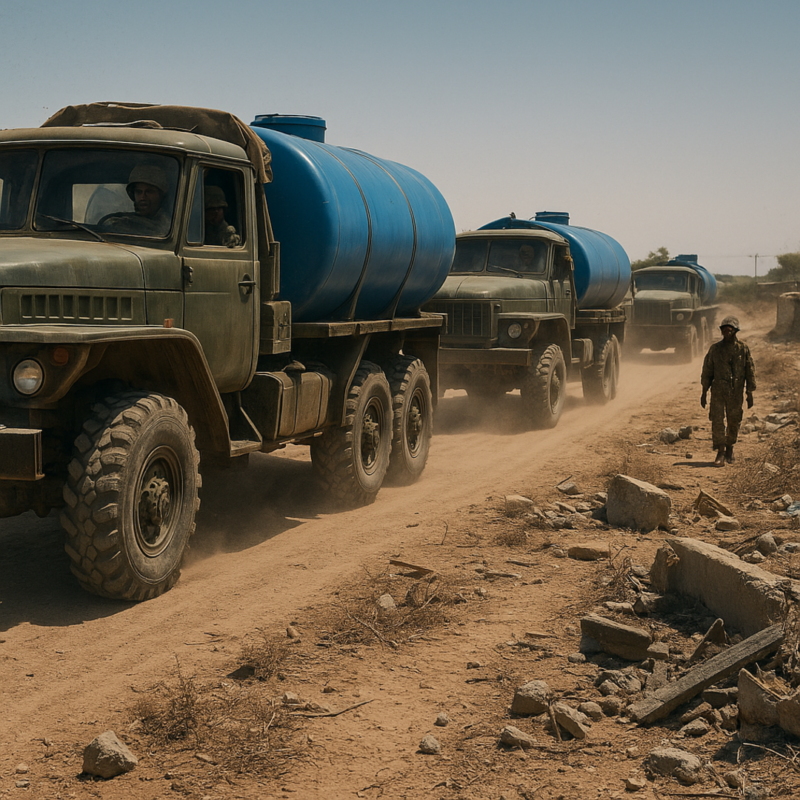
LOWER SHABELLE — The Somali National Army has initiated vital civil-military assistance by sending daily water supply convoys to help residents in Dhanaane, situated near Marka in Lower Shabelle, as part of broader humanitarian efforts in recently liberated areas.
From their forward bases in Jazeera, military personnel are organizing water tanker deliveries to sustain the immediate needs of local families. This urgent logistical response addresses the critical humanitarian situation resulting from the intentional destruction of community infrastructure by extremist groups.
Extremists Destroyed Water Wells Before Retreat
Prior to being driven out, Al-Shabaab militants targeted water wells and vital amenities, deliberately creating resource shortages as a means to punish local inhabitants. The group had reportedly stockpiled water supplies for their own fighters while denying access to civilian populations.
Military officials overseeing counter-terrorism efforts have stressed that these daily aid distributions represent a top operational priority. Commanders noted that the army’s responsibilities go beyond military action, including providing direct physical and logistical support to Somali communities recovering from extremist control.
Military’s Humanitarian Doctrine
This civil-military assistance aligns with the Somali National Army’s broader humanitarian doctrine. In February 2026, Brigadier General Ibrahim Mohamed Mahmoud, Commander of the Somali National Army, issued urgent directives to all sectors of the armed forces to intervene immediately and participate effectively in national relief operations to support citizens affected by severe drought.
The Army Commander emphasized in an official statement that the responsibility of the “Protectors of the Nation” extends beyond traditional defensive tasks to include standing firmly by the people during emergency humanitarian circumstances, considering the response to the relief call an integral part of the military doctrine.
“The Somali Army’s doctrine, centered on protecting ‘land, people, and faith,’ renders relief for those affected by drought and floods a sacred national duty and an authentic moral commitment,” the Commander stated.
Previous Military Operations in Lower Shabelle
The Dhanaane water distribution follows successful military operations that liberated the surrounding areas from Al-Shabaab control. In January 2026, the Somali National Army seized a major water storage facility previously used by Al-Shabaab militants following the liberation of Jilib Marko area in the Lower Shabelle region.
Officers leading the operation discovered several underground pits where the militants had stockpiled hundreds of plastic containers filled with water. The supplies were reportedly intended for senior leaders and fighters operating in and around the Jilib Marko area.
The Somali National Army uncovered significant caches of weaponry and a massive underground water storage facility in the Jilib Marko area of Lower Shabelle. Security forces conducting clearing operations in the newly liberated zones located the concealed stockpiles in forested and low-lying areas between Jilib Marko and the “Number 60” area.
Military authorities stated that the militants had intentionally buried these supplies in a desperate bid to maintain operations as government forces closed in. The discovery came after a well-planned military operation that successfully drove Al-Shabaab out of the area in recent days.
Ongoing Security Operations
The army indicated that these seizures demonstrate the severe setbacks experienced by Al-Shabaab due to the intensified “Silent Storm” operations currently sweeping through Lower Shabelle. These operations have already resulted in the capture of key villages and the elimination of several militant leaders.
Security forces say sustained operations are still underway in several other parts of the Lower Shabelle region as the offensive against the militant group continues. The Somali government has reiterated its commitment to intensifying military pressure on Al-Shabaab as part of ongoing efforts to restore security and stability across the country.
Economic Impact and Long-Term Needs
While the military has responded effectively to the immediate water crisis, the economic impact of the extremist occupation remains severe. Area residents indicate they cannot afford even minimal amounts for basic water containers, highlighting an immediate need for lasting government solutions.
Community members are urging authorities to shift from temporary assistance to long-term recovery through drilling permanent wells and establishing educational institutions to ensure a sustainable future for youth.
Military’s Expanded Role in Humanitarian Response
The military leadership directed field units to transform into a civil support force working to secure and deliver drinking water to the most parched regions, ensuring the flow of vital supplies to stricken communities facing acute shortages in water resources.
The military instructions also included supervising the distribution of food, medicine, and urgent medical supplies, as well as providing all forms of logistical support to field relief teams to minimize the human and material losses resulting from natural disasters.
This military initiative aims to bolster the spirit of fraternal solidarity, ensure the saving of lives, and provide a dignified livelihood for families who lost their properties and livestock, contributing to accelerating recovery and securing social stability.
Commitment to Lasting Stability
The Somali National Army announced that operations will continue along the coastal regions of Lower Shabelle. Troops are currently pursuing fleeing militants to ensure the group cannot regroup, reaffirming the Federal Government’s commitment to establishing lasting security and stability across the region.
These military maneuvers reaffirm the comprehensive role of the Somali Armed Forces as an active force in development and humanitarian response, thereby strengthening mutual trust between the people and the military establishment.