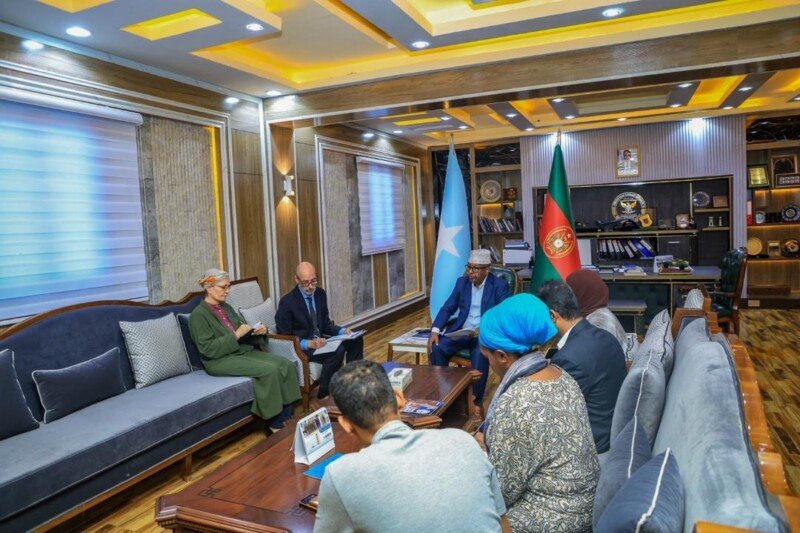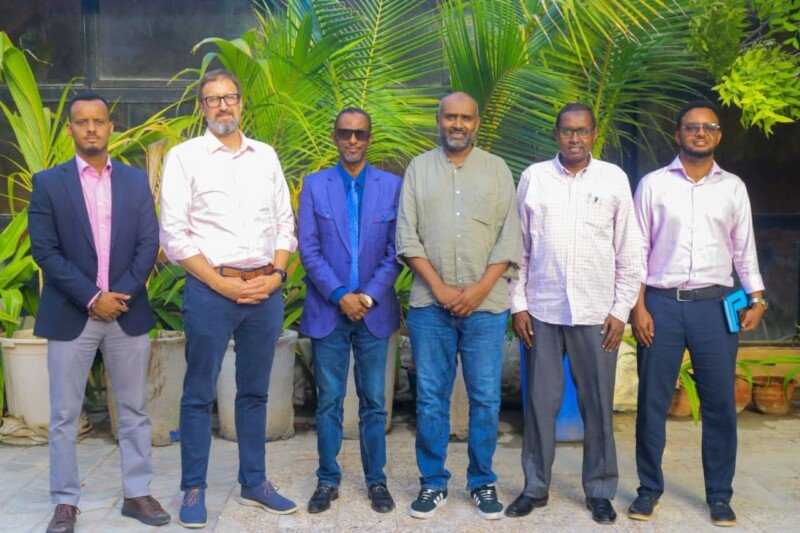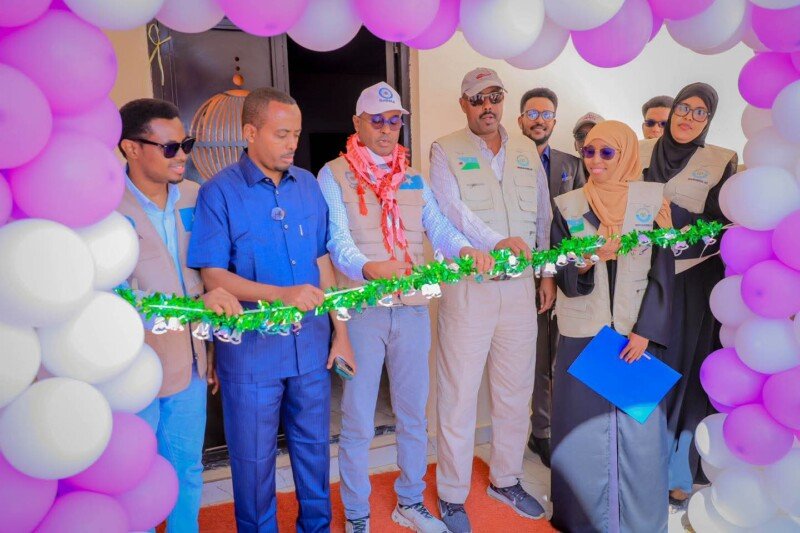

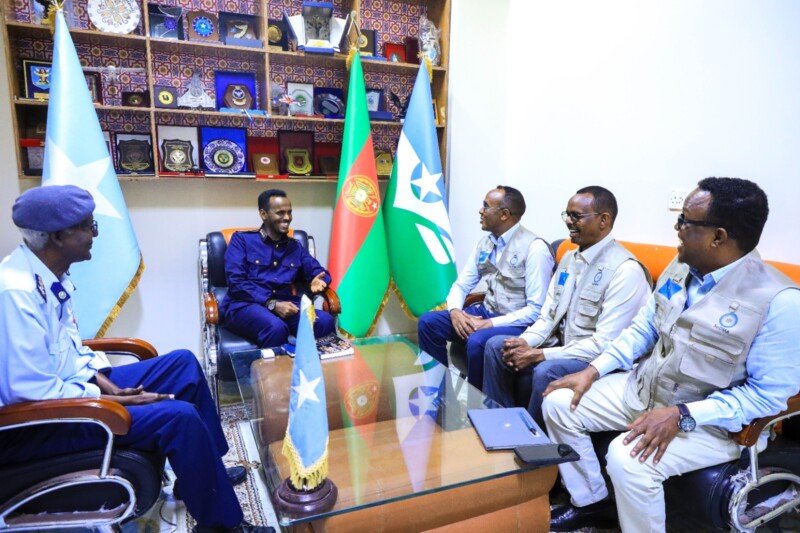
MOGADISHU — The Commissioner of the Somali Disaster Management Agency (SoDMA), Mahmoud Moallim Abdulle, has met with the Acting Commander of the Somali National Army and Commander of the Somali Air Force, Brigadier General Abdirisaq Mahmoud Haji (Qaloombi), to discuss humanitarian preparedness for the anticipated impacts of Super El Niño .
The meeting, held at the Somali Air Force headquarters, focused on the humanitarian situation in the country and preparations for potential flooding and other impacts associated with forecast heavy rainfall .
According to the Intergovernmental Authority on Development (IGAD) Climate Prediction and Applications Centre (ICPAC), the October to December 2026 rainy season is expected to bring above-average rainfall across much of the Horn of Africa . The forecast raises the risk of flash floods and riverine flooding across Somalia, with the potential to damage crops, displace communities, and disrupt humanitarian operations .
SoDMA, the government’s lead agency for disaster management, has been coordinating preparedness and emergency response activities across federal and state levels . The agency has previously highlighted the need for enhanced coordination among government institutions to mitigate the risks posed by extreme weather events .
The two sides agreed that the Somali Armed Forces should play an important role in emergency response and rescue efforts, with the Air Force contributing to the delivery of relief assistance, information gathering, and ground assessments using helicopters and unmanned aerial vehicles .
Commissioner Mahmoud Moallim Abdulle commended the Somali Air Force and emphasized the importance of strengthening coordination and preparedness among government institutions to effectively mitigate and respond to the anticipated impacts of Super El Niño and protect civilian lives .
SoDMA has been coordinating with UN partners on disaster response, with Commissioner Abdulle and UN Deputy Envoy George Conway co-chairing strategy sessions to reinforce the country’s response to the climate crisis.
SoDMA has also been coordinating with health partners on El Niño response, holding consultations to accelerate preparedness and strengthen coordination with relevant stakeholders.
The Cabinet has endorsed a national El Niño preparedness plan as the country faces the threat of severe flooding, displacement, and disruption to agriculture and food security.
Super El Niño and Humanitarian Risks
Super El Niño conditions are expected to bring above-average rainfall to the region, raising the risk of widespread flooding and displacement . The anticipated heavy rains follow several years of consecutive below-average rainy seasons, which left the region in the grip of an unprecedented drought that pushed millions of people to the brink of starvation .
Somalia’s humanitarian situation remains fragile, with 6.5 million people facing high levels of acute food insecurity . The country has experienced successive climate shocks, including the 2023 floods that displaced 2.3 million people and affected millions more .
The government and humanitarian partners have been scaling up preparedness efforts ahead of the anticipated El Niño rains . OCHA is supporting contingency planning, risk analysis and coordination at national and state levels to strengthen readiness for potential flooding and displacement .
Critical Note
While the coordination between SoDMA and the Somali Air Force represents a positive step toward strengthening disaster preparedness, the scale of the anticipated crisis demands a sustained and well-funded response. The $852 million Humanitarian Needs and Response Plan remains critically underfunded, with humanitarian partners forced to scale back life-saving services even as needs remain exceptionally high .
The government’s ability to coordinate effectively with international partners and ensure that aid reaches those most in need will be a critical test of its disaster management capacity. Furthermore, the involvement of the Somali Air Force in emergency response, while welcome, raises questions about the capacity and readiness of the country’s military to conduct complex humanitarian operations. The government would be well advised to ensure that preparedness measures are accompanied by transparent reporting and accountability mechanisms to ensure that resources are used effectively and reach the communities most vulnerable to climate shocks.
Recommended Reading On ftlsomalia.com
- SoDMA and UN Bolster Joint Efforts Against Escalating Drought Emergency
- SoDMA and Health Partners Coordinate El Niño Response
- Cabinet Endorses National El Niño Preparedness Plan
- Somalia’s Planning Minister Holds Talks with WFP Team
- UN and Somalia Advance Security Transition Plans
- SoDMA Chief Discusses Humanitarian Situation with Conway and Rukasha