
MOGADISHU: Somalia’s federal government has stressed the need for enhanced collaboration with independent media, with Information Minister Abdifatah Qasim Mahmoud highlighting private outlets as vital contributors to public awareness, peacebuilding, and national progress.
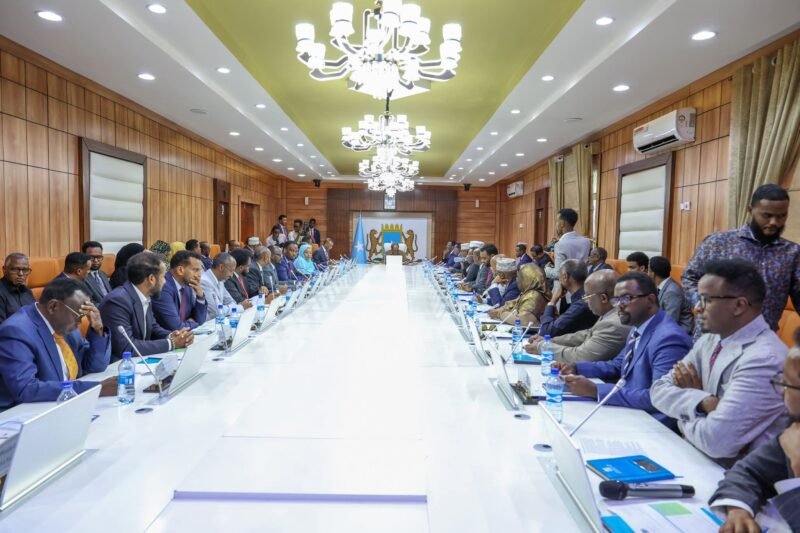
During discussions with media executives and directors in the capital, the minister characterized privately owned organizations as fundamental in disseminating accurate information, fostering social unity, and advancing Somalia’s state-building initiatives. The gathering represented a wider governmental effort to involve media stakeholders and collect perspectives on enhancing relations between the Information Ministry and independent journalists and broadcasters.
According to ministry officials, dialogues centered on bolstering partnerships in public communication, media advancement, and civic education programs, especially regarding security, stability, and national unity concerns. Media representatives at the meeting also expressed worries about industry obstacles, including operational difficulties, professional capabilities, and the necessity for a more enabling framework for independent journalism.
Government Hails Independent Media as Vital to State-Building
The federal administration has progressively depended on local media outlets to assist with public communication on counterterrorism activities, reconciliation processes, and constitutional changes as Somalia persists through political and security complexities. The latest engagement aligns with ongoing efforts to professionalize the media sector, which has faced challenges ranging from insecurity to legal and political pressures.
Somalia recently made a historic debut at the Pan-African Media Councils Summit in Arusha, marking a significant milestone in the country’s media development journey and underscoring ongoing reforms to professionalize journalism and uphold press freedom. The international community has also taken note of these efforts. The British Ambassador to Somalia recently commended the resilience of Somali journalists and reaffirmed the UK’s commitment to safeguarding media freedom, highlighting the vital role of an independent press in the country’s democratic journey.
A Parallel Digital War: New Censorship Tactics Emerge
However, these positive steps toward collaboration are taking place against the backdrop of a sophisticated, high-stakes digital proxy war. Independent media outlets and prominent political analysts in Somalia have launched formal appeals to Western embassies over what they describe as an unprecedented, state-sponsored electronic warfare campaign designed to systematically eliminate political dissent from the global internet. This assault leverages automated systems within major American tech giants, effectively establishing a blueprint for a new era of bloodless, invisible state censorship.
The frontline of the digital crackdown centers around an unexpected actor: CONVEY LLC, an Italy-based marketing and intellectual property management firm. According to diplomatic briefs reviewed in Mogadishu, the Federal Government of Somalia has allegedly contracted the foreign entity to systematically dismantle the online presence of the country’s leading independent broadcasters.
The operation exploits the automated, “guilty-until-proven-innocent” nature of Meta’s copyright enforcement architecture. CONVEY LLC has reportedly lodged sweeping, bad-faith copyright infringement claims against video packages published by independent stations covering opposition rallies, critical speeches, and anti-mandate demonstrations. Under Facebook’s automated policy, a copyright strike can trigger instantaneous distribution penalties. Before a human moderator can evaluate the validity of the claim, the video is scrubbed from public feeds, choking off the media’s reach exactly when critical news breaks.
Multiple independent Somali media houses, including Shabelle TV, and Universal TV, have reported being hit by mass reporting and false copyright complaints. Shortly after posting protest videos on Facebook, Shabelle TV lost all its video content, while Universal TV went offline following similar complaints.
Organized Digital Violence, Not Isolated Attacks
The Somali Media Women Association (SOMWA) has issued urgent warnings, characterizing the development as a dangerous, “highly organized wave of online subversion.” The group told AllAfrica that journalists are experiencing a dangerous shift from physical attacks toward coordinated digital violence aimed at silencing reporting.
“We are witnessing a dangerous shift from physical attacks on journalists to coordinated digital violence designed to silence independent media voices,” SOMWA Executive Director Maryan Seylac said. She added that journalists now face pressure on multiple fronts, including harassment, arrests and organized online campaigns targeting their work and credibility.
The group says organized networks use chat-based coordination to flag content, suppress reporting and reduce the visibility of independent journalism across digital platforms. More than 10 journalists, including at least five women, have been detained or assaulted while covering political and security developments, according to SOMWA.
‘Algorithmic Drowning’: The Bot Campaign on X
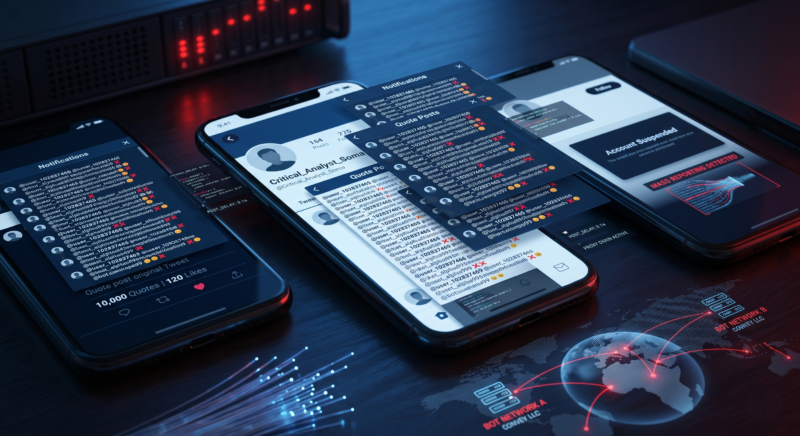
Simultaneously, a parallel offensive has paralyzed political discourse on the social media platform X (formerly Twitter). Political heavyweights, regional security experts, journalists, and opposition leaders have found their accounts swarmed by interactions from vast networks of automated, machine-generated accounts.
The tactics bypass crude hacking attempts in favor of a far more sophisticated manipulation known as algorithmic drowning. “Accounts of many Somali analysts on X are being subjected to an intense inauthentic machine-generated attack,” warned Rashid Abdi, a senior political analyst. “The attack is designed to ‘dislike’ a tweet by quote-posting abusive or simply gibberish content. The way to spot this manipulation is to check the quote-to-like ratio. A 3.3k post, quote and 85 like is impossible in 15 mins of posting,” Abdi said.
According to the online allegations, among those targeted are Abdi himself, Professor Afyare Abdi Elmi, and former President Sharif Sheikh.
Press Freedom Challenges Persist Amid Government Efforts
Despite these positive steps toward collaboration, Somalia remains one of the world’s most dangerous places for journalists. Media rights groups documented numerous press freedom violations. The National Union of Somali Journalists (NUSOJ) has repeatedly raised alarms over persistent threats facing media practitioners, including detentions for critical reporting and the misuse of outdated criminal defamation laws.
Commitment to Sustained Dialogue and Media Advancement
Both parties concluded the meeting by committing to sustained dialogues and improved cooperation designed to fortify Somalia’s media landscape and expand its function in public information. The agreement builds on a series of high-level engagements between Somali officials and international partners focused on media development and public communication.
Minister Mahmoud, who assumed his post in early May following a formal handover ceremony, has pledged to continue strengthening the ministry’s role in government messaging and cultural preservation. During a recent working visit to the Somali National Theatre, the minister underscored the government’s commitment to cultural revival as part of wider state‑building efforts.
Recommended Reading On ftlsomalia.com:
- Somalia Joins Continental Media Dialogue at Arusha Summit
- UK Envoy Hails Somali Journalists, Reaffirms Support for Media Freedom
- Information Ministry and Mogadishu University Sign Media and Culture Development Agreement
- Minister, UNDP Discuss Media Development Cooperation
- Minister Pledges Support for Somali National Theatre and Cultural Development