
MOGADISHU — Somalia is entering a critical new phase of hunger as drought, conflict, displacement, sharply reduced humanitarian assistance, and rising food and fuel prices converge faster than families can recover, according to the World Food Programme’s latest Country Brief for August 2026.
One third of Somalia’s population, six million people , is facing acute hunger or worse, including nearly two million people in emergency levels of hunger. These are not abstract numbers; they are families exhausting every last option to survive.
Somalia remains one of the world’s worst malnutrition crises, with an estimated 1.88 million children under five projected to suffer acute malnutrition in 2026, including nearly 493,000 requiring treatment for severe acute malnutrition.
WFP requires USD 198 million for the next six months (September 2026 – February 2027), but faces an urgent shortfall of USD 147 million for humanitarian food assistance and nutrition, representing 102 percent of requirements including advance financing.
Dangerous Climate Outlook and Rising Food Prices
The latest climate forecasts point to a dangerous outlook: prolonged dry conditions through October, followed by an elevated risk of El Niño-related flooding before the end of the year. At a time when households are already struggling with weak purchasing power and repeated shocks, flooding could further disrupt livelihoods, markets and food access.
UN agencies have warned that Somalia is facing a rapidly worsening hunger crisis that could push parts of the country toward famine without urgent humanitarian action and increased international funding. The UN Food and Agriculture Organization (FAO), OCHA, UNICEF and WFP said close to 1.9 million people are already experiencing emergency levels of hunger, a figure that has tripled in less than a year. The warning includes a confirmed famine risk in Burhakaba district in Somalia’s Bay region, where worsening drought, rising food prices and insufficient humanitarian aid could push conditions into catastrophe if the current rainy season fails.
WFP has warned that Somalia stands at the threshold of a severe hunger catastrophe that could deteriorate into famine without immediate financial support. New findings from the Integrated Food Security Phase Classification (IPC) report indicate that 1.84 million children under five are projected to suffer from acute malnutrition during 2026, with approximately 500,000 facing life-threatening severe malnutrition. The repercussions from the crisis in the Middle East are causing food prices to surge by 70 percent in certain regions, while fuel costs have jumped by 150 percent.
WFP’s market analysis shows that Somalia’s markets remain broadly functional and supplied, but food access is increasingly constrained by affordability. The national food and non-food basket remains around USD 215, more than 8 percent above last year, while elevated fuel and transport costs continue to push up the cost of food, water and humanitarian delivery.
Below-average Gu rainfall (April-June) has reduced water availability and limited groundwater recharge in parts of Puntland and Somaliland, while water prices remain significantly higher in some drought-affected areas.
WFP executive director Carl Skau has warned that the agency has only a tenth of the resources it had in 2022 when it helped avert famine in Somalia. “We can only do the bare minimum,” Skau said during a visit to a nutrition center on the outskirts of Mogadishu. “We’re only providing these nutrition supplies to the children that are really the worst hit.” The reduced funds, because of cuts in international aid by donors and the redirection of resources to other humanitarian crises, means that WFP is unable to expand its assistance in Somalia.
Climate Shocks and El Niño Preparedness
The Minister of Interior, Federal Affairs and Reconciliation, Ali Yusuf (Ali Xoosh), has warned the Somali public about the risk of floods and flash floods linked to the anticipated Super El Niño weather phenomenon, urging communities to take precautionary measures and remain vigilant. The Minister specifically called on residents of areas vulnerable to flooding to exercise caution and prepare for potential emergencies.
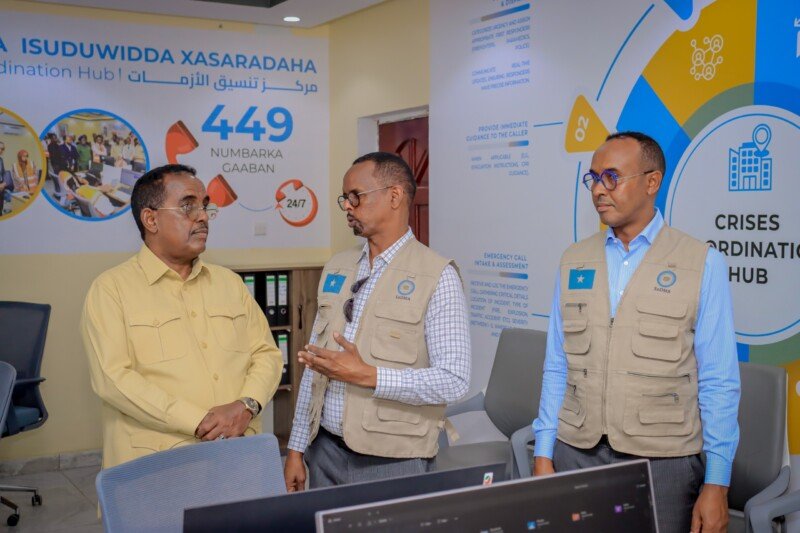
Building on lessons from 2023, when floods and drought displaced 2.3 million people and affected millions more, the government and humanitarian partners are supporting contingency planning, risk analysis, and coordination at national and state levels to strengthen readiness for potential flooding and displacement. SoDMA and health partners have been coordinating the El Niño response as the government works to move from rhetoric to resilience, holding a series of consultations to accelerate preparedness and strengthen coordination with relevant stakeholders to mitigate the risks.
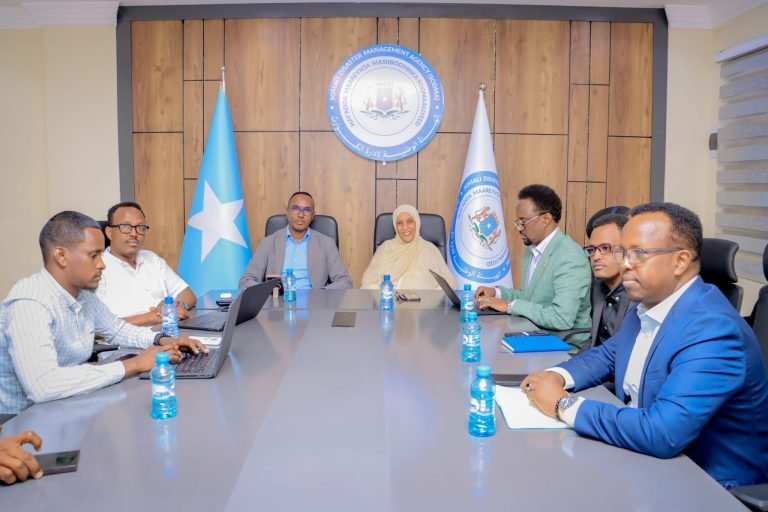
The Cabinet has endorsed a national El Niño preparedness plan as the country faces the threat of severe flooding, displacement, and disruption to agriculture and food security. Prime Minister Hamza Abdi Barre has visited SoDMA headquarters to review El Niño preparedness, receiving briefings on measures already in place to prepare for the anticipated rainfall.
SoDMA and the UN have bolstered joint efforts to confront the escalating climate crisis, with Commissioner Mahamuud Moallim Abdulle and UN Deputy Envoy George Conway co-chairing strategy sessions to reinforce the country’s response to the climate emergency and assess the drought’s current path and its harsh effects on at-risk populations. A joint assessment team led by Commissioner Abdulle and including Conway has also visited Kismayo to examine the consequences of the persistent drought and assess living conditions in internally displaced persons settlements near the city.
FAO has warned Somalia to prepare now for potential El Niño-linked flooding later in 2026, stating that while the immediate risk of major riverine flooding during the June-September period has eased, the Deyr season remains the main period of concern, and preparedness should begin now, not when the rains start.
Operational Updates and Humanitarian Response
In July, WFP provided lifesaving food assistance to 452,000 people across Somalia, delivering USD 5.1 million in cash-based transfers. WFP provided specialized nutritious foods to 280,000 children under five and pregnant and breastfeeding women and girls to prevent and manage acute malnutrition.
WFP supported the launch of Somalia’s first Food-Based Dietary Guidelines, led by the Federal Ministry of Health and Human Services and FAO Somalia, providing a national framework to promote child nutrition and reduce malnutrition.
WFP also joined the Government, UN agencies and partners in the official endorsement of Somalia’s Regulations on the Control of Breast-Milk Substitutes (BMS Code) during World Breastfeeding Week on 1 August, establishing national safeguards for breastfeeding and strengthening efforts to reduce malnutrition among mothers and children.
WFP and the Federal Ministry of Education, Culture and Higher Education advanced efforts to secure sustainable financing for school meals, including exploring debt-swap opportunities and African Development Bank support.
As a result of a serious resource deficit, the WFP has had to cut back on assistance. Essential support is currently only reaching one in ten individuals requiring help, a pattern that mirrors conditions leading up to the 2011 famine and the 2022 near-famine scenario. The UN agency is urgently appealing for $95 million to sustain critical food and nutrition operations in Somalia through August 2026, warning that its lifesaving programs could be forced to shut down without immediate funding. The number of emergency food aid recipients has already fallen from 2.2 million in early 2025 to just over 600,000 currently.
Critical Note
The WFP’s latest country brief paints a grim picture of Somalia’s humanitarian situation, with six million people facing acute hunger and a funding gap of USD 147 million threatening to push millions deeper into crisis. While the agency has launched a new country strategic plan and strengthened preparedness for anticipated floods, the gap between humanitarian needs and available resources continues to widen.
The international community’s failure to adequately fund Somalia’s humanitarian response is particularly alarming given the lessons of 2022, when early action prevented a famine declaration. As Action Against Hunger has warned, a Global Acute Malnutrition rate of 37.1 percent in Burhakaba District means that in some communities, malnutrition is the norm, not the exception.
The Somali government must urgently prioritize resource mobilization for humanitarian assistance, engaging donors and international financial institutions to bridge the funding gap. Without immediate funding to sustain life-saving operations, the country risks a humanitarian catastrophe that could reverse years of progress in state-building and stability. The international community must recognize that investing in Somalia’s humanitarian response is not just a moral imperative but a strategic necessity to prevent further displacement, instability, and the erosion of fragile governance gains.