
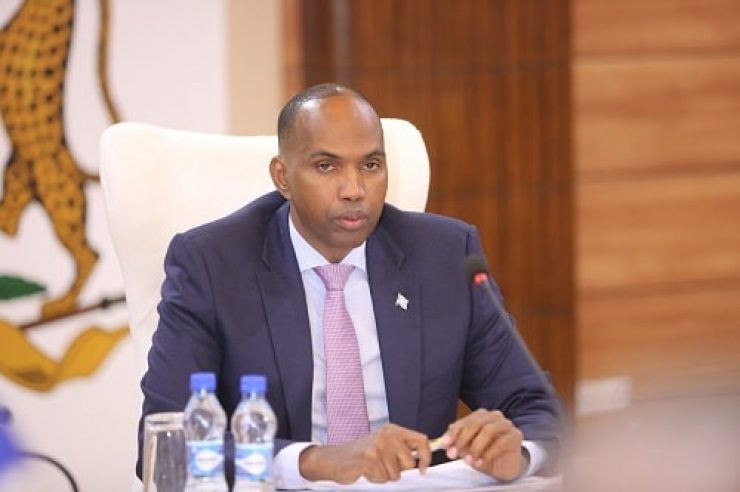
MOGADISHU — The World Bank has pushed back on claims made by former Prime Minister Hassan Ali Khaire regarding the state of Somalia’s economy and the management of development funds, providing data that contradicts several of his assertions.
Khaire had alleged that more than 500 million dollars allocated for development in 2024 and 2025 remained unspent due to what he described as “mismanagement and corruption.” He claimed that 73 percent of over 330 million dollars allocated in 2024 and 70 percent of over 407 million dollars allocated in 2025 had not been utilized.
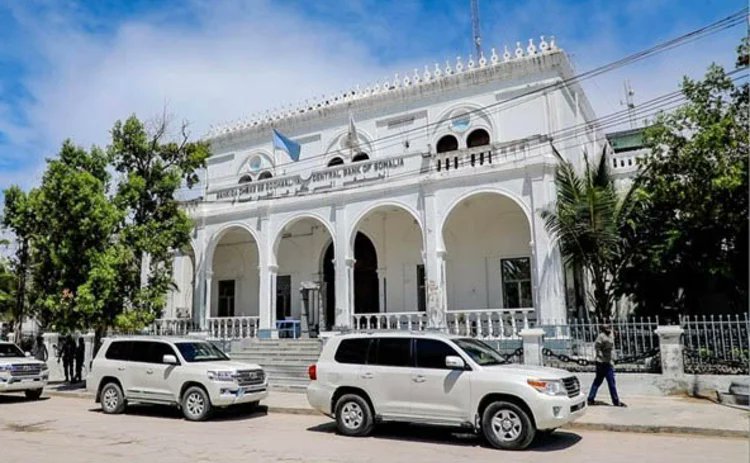
Somalia’s real GDP growth slowed to an estimated 3.1 percent in 2025, down from 4.0 percent in 2024, according to the Central Bank of Somalia’s Annual Report for 2025. The moderation reflects the impact of reduced international aid, drought conditions, and rising living costs weighing on domestic demand. Nominal GDP rose to $13.234 billion in 2025, up from $12.348 billion in the previous year.
However, the World Bank provided a different explanation for the development funds, stating that the disbursement rate for Somalia’s development projects had actually increased from approximately 24 percent in 2025 to 29.4 percent in 2026. The Bank emphasized that multi-year projects do not require all funds to be spent in the year they are allocated. Project disbursements are contingent upon procurement processes, safeguarding compliance, verified milestones, donor conditions, security access, and the performance of implementing agencies.
According to the latest portfolio review, Somalia has an active World Bank portfolio worth approximately $3.07 billion. Of this amount, around $1.07 billion, nearly 35 percent of the portfolio, remains undisbursed. The Bank also noted that delayed disbursement may reflect weak state capacity without proving that officials stole or deliberately withheld the funds.
Somalia’s banking sector continued to demonstrate strong growth in 2025, with total banking assets increasing by 14 percent to $2.3 billion, equivalent to 20 percent of GDP, according to the Central Bank of Somalia’s Annual Report for 2025. The expansion reflects sustained confidence in the financial system, steady deposit mobilization, and increased engagement within the formal financial sector. Financing assets rose by 14 percent to $540 million, reflecting continued private-sector credit demand.
Finance Minister Bihi Imaan Igeh had previously dismissed similar allegations in August 2025, stating that no funds had been frozen and no development projects had stalled. The Minister confirmed that Somalia is currently overseeing 24 World Bank-financed projects worth $2.7 billion, all remaining active. The World Bank also approved a second Development Policy Financing operation of $125 million in August 2025 to support economic reforms.
Khaire had also claimed that Somalia’s economy contracted by 3 percent in 2025. However, the World Bank’s Somalia Economic Update 2026 shows that the economy actually grew by 3 percent in 2025, although this was a slowdown from about 4 percent in 2023-24. The slowdown reflects reduced humanitarian and security-related assistance, drought impacts on agriculture and livelihoods, and higher costs that constrained household spending.
Khaire’s claim that business credit “collapsed from 30 percent in 2022 to just 14 percent in 2025” was also contested. The World Bank’s data refers to the annual growth rate of private-sector credit, which slowed from nearly 30 percent in 2022-23 to 14 percent in 2025. Private credit did not collapse; it continued to expand, but at a slower rate.
Remittance inflows remained a central pillar of Somalia’s economic stability in 2025, reaching a record $6.78 billion, a 5 percent increase from $6.43 billion in 2024. Individual remittances totaled $3.13 billion, up 15 percent from the previous year, reaffirming their role as the largest and most stable source of inflows. Commercial banks processed $3.71 billion in inflows, a 12 percent increase from 2024.
The World Bank also noted that commercial banks’ loan-to-deposit ratios rose above 30 percent in 2025, up from levels in the mid-20s during previous years, while capital adequacy stood at 16.6 percent, exceeding the regulatory minimum, and non-performing loans remained stable at approximately 2-3 percent.
However, the World Bank did support some of Khaire’s concerns about the broader economic context, including worsening food insecurity, declining foreign aid, climate impacts and ongoing security challenges that continue to weigh on the economy. The report projected real GDP growth at 2.8 percent in 2026 and 3.1 percent in 2027, constrained by continued aid reductions, climate variability, global price shocks, and limited productive capacity.
Following the attainment of the Completion Point under the Enhanced Heavily Indebted Poor Countries (HIPC) Initiative in December 2023, Somalia’s external debt position underwent a fundamental transformation. Total external debt declined from $5.23 billion in 2018 to $1.48 billion in 2025, while the external debt-to-GDP ratio fell from 61 percent to 11 percent.
Central Bank of Somalia Governor Abdirahman M. Abdullahi has highlighted that approximately $210 million is lost annually as funds pass through numerous intermediaries in East African financial centers before reaching Somalia, with each transaction adding unnecessary expenses, delays, and reducing transparency.
Critical Note
The World Bank’s response to Khaire’s claims highlights the complexity of development finance and the dangers of misinterpreting data for political purposes. While the former Prime Minister raised legitimate concerns about the pace of development spending, the data presented by the World Bank suggests a more nuanced picture than Khaire’s allegations of widespread mismanagement and corruption.
The increase in the disbursement rate from 24 percent to 29.4 percent, the approval of new World Bank financing, and the continued growth of the economy, albeit at a slower pace, suggest that Somalia’s economic management has not collapsed as Khaire suggested. However, the undisbursed $1.07 billion in the World Bank portfolio and the slowdown in economic growth do raise questions about the government’s capacity to effectively implement development projects and manage the challenges facing the country.
The banking sector’s expansion and record remittance inflows demonstrate resilience, but they cannot substitute for sustainable economic development and job creation. The large trade imbalance, with imports accounting for 80 percent of GDP and exports just 21 percent, highlights the economy’s structural weakness and its reliance on foreign supply to meet domestic consumption and investment needs.
The debate between Khaire and the government underscores the need for greater transparency and accountability in the management of development funds. The Somali people deserve clear and accurate information about the state of the economy and the use of public resources. The international community must continue to support Somalia’s efforts to strengthen its financial management systems and ensure that development funds are used effectively to benefit the Somali people.