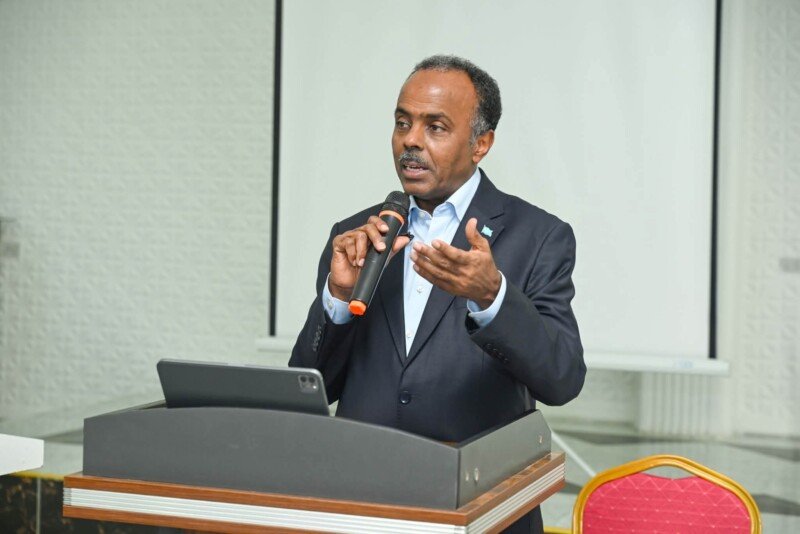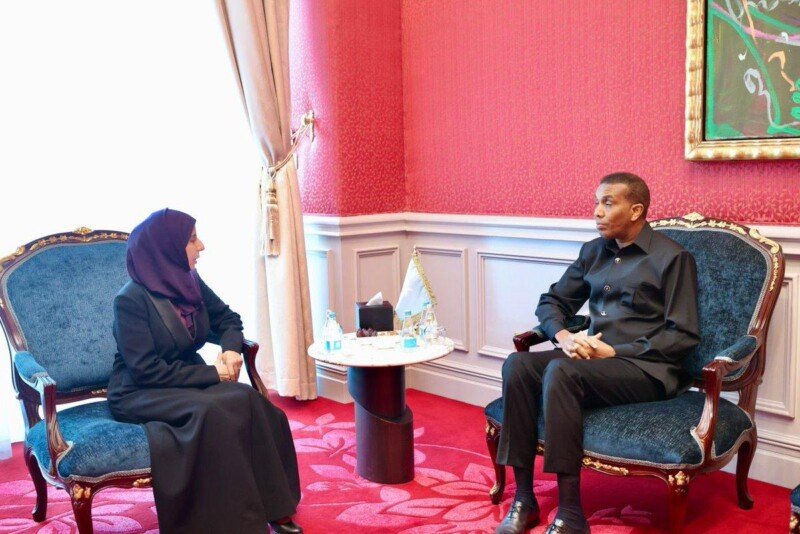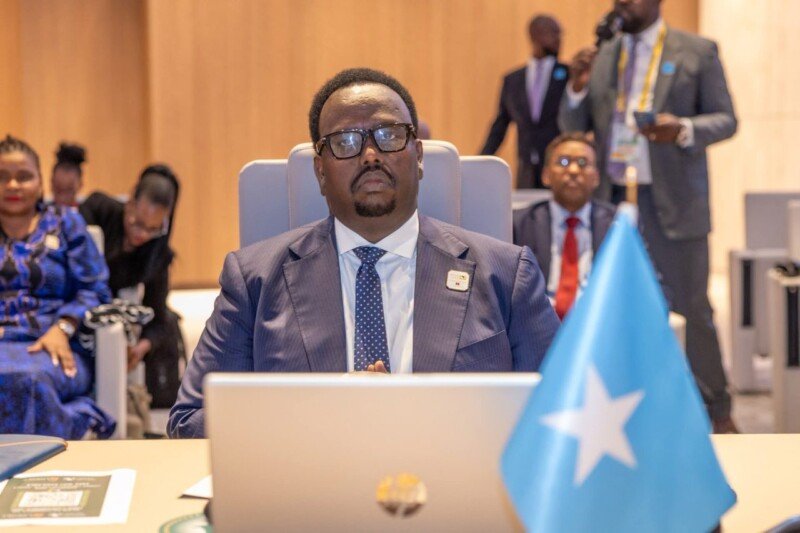

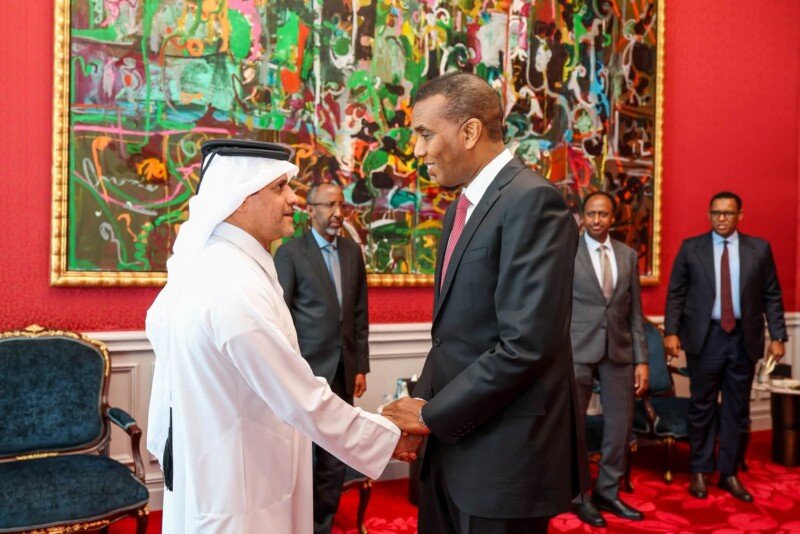
DOHA — Prime Minister Hamza Abdi Barre has met with Qatar’s Deputy Prime Minister and Minister of Defense, Sheikh Saoud bin Abdulrahman bin Hassan Al-Thani, in Doha as part of his official visit to Qatar, where the two leaders discussed strengthening bilateral cooperation in security, defense, and regional stability .
The meeting, which was part of the Prime Minister’s formal engagements with Qatar’s senior leadership, focused on joint efforts to counter cross-border terrorism threats that pose a significant risk to Somalia .
Prime Minister Hamza briefed Sheikh Saoud on the gains made in stabilizing major cities and the ongoing operations against Khawaarij militants . The Deputy Prime Minister of Qatar, who visited the Prime Minister at his residence in Doha, affirmed Qatar’s commitment to standing with Somalia and its readiness to expand cooperation across various sectors .
Prime Minister Hamza expressed gratitude for the warm reception extended to him and his delegation, and for the high level of bilateral relations between the two countries. He particularly thanked Qatar for its steadfast support for Somalia’s sovereignty during times of external pressure .
The meeting reflects the strengthening partnership between Somalia and Qatar, which has deepened significantly in recent years. In January 2026, Somalia and Qatar signed a Defence Cooperation Agreement in Doha, aimed at strengthening military ties and security collaboration between the two countries .
Qatar has consistently reaffirmed its support for Somalia’s sovereignty and territorial integrity, opposing Israel’s recognition of Somaliland and describing it as a “dangerous precedent” that undermines Somalia’s unity .
Qatar’s Growing Role in Somalia’s Security
Qatar has been expanding its security cooperation with Somalia. The Defence Cooperation Agreement signed in January 2026 focuses on military training, the exchange of expertise, the development of defence capabilities, and enhanced security cooperation .
In February 2026, a Qatari Emiri Air Force C-17A Globemaster III strategic airlift aircraft arrived in Mogadishu, indicating an ongoing expansion of military logistics in the Horn of Africa as regional alliances shift . The arrival coincided with a period of enhanced security collaboration between Mogadishu, Doha, and Ankara, with the flight underscoring a developing three-way security alliance as the Federal Government adjusts its foreign policy approach.
Qatar’s support for Somalia’s sovereignty has been particularly significant following Israel’s recognition of Somaliland. During a telephone call with President Hassan Sheikh Mohamud in February 2026, the Qatari Emir reaffirmed Qatar’s support for Somalia’s legitimate state institutions, security and stability, and the preservation of its territorial unity .
The meeting between Prime Minister Hamza and Qatar’s Deputy Prime Minister also comes as Somalia continues to make gains in its fight against Al-Shabaab. Somali forces have conducted a 72-hour planned security operation across the Buulo Cabdalla corridor in Lower Shabelle, resulting in the death of 22 Al-Shabaab militants, including their regional commander .
NISA has also conducted intelligence-driven operations across central Somalia, with preemptive strikes destroying militant strongholds and thwarting several imminent attacks .
Critical Note
Prime Minister Hamza’s meeting with Qatar’s Deputy Prime Minister underscores the growing strategic partnership between Mogadishu and Doha, particularly in security and defense cooperation. Qatar’s steadfast support for Somalia’s sovereignty, especially in opposing Israel’s recognition of Somaliland, has positioned Doha as a key ally for the Federal Government.
However, Somalia’s deepening ties with Qatar raise questions about the balance of influence in the Horn of Africa and the potential for entanglement in broader Gulf rivalries. The government must ensure that its partnership with Qatar serves the country’s long-term development interests while maintaining a balanced approach to regional diplomacy.
As Somalia continues to face significant security challenges, including the threat of Al-Shabaab, Qatar’s support in defense cooperation and capacity building is welcome. However, the effectiveness of this partnership will depend on tangible outcomes, including the implementation of signed agreements and the translation of diplomatic engagement into concrete improvements for the Somali people.